Archive for the ‘Nature’ Category

Costa Rica 2012, Part 6.

Thursday, February 23rd, 2012

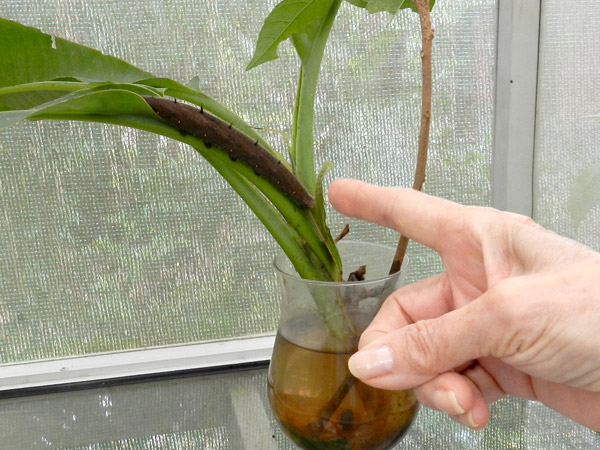
Reptiles and amphibians! Hey, you know what there is a lot of in Costa Rica? Reptiles and amphibians. Even better, reptiles and amphibians that can kill you. For example, we went to a butterfly park. What that means is there is a chunk of rainforest, not particularly big, like 100 feet by 50 feet, and there is a netted tent over it. Butterflies live in there and flit from plant to plant and eat fruit and then die. In the fancy butterfly parks they carefully collect all the dead butterfly bodies off the ground every morning and frame them, but here the public was allowed in so it wasn’t that carefully regimented. What was neat was seeing the caterpillars eating (and pooping, caterpillars poop so much, I had no idea) and butterflies emerging from chrysalises all crumpled and damp. Here are some giant hairy caterpillars with cool patterns. Yes, that is a milkshake glass. Big caterpillars.

This is my mom pointing to one caterpillar’s hind quarters. And whole bunch of caterpillar poop.

This was a lone monster caterpillar. We christened him The Shark. Look at him, then sing the Jaws, “dun dun, dun dun” song to yourself. It totally works.
Emerging butterflies!
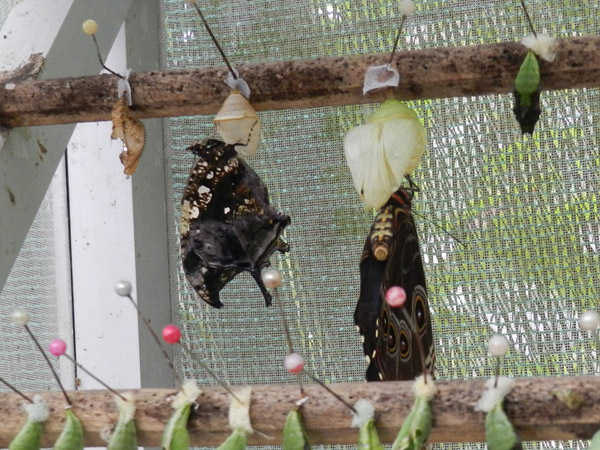
This is a Blue Morpho. I love the brown spotted pattern on the outside of their wings, but everyone is totally into their bright blue iridescent inside wing parts. However, it is damn near impossible to photograph the inside because they sit with their wings closed.

All these little fellers were wafting past our heads the entire time we were walking around. It’s magical, like a ticker tape parade but alive.
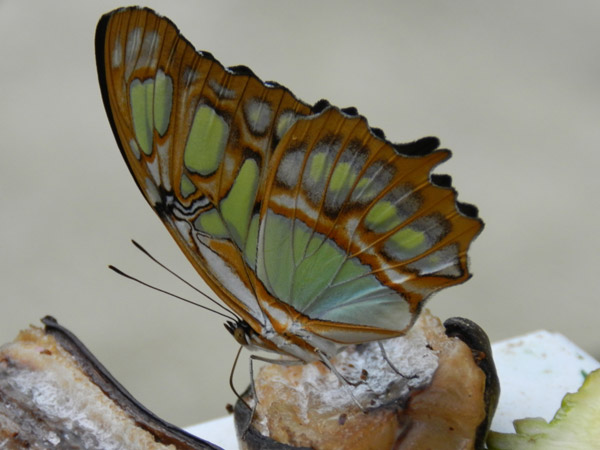
This guy was my favorite. He’s got big “eyes” on his wings so predators will think he’s a big scary animal, but he is not. He’s a giant fuzzy moth that I want to cuddle.

ANYWAY, the reason I brought up this during my reptiles and amphibian portion of review is because at the bottom of one of the planters in this butterfly park was… a poison dart frog! Just hanging out being poisonous!

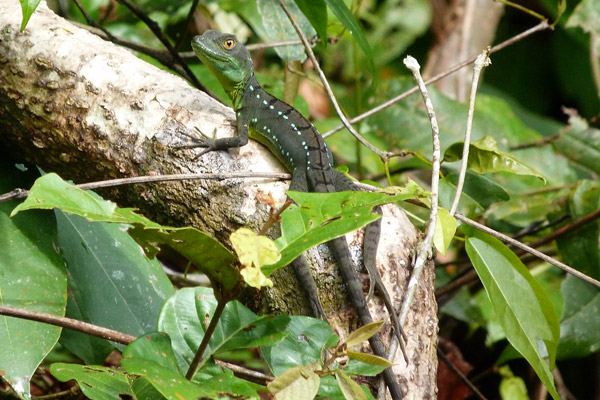
One of the reptiles we kept bumping into was the fabulously named “Emerald Basilisk, or Jesus Christ Lizard.” He is named this because he runs across the surface of the water. Their coloring differs depending on their habitat, but in the rainforest they look green and fake. If they didn’t blink or dart away, I would have thought they were plastic. Seriously. Here’s one (a male, notice the big crests on the back) chillin’ on a branch. This was taken without flash.

But this male was taken with flash and he looks super-plasticky-fake.

Mrs. Jesus Lizard was right next to us on the left. No crest.

This is a basilisk that lives in a brown dirt-covered area so he matches that environment. I would call him The Olive Basilisk.

There were tons of teeny-tiny lizards on the walls all over the place. I took a few pictures of them because (shocker!) I thought they were cute and I wanted to take them home with me.
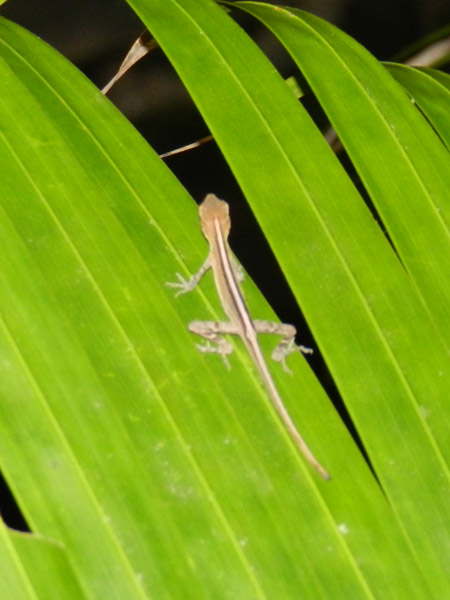
Susan took pictures of these three guys, I don’t know what they are. I think one might be a skink, or maybe not. I am not a herpetologist. Fine-lookin’ lizards, though.

While we were on the river one morning really early we rolled on past this tree and the guide pointed out a boa constrictor being one with the branch. That boa could blend, I tell you. It took me a very long time to see him and he was right in front of me.

Later in the day we floated on by and he had curled up into a little boa-ball.

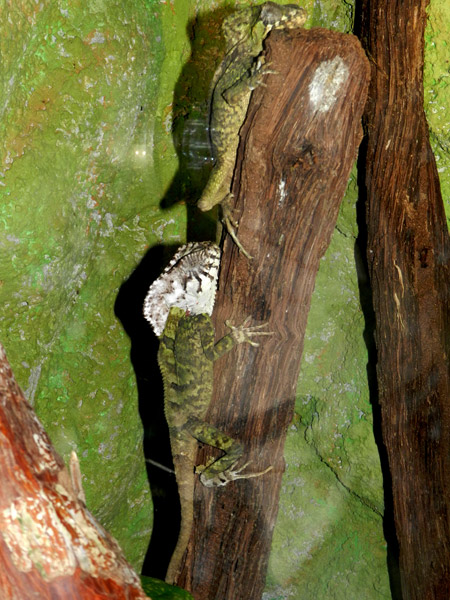
The time we saw the most cold-blooded creatures is when we went on a night-time frog walk. A guide led us through a chunk of rainforest on foot where there was a pond. They also had some glass cases that had some specimens in them, you know, someone found a death-beast in their house and these people came out and collected it and now they show it to schoolchildren to educate them, etc. My favorite was these two chameleon-looking lizards trying to sleep even though we were shining flashlights in their faces. We left them alone for the rest of the night, so I don’t feel so bad about the five minutes of inconvenience they had to endure.
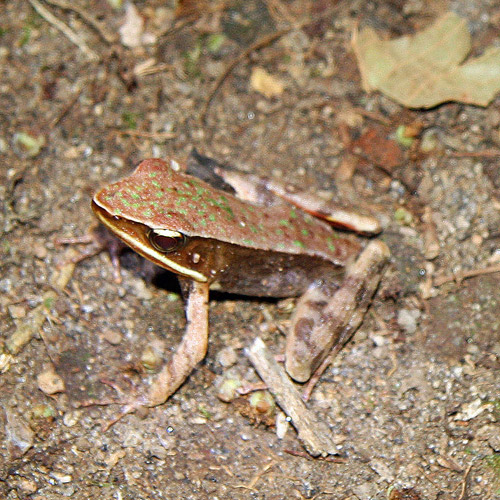
And we saw a ton of frogs. We saw the Brilliant Forest Frog which doesn’t look like much, but he has a lovely defense mechanism. When he is startled he pees into the face of his predator and jumps away, and the insides of his legs are a vibrant red which disorients the attacker even more. I don’t think I would need the red inner thighs. I think the pee in the face would be enough.

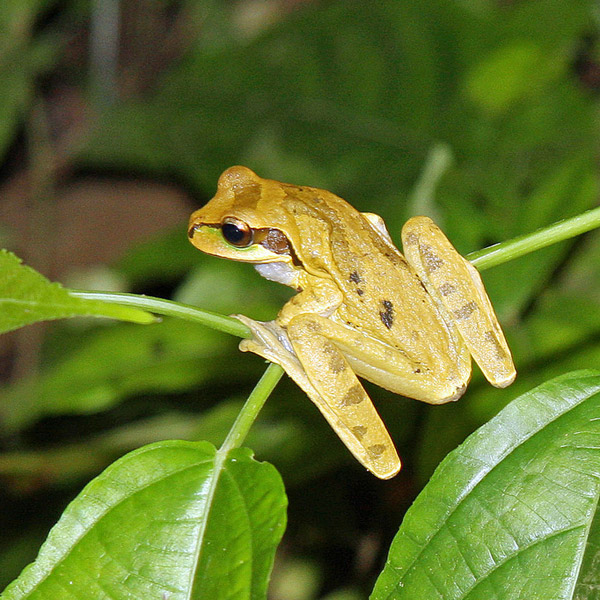
We saw The Masked Frog…
And the Common Tink Frog, who was super-wee…
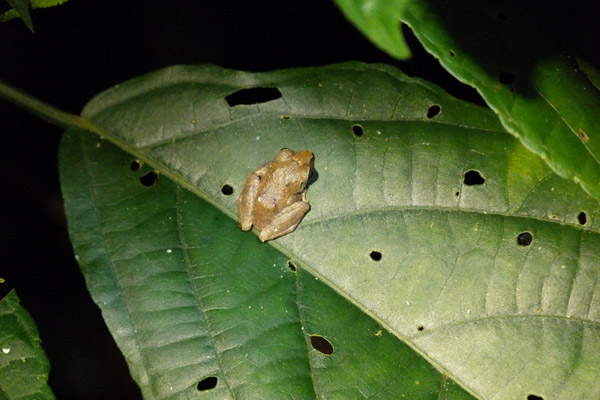
As well as the equally wee Hourglass Tree Frog.

And in a glass case there was an Eyelash Pit Viper. He was the greatest. He was a slim yellow guy with eyelash-looking scales over his eyes. And he has the best name in the Aztec language: “The Evil That Takes Your Soul With Kissing.” They come in a wide variety of colors depending on what they eat. The bright yellow ones eat hummingbirds, so they are mimicking a pretty flower. I love ’em.

In my wildlife book they had a whole page devoted to my beloved yellow eyelash pit viper.
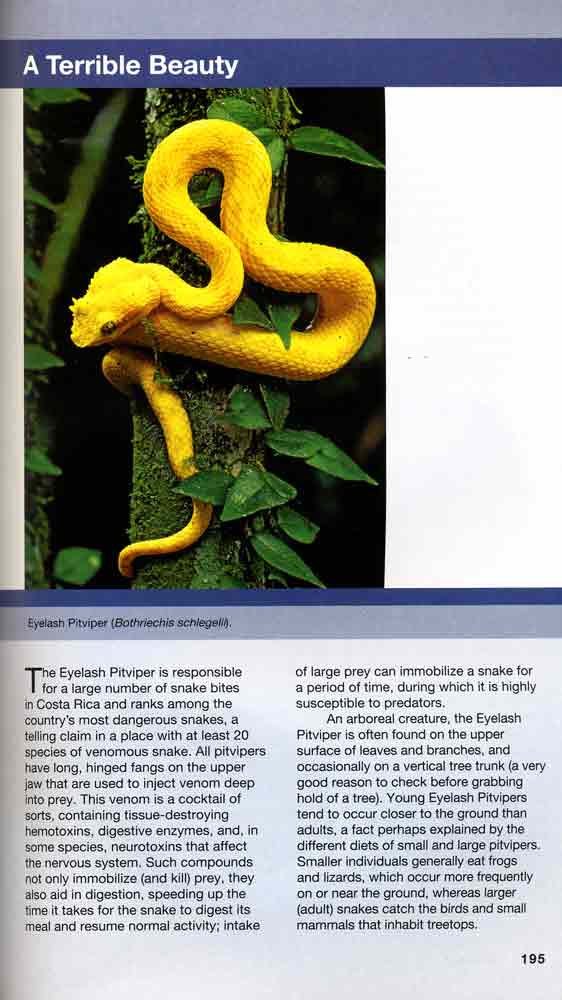
I was quietly enjoying my moment with my new snake friend when my shoulder brushed something and eeeeeeehhhhhhhhh giant hairy spider. I don’t normally have a problem with giant hairy spiders but this one surprised me and I thought he was going to climb up my neck into my hair and then I had to walk off to the side and vigorously scratch my scalp with my fingernails.

In the next tank over was the Hog-Nosed Viper, so named because of its upturned snoot. Love the pattern.

We also saw these two frogs. Don’t know what kind they are. I call them Generic Frogs.

One of the most exciting moments of the frog walk was when the guide moved a leaf (a lot of my stories have the phrase, “the guide moved a leaf, and there was a <awesome thing> behind it”) and there was a Red-Eyed Tree Frog, the symbol of Costa Rica.
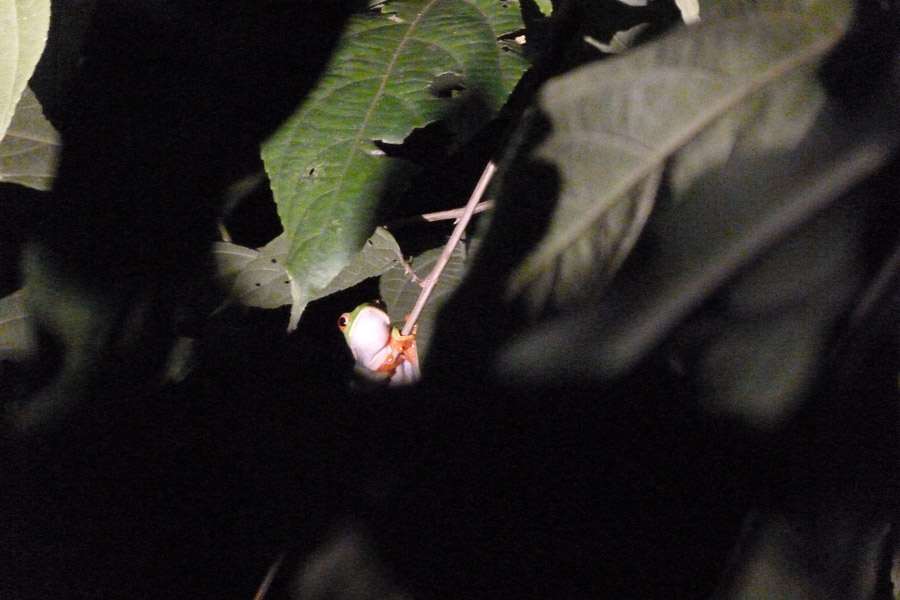
And, if you look carefully at this photo, you will see a Smooth-Skinned Toad hanging out in the leaf litter.

Coming up, more reptiles. Bigger ones. Scarier ones. With big teefers.
Costa Rica 2012, Part 5.

Wednesday, February 22nd, 2012

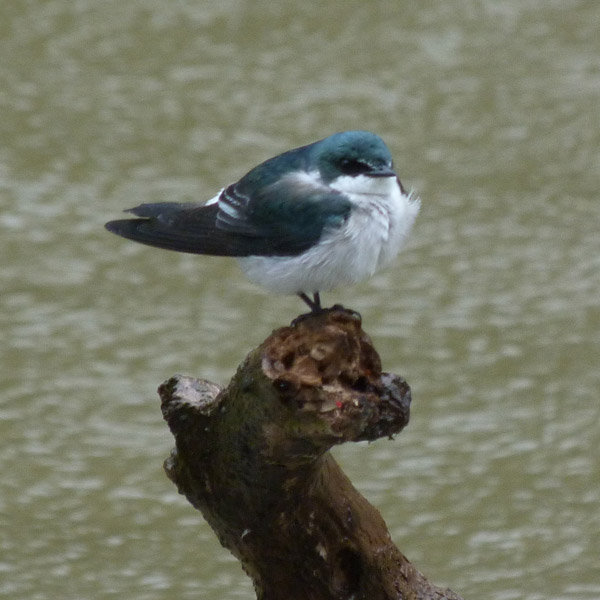
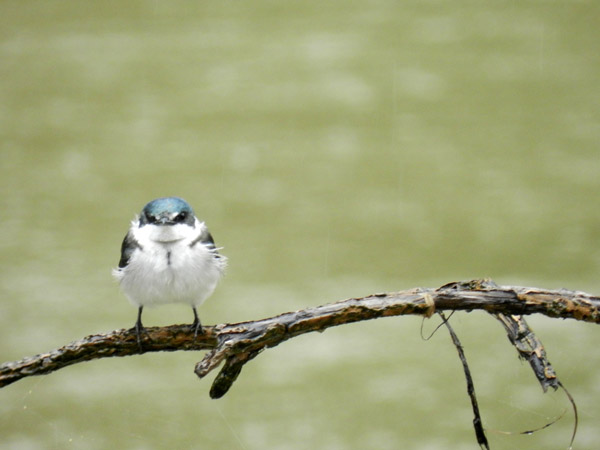
Not all the insanely cute things I saw were mammals. Some of the birds I saw made me clutch at my heart from the preciousness as well. For example, SeƱor TeenyGrumples right here. He’s a Tree Swallow.

Or this Broadbilled Motmot. Also poofy and grouchy.

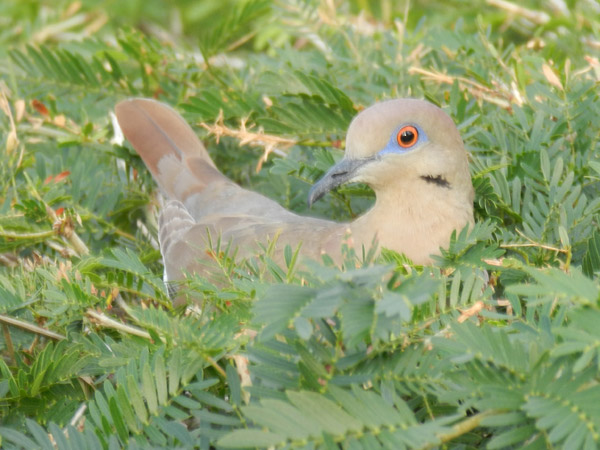
At the end of the trip, Cricket and I were checking out of the hotel when someone pointed out a dove’s nest right in the hedge next to the pool. I felt really bad for that dove, she picked a profoundly crappy place to build a nest. But I got to stand up close to her and see her egg. Here is Mrs. White-Winged Dove.

Here is Cricket standing next to the hedge with Mrs. Dove sitting in it.

And look at the egg! She’s got her feet wrapped around it! Awww.

There was this little guy who I think is a Blue-Gray Tanager. He looks fake, like a Christmas tree clip-on ornament, but I assure you he was not.

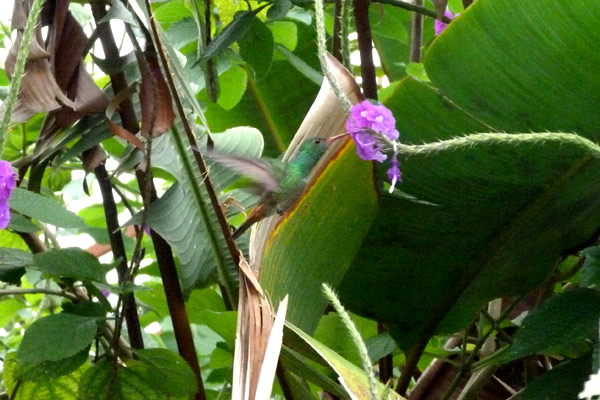
But by far the smootchiest bird I encountered while in Costa Rica was the hummingbird. Have you ever seen a hummingbird up close? They are so small and vibrant. There was this Rufous-Tailed Hummingbird hanging out in the trees one day.

He was great. He would go and collect nectar from a variety of flowers, then zip back to this branch and flickety-lick his beak with his skinny tongue. It was redonk. Susan got two amazing shots of hummingbirds flying.

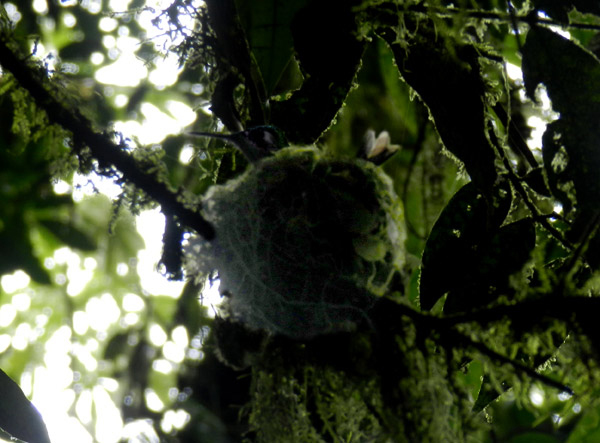
But the ultimate was when I was walking on the hanging bridges. Right in front of me was a wee hummingbird in a wee nest. The nest was made from moss and spiderwebs (I am not making this up). I could only get one picture before the little guy flew off and it’s royally backlit, but it gives you an idea. Holy Moses, people.

Here’s a photo I found on the internet that more adequately shows you what it looked like, and a picture of a hummingbird nest to give you a sense of scale. The nest was mad tiny, yo.

Other birds! This is a Green Ibis. There he is. Apparently he only looks green in bright sunlight, so when there’s clouds (which there is a lot – rainforest!) he looks gray.

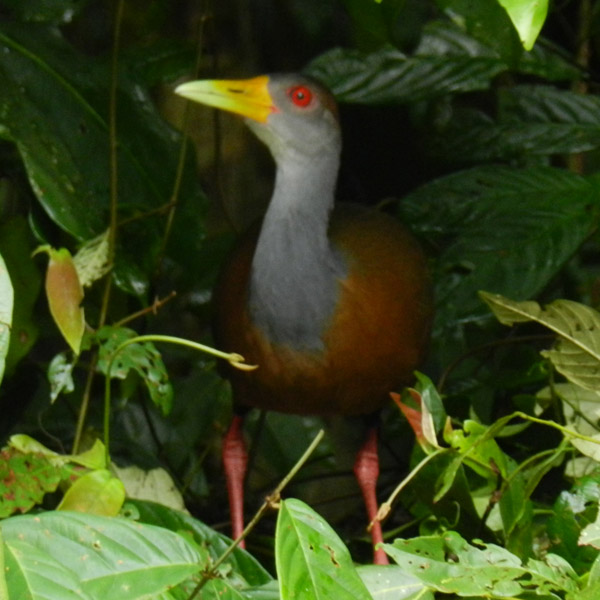
We saw what I politely referred to as “a demonic-looking duck” building a nest in some greenery. It’s called a Gray-Necked Wood Rail, by the way. The Evil Gray-Necked Wood Rail of Satan.

When we were in a boat we passed by three kingfishers – The Belted Kingfisher, The Amazon Kingfisher and The Ringed Kingfisher. All were staring with that laser-like gaze they have. I feel like if they looked at you for ten seconds or so, you would blister in the spot they were looking at, so very intense is their gaze.

An Osprey! Big bird of prey. Eats fish. Has sharp talons.

We were one the bus one day and the guide Aaron stopped it and informed us that a rare bird was wandering around in a cow pasture off to the right. I found out the name later: It’s a male Purple Gallinule.

This was super-cool – when we were on a river boat ride down a bit of river filled with birds and crocodiles, Aaron spotted a pair of Scarlet Macaws flying off in the distance and Susan managed to get a shot of the pair in a tree. It’s grainy, but it’s a picture. There are only 300 breeding pairs out there.

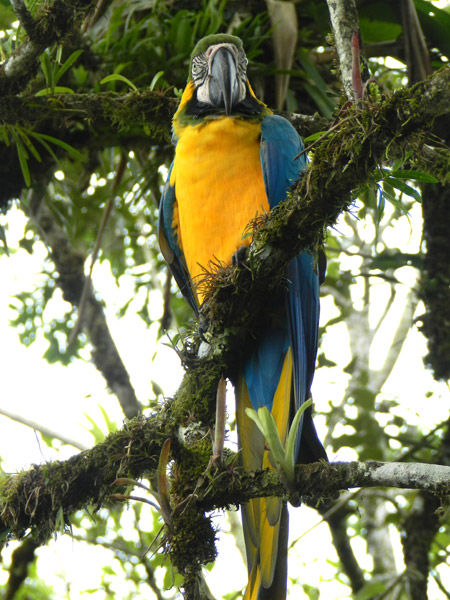
Did you know parrots are monogamous for life? At rest stop we spotted this Blue Macaw on a branch. She belonged to the owner of the rest stop and her husband had recently passed away (the Blue Macaw’s husband, not the owner) and according to studies, Mrs. Macaw would pass away soon as well…of depression and loneliness. Isn’t that sad? I wanted to give her a hug, but she was big and beaky and high up and probably didn’t need my love, so I refrained. And because of that I still have all my fingers, so good choice on my part.

Also, on the Bird ‘n’ Crocodile River Ride…The Northern Jacana! I love this bird. Its feet are so incredibly large in proportion to its body. Its feet are perpetually making jazz hands.

We also saw the Yellow-Headed Caracara (nice bird) and the Collared Caracara (AWESOME bird). They eat carrion and hang around where the crocodiles be at in the hopes of getting leftover snakkies.

Susan got a shot of Black-Necked Stilts. I didn’t see them, but I love the way they are arranged in this photo, so I’m putting it in here.

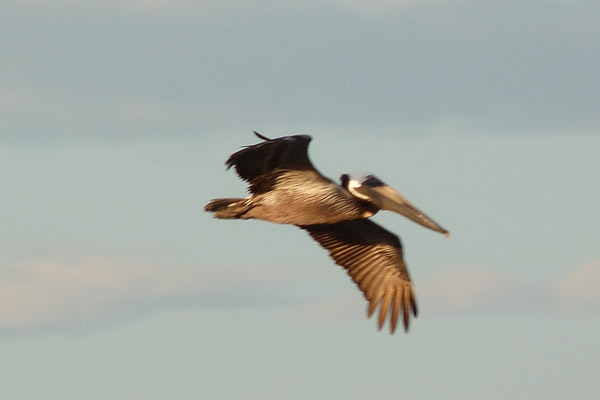
Finally, bird-wise, while we were on the Pacific Ocean beach there were Brown Pelicans swooping around eating and swimming and standing with their beaks shoved into their chests. They’re smaller than the pelicans we are accustomed to, and prettier too. Generally all-around better pelicans.

Okay. End of birds. On to reptiles, amphibians and mammals. And a couple buggies thrown in for good measure.

Costa Rica 2012, Part 4.

Sunday, February 19th, 2012

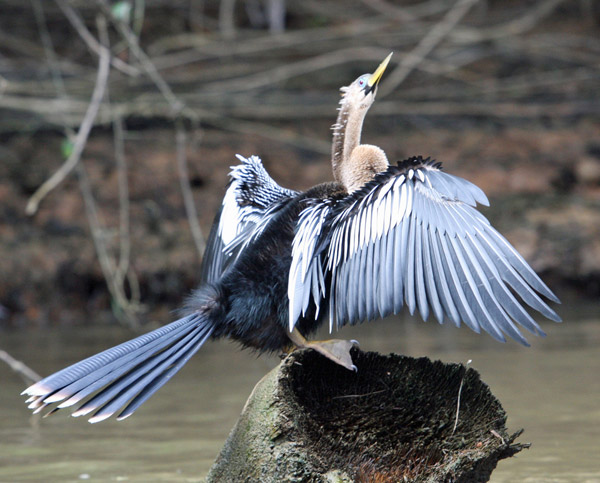
Anhingas! Anhingas are birds that dive for fish like cormorants. Anhingas are flawed in their design because, unlike ducks, they do not have that waterproof oil on their feathers so when they are wet they cannot fly. But they dive to eat fish and live in the rainforest, so I don’t know when they dry. We saw them sunning themselves all over the place but I never saw one fly, so maybe they don’t need to fly. Here’s a male anhinga.

And here’s a female anhinga.

This is a female diving for fish and swimming. They are sometimes referred to as the snake bird, and when it’s in the water you can see how the anhinga got that name.

I mentioned how Cricket made me tromp through the forest so we could see a lagoon, and at one point I thought I was hallucinating because all of a sudden there was a wee plump bird next to my foot.

Here’s the weird part – he kept me company for a long chunk of the walk. He didn’t want anything from me, like food, and he wasn’t scared of me. As I would walk he would hop next to my foot, several times getting so close that I was concerned I would step on him. I liked my little walking companion.

The reason we were on the top of the mountain was to look at a resting volcano. I say resting and not dormant because it was full of steaming hot sulfuric water, so the volcano is still cranky and could totally pop its top at any time (I think the last time was in 1963).

Here’s the sun-faded information board off to the side, as well as the altitude sign.

And here’s the lagoon that we trekked to. It is a dormant volcano and hasn’t exploded in forever (you can tell because all the foliage has grown around the opening), and it is full of rainwater. It really is that insane shade of blue.

• | • | • INTERMISSIONĀ  • | • | •

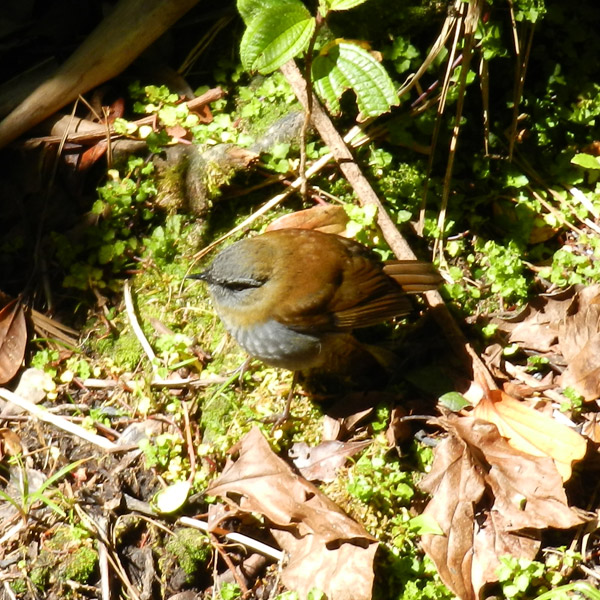
Here’s a bird on a plant. Don’t know what kind of bird or what kind of plant. Cool photo, tho.

• | • | • INTERMISSION OVER • | • | •

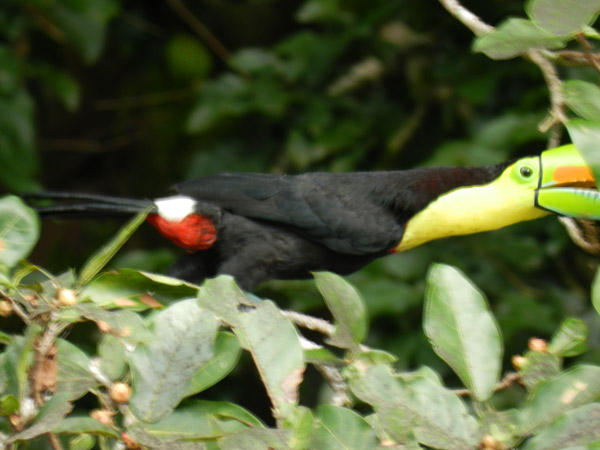
Toucans! Wow, toucans are awesome. I think they’re great. Our guide told us the most common question he gets about toucans is, “How do they hold up that heavy beak?” but the beak is made out of a similar material to our fingernails, so the beak is not that heavy. Also, according to our guide, the beaks are not that strong either, like if the bird bites down on your finger it doesn’t really hurt because they don’t have the jaw strength. Here are the first toucans we saw. They are called Keel-Billed Toucans, but I heard them referred to as Rainbow Toucans a couple of times.

When we were in Tortuguero* we stayed in little bungalows surrounded by massive quantities of trees, so beasties would be right above us all the time. There was a Chestnut-Mandibled Toucan hanging out in a tree maybe ten feet away from me one day. He was delightful.

And one day Susan caught this fellow on the far end of a branch. I adore the shot where he’s looking straight-on at us.

She also got a shot of the scariest-looking toucan ever, the Collared Aracari. I think the combination of the goat pupil with the serrated edge on the beak really amps up the creepiness factor.

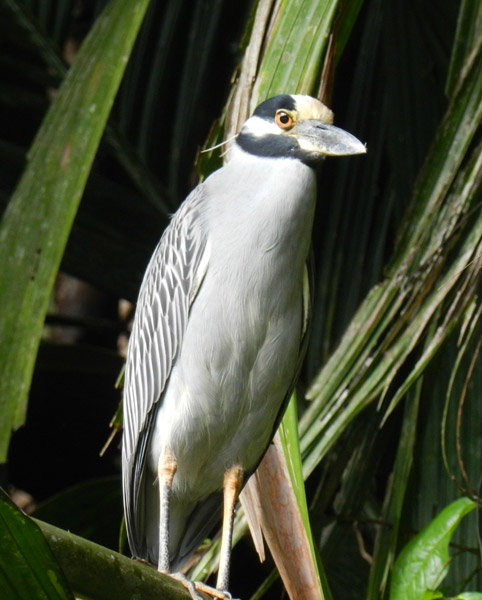
Herons! Herons and egrets are all over the place when you’re in the rainforest or wetlands. They stare into the water looking for shrimps or fishies, they have really evocative expressions because of that. Here’s a few examples.

“Why? Why am I here? When will I truly understand my purpose in life?” (Snowy Egret)

“I hate everyone.” (Little Blue Heron)

“I am very photogenic. And now I am leaving.” (Great Egret)

“You kids get off my lawn!” (Yellow Crowned Night Heron)

And, of course, “Hey lookit, a shrimp!” (Little Blue Heron again)

When we were in a crocodile reserve we saw a Bare-Throated Tiger Heron stalking up and down on the bank.

And we saw this guy. He is a heron of some kind. I couldn’t find him in the book. My friend B. figured what he is! He’s a green heron. Thank you, B.

Next entry I will continue with birds, and I may delve into some mammals. And talk about coffee. Good stuff.

* Tortuguero National Park is where a large quantity of the world’s population of green turtles come to lay eggs. Here’s an informative page on the park: http://www.wayfaring.info/2009/07/08/tortuguero-national-park/

Costa Rica 2012, Part 3.

Tuesday, February 14th, 2012

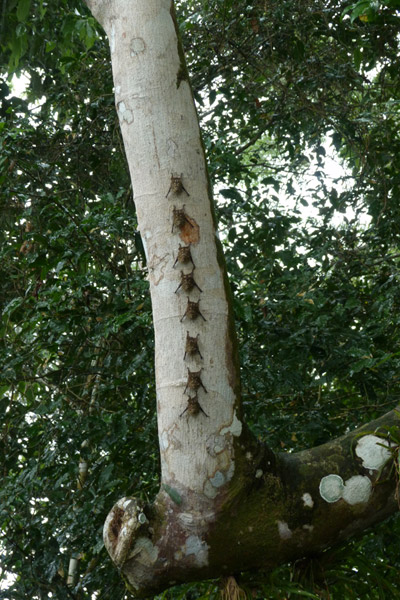
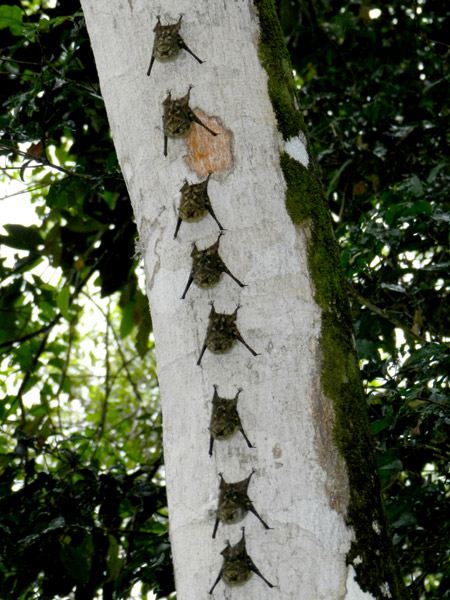
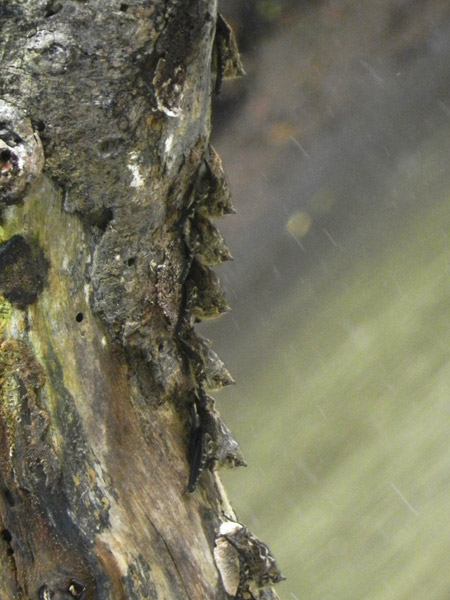
Someone asked me what was the cutest thing I saw in Costa Rica. Everyone assumes it was the sloths (I saw both the two-toed and the three-toed variety, more on those later) and they were fantastically cute, but it was not them. It was the bats. Specifically, what the bats were doing. Here is a row on bats on a tree, little bats about two inches tall, and they are hanging in a row because they are pretending to be a snake. I mean, seriously, how adorbs is that?

Occasionally they would wiggle in unison to look more snake-y and I would make a squee noise because, c’mon. We were on a boat in the rain (because in the rainforest -surprise!- it rains a lot) and we passed a cormorant on a branch which was lovely in itself, but then the guide pointed out there were bats doing their snake thing on the underside of the branch to avoid the rain. Awwww. Damp pointy-snooted bats being a snake. So cute.

Turns out, BTW, that is not the cutest bat thing in Costa Rica. I was reading my book, “The Wildlife of Costa Rica” and in the bat section there was this page.

Are you frickin’ kidding me?!? Puffy cottonball bats clustered under a leaf? I would have probably had a teenage-girl-seeing-Nsync-style-meltdown if I had seen those.

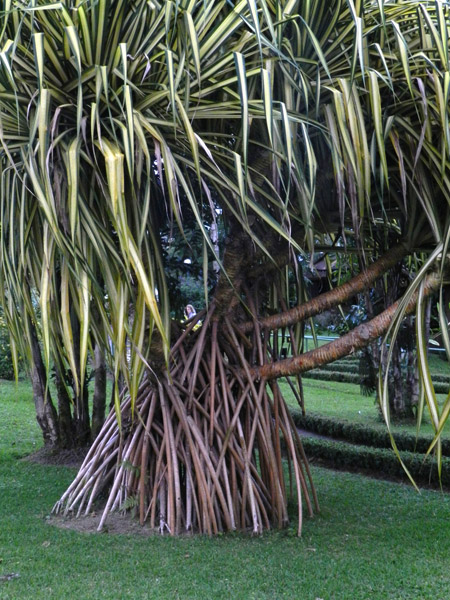
Let’s look at some trees. I saw a great variety of trees. While we were gliding around the rainforest we saw this tree with amazing roots, I think it was a Tea Mangrove Tree, but I could be wrong:

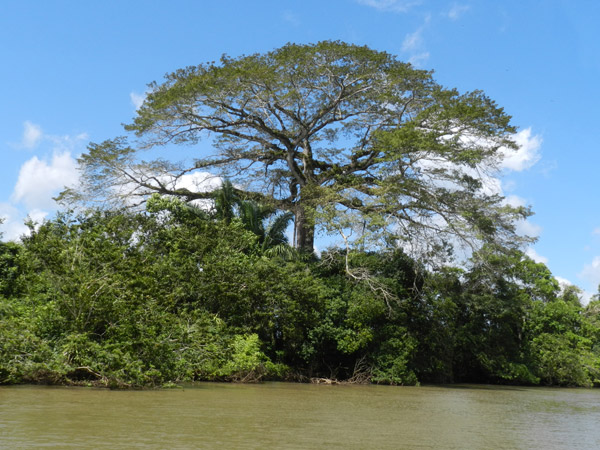
And there was this giant tree. Most of the trees aren’t nearly as big because a lot of the rainforest was felled for lumber before it was made into a protected national park, so it’s unusual to see gigantic umbrella-like trees.

This one looked like Snuffleupagus.

And this tree is called a Buttressed Tree. It is very large and I tripped over several of their roots throughout the journey. (Reiterating: very outdoorsy.)

Outside of one of the hotels we stayed in was this cool-looking palm tree.

And one day we saw a Costa Rican Bamboo Palm with its flowers/fruit in all three stages, which was neat. They start all curled up in that banana-looking thing, then they are flowers in that white fluffy cascade and they finally turn into the fruit.

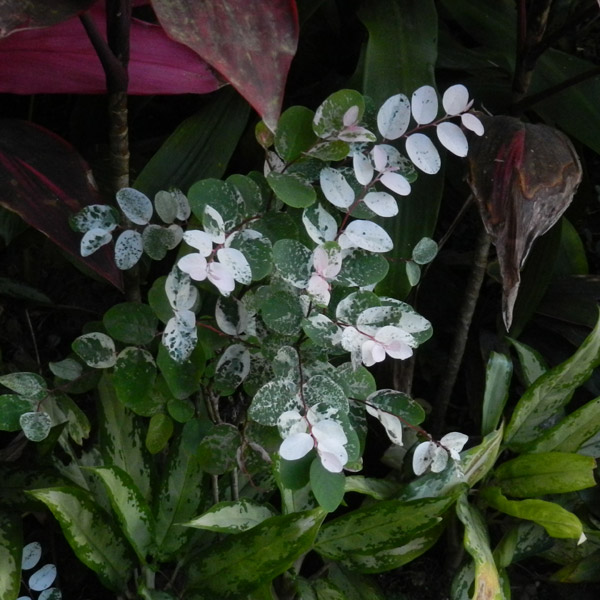
Finally (plant-wise) here are a bunch of awesome plants that I could not be bothered to learn the names of. This in no way negates their awesomeness, I just got tired.

Birds! Holy Moses, I saw so many birds. And many of them make a noise, often at the same time, which makes what we in the art world like to call “cacophony.” It was loud and amazing and if I lived there I would make a concerted effort to learn what bird makes what sound. Since we’ve already dipped our toes in Trogon water, here’s the other Trogon I saw, the Baird’s Trogon. Similar to the previous Trogon, this bird looks like it was dropped on its head as a wee birdlet and now is no longer “quite right.”

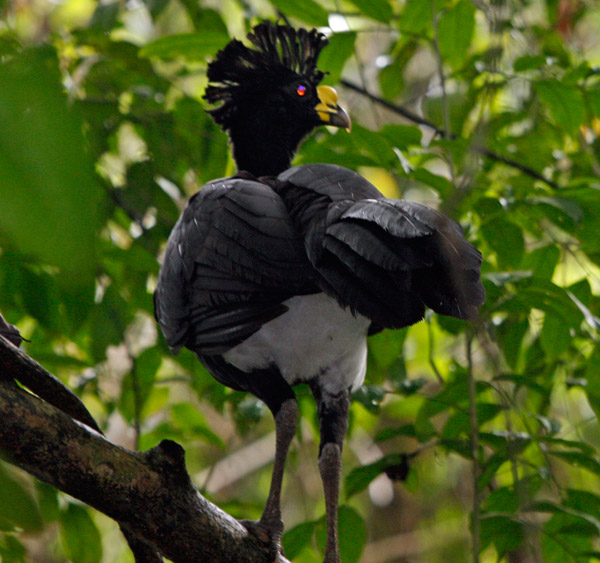
We saw an enormous turkey-like bird one day. It’s called the Great Curassow. This is a male. The best part about this bird is the clump of curly feathers on the top of its head. It looks like it’s rockin’ a big ole jheri-curled hairpoof. That, combined with it’s expression, makes it hysterically funny to see. Here’s a pic Susan took:

And here’s a better picture taken by my other co-traveler Lowell (thank you for the pictures, Lowell) where you can appreciate the silliness of this thing.

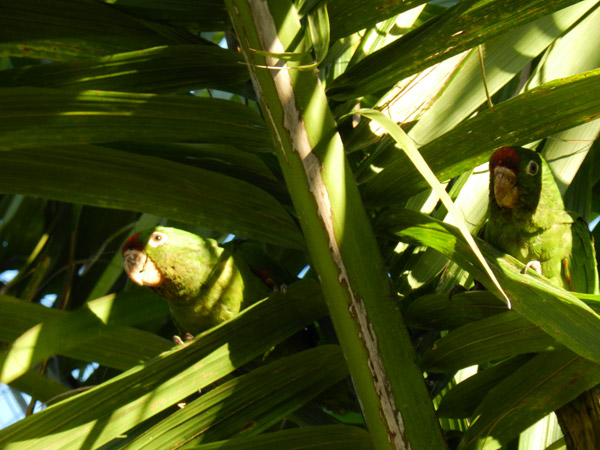
Our first day our guide told us that at 5:30 p.m. parakeets would come and nest in the palm trees outside the hotel. Sho’ nuff, they did do that with much screaming on their part. You get a couple hundred parakeets together that haven’t seen each other all day, they start shrieking all their daily activities at each other like crazy. “I PICKED TIMMY UP FROM SCHOOL!! OH, AND I WENT TO THE DMV AND RENEWED MY LICENSE!! THE LINE WAS SURPRISINGLY SHORT!! I BARELY HAD TO WAIT AT ALL!! etc.” Here are some yelling at me.

And I don’t want to appear paranoid, but it looks like these two are laughing at me, right? Not with me, at me.

And these ones are clearly holding a secret Masonic meeting or something.

Creepy birds, parakeets.

Next blog entry, more birds, all kinds. Also another extremely cute thing.

Costa Rica 2012, Part 2.

Sunday, February 12th, 2012

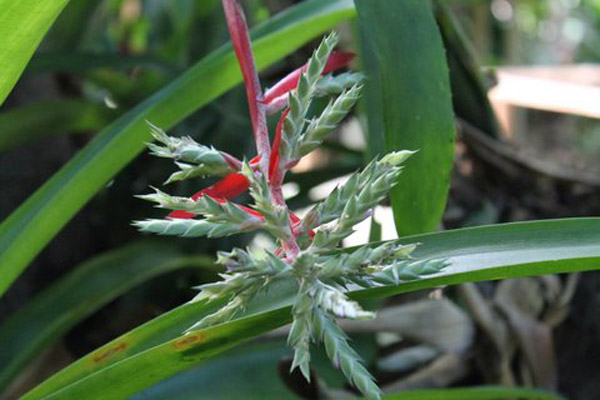
Bromeliads! Bromeliads are a type of plant. Here, I will let the Bromeliad Society International website explain them for you:

All bromeliads are composed of a spiral arrangement of leaves sometimes called a “rosette”. The bases of the leaves in the rosette may overlap tightly to form a water reservoir. This central cup also collects whatever leaf litter and insects happen to land in it.Ā  Tank bromeliads (as the water storing species are often called) rely less heavily on their roots for nourishment and are more often found as epiphytes. The roots of epiphytic species harden off after growing to form holdfasts as strong as wire that help attach the plant to its host. Even though bromeliads are commonly called parasitos in Spanish-speaking countries, these epiphytes do not take sustenance from their host but merely use it for support. All bromeliads share a common characteristic: tiny scales on their leaves called trichomes. These scales serve as a very efficient absorption system. In species found in desert regions where the air is hot and dry and the sun beats down relentlessly, these scales also help the plant to reduce water loss and shield the plants from the solar radiation. These plants are so covered with scales that they appear silvery-white and feel fuzzy.

The most well-known bromeliad is the pineapple and the most well-known epiphyte (air plant) is the orchid. Epiphytes will attach any place they land on. Here are some epiphytes on a power line.

And here are some bromeliads scattered about growing on a horizontal branch in the forest.

We went to pineapple plantation to learn about the wonderful world of pineapples and I was taught how to choose a good pineapple in the store. It is not by sniffing it or squeezing it or poking it at its base to check for softness or tugging on its leafy crown. A good pineapple has large “eyes” in the pattern, it is shaped nicely (not pear-shaped or uneven), and the bottom part is golden-colored. I also learned that the bottom half of the pineapple is sweeter and less stalky than the top part, so save the bottom half for people you really like (or yourself). Here is a shot of the pineapple plantation that grows amazing organic pineapples. It is owned by the Collins Street Bakery in Texas, famous for having the best fruit cake in the world (their claim, not mine – I’ve never tasted their fruit cake, so I cannot judge).

They also grow ornamental pineapples. Like these cuties:

And these that I christened “tiny pineys”.

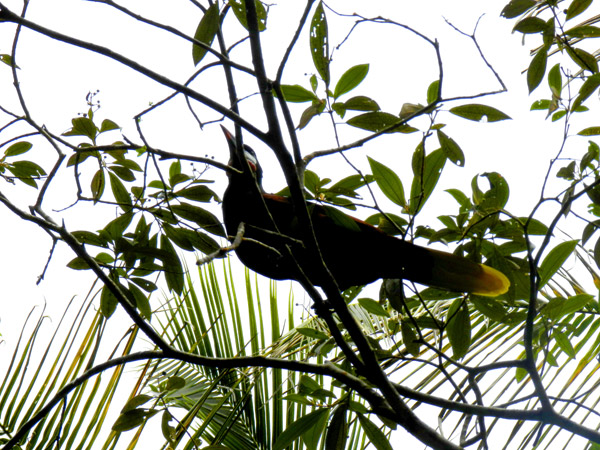
And now changing gears for a second: The Montezuma Oropendola! It’s a bird, not an ailment. A cool-looking bird, in fact.

What I loved about this bird was the amazing sound it made. It sounded like someone shaking a thick sheet of plastic. And apparently they are called “oropendola” because when they make the call, they will hang upside down from the branch for a second like a pendulum. I found a video on YouTube that kind of captures the sound and the motion. It’s way cooler in person, all tremulous and loud.

www.youtube.com/watch?v=-HjNZ1a0PTY

I could listen to that all day.

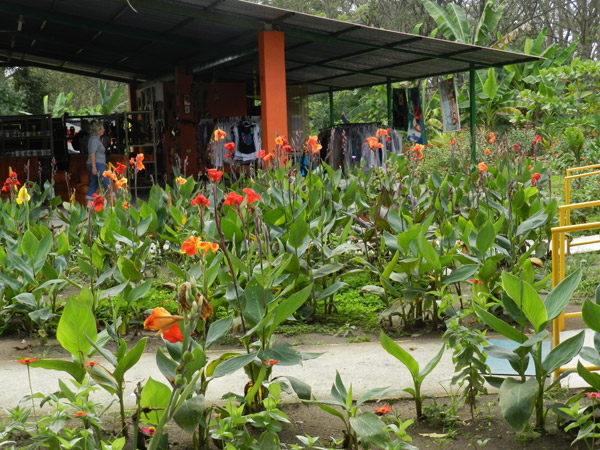
Check out this yard full of canna lilies being all flouncy and vibrant.

I like the way the seed pods look like unpeeled lychees.

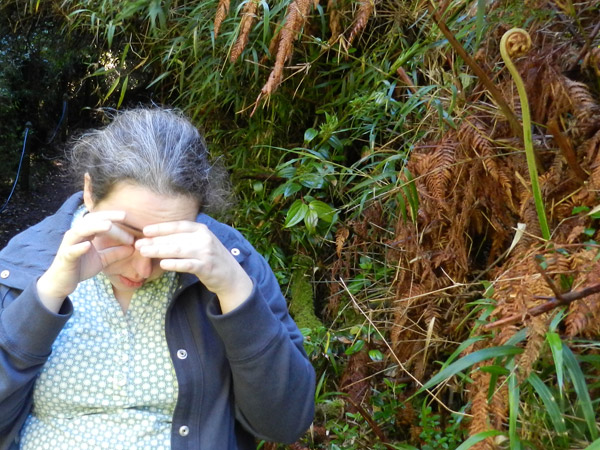
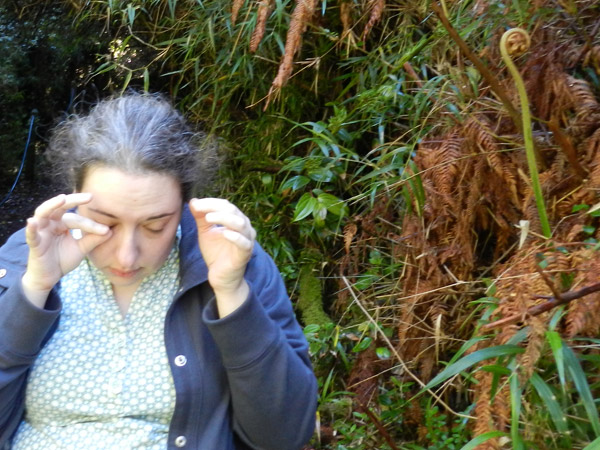
I spent a great deal of this trip taking (or attempting to take) pictures of ferns. I’ve always loved ferns, but the second I would get them into my house, they would become very sad and die. The first day we were in Costa Rica, we went to a volcano and Cricket insisted we go on a walk. In the rainforest. 6,000 above sea level. On a mountain. This did not go well for me. At one point I wrapped my arms around a moss-covered tree trunk and whispered, “I love you, tree. I hate my boyfriend. I hate him so much. I will live with you forever. Because I’m going to die here. Right now.” At one point Cricket tried to take my pulse but it was too fast for him to count. Periodically we would stop so I could catch my breath and stare daggers at Cricket and I noticed this lovely baby fern leaf all curled up. I said, “Hey, can you take a picture of me pointing to this?” Cricket went to take the shot just as some NATURE! flew up into my eye aaaaaaaahhh nature in my eye. So now we have two lovely pictures of a curled-up fern leaf and me making low moaning noises while trying to get what turned out to be a piece of leaf out from under my eyelid.

(I’m real outdoorsy.)

I learned a neat fact about ferns. We passed some fern farms and the wee fernlets were under large tents covered in black mesh fabric. That is because ferns grow on the forest floor where 60% of the sunlight is filtered out, so the black mesh is attempting to mimic that.

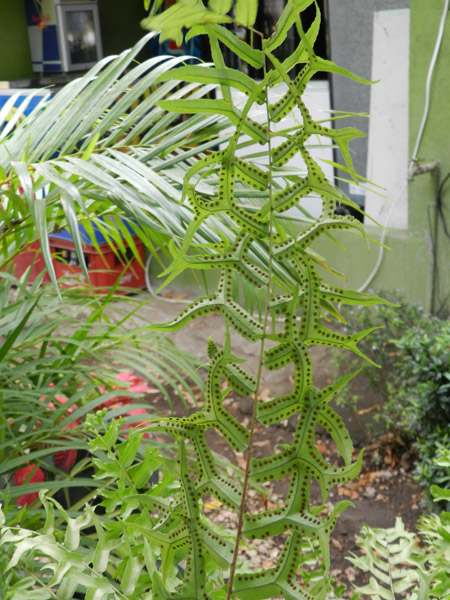
Here’s a fern I saw one day that had spores on the underside of its leaves.

Here are teeny-tiny ferns growing in the rainforest.

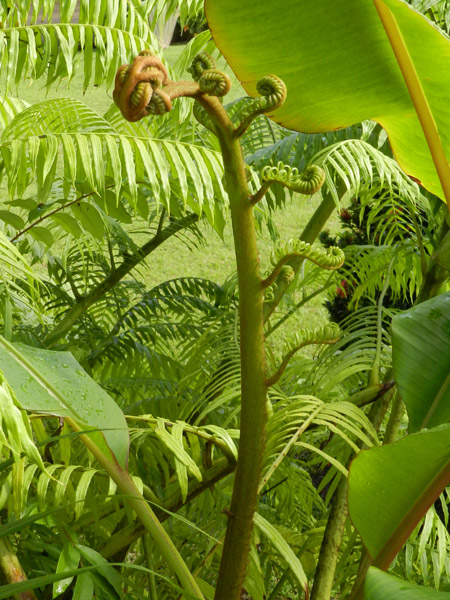
And here’s my favorite fern photo. FERN FIST.

Other plants: a stilt root tree.

A red ginger flower. I don’t know if it tastes like ginger, but that’s what it’s called. It’s used a lot in fancy-pants flower arrangements.

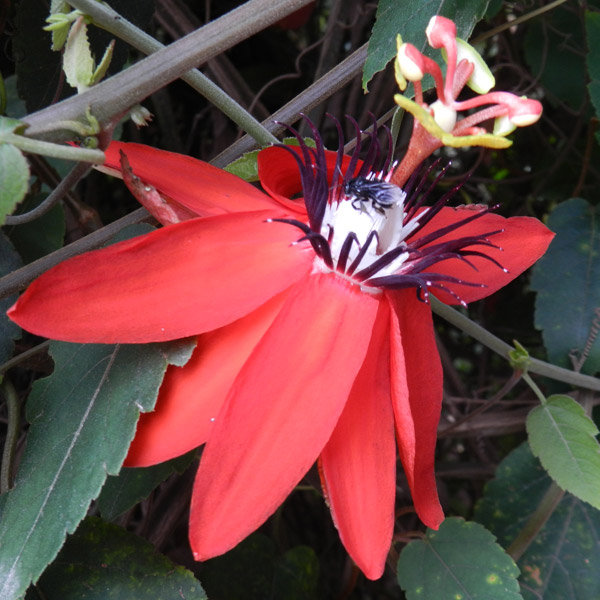
And a passion flower. I’ve always known passion flowers to look like this:

But did not know they also looked like the one I saw, this one:

Birds are next. A lotta birds. Very exciting.

Costa Rica 2012, Part 1 (officially).

Friday, February 10th, 2012

My books arrived! Now my avian photos are labeled correctly, no longer things like “teeny-bird.jpg’ or “bird-that-makes-cool-noise.jpg”. Seriously, has anyone noticed how freakin’ weird bird names are? I looked through this book and now I realize I have to go back to Costa Rica to see the Marbled Godwit, or the Lesser Yellowlegs, or the Great Potoo. I did see the greatest bird ever, not for its appearance (it’s a nice-enough-looking fella), but for its name – The Violaceous Trogon. Seriously. Here’s a photo of a Violaceous Trogon:

And here’s what something called a Violaceous Trogon should look like:

(This picture is taken from a website called ZeroFriends, they have lots of great prints, go check ’em out.)

A Violaceous Trogon should be laying waste to the cities of man, not sitting benignly in a tree looking like it got hit the back of the head with a brick. But I’m not an ornithologist, so I can’t complain about the naming system.

First of all, I would like to thank Susan for her photographs. Susan is this really cool dame from Kansas City who was with me on the trip and took about fifty of the photos you’re going to see here. A delightful and talented lady, she has a blog she updates periodically and it’s got some great pictures of her paintings and her glasswork and her fiber (or, if you’re pretentious, “fibre”) works. We bonded over our shared craftiness. And if you like paintings of dogs, she’s your lady. I love her dog paintings. Thank you, Susan. You da bomb. I am also using three photos from another co-traveller called Ami, so thank you to you as well, Ami.

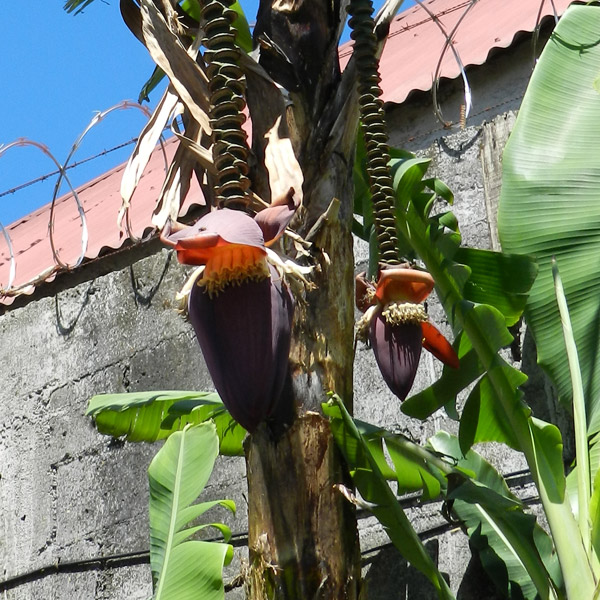
The first thing I noticed when I got off the plane in Costa Rica was the plant life. As I said, everything is huge and insanely bright. And more often than not, the plants look vulgar, like the engorged sexy-time parts of mammals. I found myself periodically holding my purse in front of various flowers, attempting to cover them up. I might have hissed, “You’re just embarrassing yourself,” at some of them. Specifically, the bananas gave me the most problems. At the bottom of the hands is a flower-thing that just screams, “Hey, lady, you lost? Want a ride?”

Unrelated note: Has anyone noticed how popular sloths have become of late? There are whole websites devoted to the awesomeness of sloths. And then today on Buzzfeed, I saw this:

http://www.buzzfeed.com/animals/sloths-are-so-hot-right-now-5685

They say it’s because of the Kristen Bell sloth-freak-out video that’s making the rounds, but I’d like to believe the entire internet is in a tizzy over sloths because of my recent trip. And I will continue to believe that. Please do not inform me of the truth. Thanks.

Back to plants: Heliconia! These are all in the Bird of Paradise family. They are, of course, are bigger and weirder than the regular Bird of Paradise. And the last one is hairy. I wanted to pet it, but I was afraid it would growl and bite my hand.

Concerning my houseplant comment of the previous entry, I had never given any real thought to where those plants originally come from. Imagine my surprise when I saw a poinsettia in someone’s garden, just hanging out. It was like seeing Santa Claus in the driveway of his house picking up the newspaper in a bathrobe. “Oh, you…live here. This is your home. Okay.”

The houses in Costa Rica are very simple and basic. Almost all of them are small, boxy ranch-style houses built out of cement blocks with corrugated metal roofs. I suppose if you live in vegetal bliss surrounded by glittering hummingbirds zipping to and fro, your house need not be particularly fancy. I got jealous of these humble dwellings. I hope the locals appreciate walking outside every morning into gorgeous weather and seeing something awesome like a monkey or an iguana. If I go outside my apartment, most likely I will see clouds and neighbor with a dog on a leash relieving itself. (The dog is relieving itself, not the owner. Watching the other thing would not be awesome, but it certainly would be something.)

Speaking of the weather, there’s a lot of NASA stuff all over Costa Rica. I saw them with a big tent at the airport, and then various other places after that. The reason is that large chunks of Costa Rica have the most stable weather patterns in the world. Every day: sunny. Nice. Little bit of wind, nothing drastic. So NASA does a great deal of testing down there. I thought that was extremely neat.

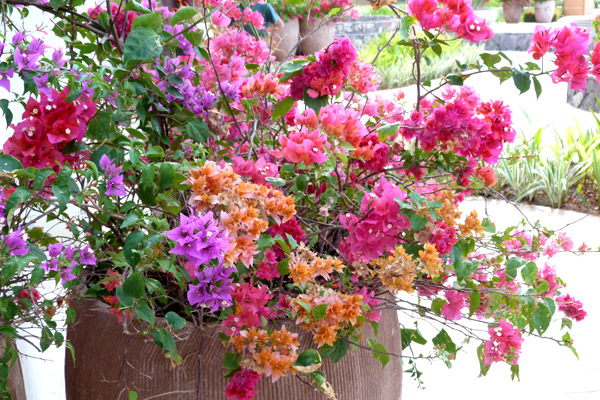
Not all of the plants were unfamiliar to me. I’ve seen bougainvillea before, just never this lush and in such a variety of colors.

And I’ve seen hibiscus flowers before too, but not double-petalled pinwheel duo-toned ones.

Anyone ever see Little Shop of Horrors? Well, Audrey II is real, and I have seen her.

Another gigantor leafy thing with a simply unacceptable flowering bit. C’mon, there are kids here, man.

Some of the plants I wanted to shove a clipping of into my bag and take home with me. Like this Powderpuff.

Or this Queen’s Wreath.

Next entry: more plants and some birds and other cool stuff.

Addendum: I have been informed by one of my co-travelers that the bird in the photo is not a Violaceous Trogon, but a Black-Headed Trogon. They look very similar. I’m guessing none of you give a crap about Trogons, so I’m not changing the blog entry.

I have returned from Costa Rica. Many photos await.

Tuesday, February 7th, 2012

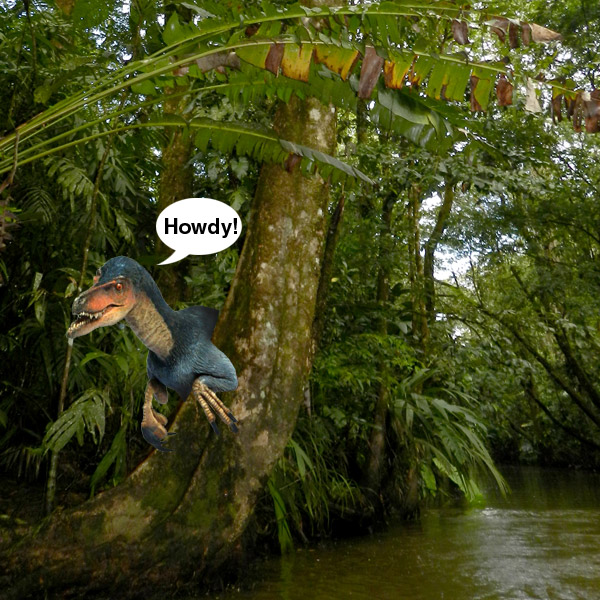
I have sorted through my 1,000+ photos and picked out the juiciest and tenderest morsels but I can’t post them yet because the books haven’t arrived from Amazon.com. The books I ordered are “The Birds of Costa Rica”, “The Wildlife of Costa Rica” and “The Plants of Costa Rica.” I need them because half of the time I had no idea what I was taking a photograph of. Specifically birds. Hoo boy, are there a lot of birds in Costa Rica. Periodically people would say the name of this bird or that one, but after a while it all sounded like, “That is a Yellow-Necked Deep-Vein Thrombosis, very rare in these parts,” so until the books come I have my photos labeled things like Plant1.jpg and Bird3.jpg. I can give a rough overview of the experience, though. This was my first trip to an America other than North America, so I was enthralled by everything I saw. I had never been to the rainforest either (the southern part of Africa is all savannah) so that was exciting as well. Lemme tell you about the rainforest – it looks really prehistoric. I kept waiting for a velociraptor to show up.

The name is super-accurate. It’s wet all the time. The rainforest gets something like eighteen feet of rain a year. If you stand still for five minutes, a fungus will take root on you, guaranteed. The picture below, they called this a “light shower”. By the end of the trip all my clothes smelled like I had washed them, immediately shoved them soggified into a non-breathable garbage bag and then chucked it into a corner of the basement for a month – even the clean clothes. I was charmed by the optimism of the local villagers, hanging their laundry out to “dry”.

You know all your house plants? All those sweet little leafy friends of yours? Well, they’re from the rainforest and they’re big. In their natural habitat they are enormous and they look like they are going to eat you. Here, look, some leaves with a hand for scale:

And I want to apologize to the artists of Central America. I never really liked the artwork from there because I thought it was a little garish, a little overly bright. Seriously, you don’t have to use the colors straight out of the tube, mix a little brown in there, fer cryin’ out loud. Now, having been there, I admit I was wrong. They were painting accurately because everything really is like that. A lot of RED and YELLOW and BLUE, so bright it buzzes in your eyes. When I correctly name my plant ‘n’ bird photos, you shall see for yourself.

This trip can be summed up by how many times I said the phrase, “Holy crap, look at the (fill in the blank)!!!” Everything was so big or so close or so much more than I had anticipated. I am already planning my next trip there (turtle-hatching season happens in July) and I’ve only been back for three days. I highly recommend going to Costa Rica. It’s only a five-hour flight, it’s relatively inexpensive, and their number-one industry is tourism (number two, technology; numbers three, four and five, coffee, bananas and pineapples) so they tend to know what they’re doing. If you have any questions about where I went or stayed, feel free to email me and I’ll hook you up with all the details.

Costa Rica.

Wednesday, January 25th, 2012

I am leaving for Costa Rica in two days for a nine-day vacation, and one of the places I’m going is a butterfly farm where hopefully this will happen to me:

I’m sure I will have a million photos when I return. Start getting excited about that.

Addendum: I’m back. That did not happen to me. Still a phenomenal trip, though.

Burning Man Costume 1.

Monday, January 23rd, 2012

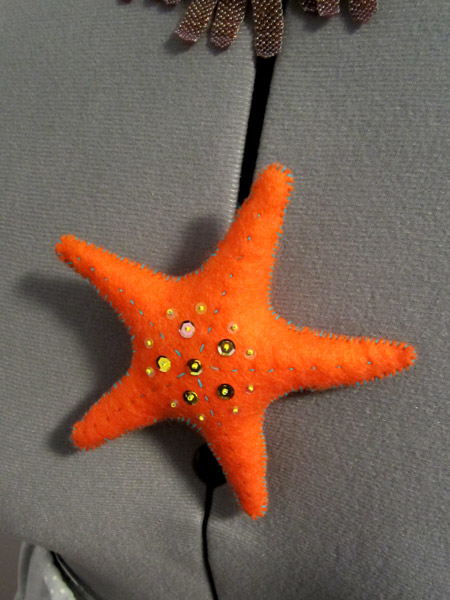
Even though I studied some costume design in college, I always have problems when I make a costume. One specific problem, actually. I keep forgetting that it is not important that the costume look good up close, it has to have impact from twenty or thirty feet away. I get so obsessed with minutiae that I end up fussing over these tiny little bits that from a distance don’t look like anything. I promised myself I would attempt to rectify this error, so every time I design an element for this Burning Man costume I like I pat myself on the back, good job Jess, and then I immediately make the thing twice as large. I try to make it so big I feel ridiculous about wearing it. Then I know I’m in the right area. So far I have made a kelp necklace, 56 barnacles and three orange seastars.

I made the kelp necklace before I had my “bigger, simpler, more garish” epiphany, so it is small, delicate and softly colored. But I had beaded it already, so I’m incorporating it nonetheless.

The top part is a large tube so that if it’s possible I can slide a thin strip of LEDs into it and they will shine through the glass seed beads. I’m creating a lot of semi-translucent and / or pierced and / or hollow elements in the hopes that some of them can be wired for light. I’m not expecting all of them to be, but I don’t know which ones will be feasible and which won’t, so I’m making a bunch of them lighting-friendly.

Seastars. Big, simple, orange, with reflective sequins. I’m making two more seastars in pink, and they will be slightly larger and have more reflective sequins.

I’ve been doing quite a bit of ocean research, and the thing I have learned about the shores and most coral reefs (which is where I’m basing my costume on) is that it is not very colorful. The rocks and the sands and the kelp and the seaweed and the coral is predominantly four colors: medium brown, bottle-green with some yellow in it, muted grape-purple, and sickly dusty pink. Mostly the brown and the green with a smidge of the purple and the pink. A jazzy yellow fish or a bright blue anemone pop up all over, but the majority is rather bleh. So the base of my costume will be brownish-greenish with brightly-colored characters scattered about. And I won’t be making any fish. I will have crabs, sea slugs, sea worms, the above-mentioned seastars, snails, anemones, urchins, clams maybe, and an enormous jelly. The closest thing I’m going to have to a fish is putting scales on my corset. It’s just everyone when they think of ocean think of fish, and there are so many other under-appreciated oceanic beasties that I want to highlight.

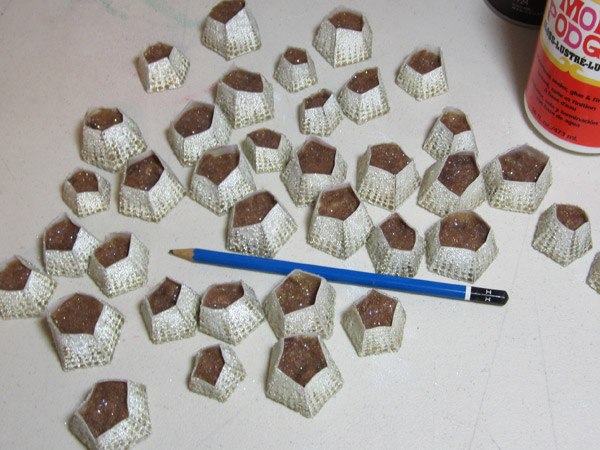
Speaking of one of those beasties, here are my barnacles. I put a pencil into the photo to give you a sense of scale.

I’ll keep updating as I create more pieces of this exciting ensemble.

Unacceptable.

Friday, January 20th, 2012

The Moomins likes African art, which is fine. She’s from Africa and she’s entitled to like whatever she wants. (I do not, by the way, tend towards African art in general. It’s not persnickety and perfection-oriented enough for me. I lean more towards Asian art, specifically Japanese. But I digress.) Normally I tolerate the fact that her house is filled with odd figurines that look at me funny in the night and weird bowls with jacked-up-looking animals painted on them. However, on her last trip she returned with a sculpture that is not okay. She can have whatever wacky art she wants but this is just gross and my father and I are perpetually creeped out by it. And OF COURSE she insists on it being displayed right above the television where it’s in your face and you cannot escape its horror. Let me clue you in. It’s a clay sculpture, about ten inches tall of a goat standing upright like a man. A goat whose front is covered with leopard-print boobs that birds are drinking from. The feet are pig snouts and birds are eating from them as well. You with me so far?

That’s all fine, sort of. Until you turn the sculpture around and WHAT THE HELL IS GOING ON HERE OH MY GOD GET IT AWAY FROM ME.

Why? Why, Mom? At one point she attempted to explain how it represents the artist’s rage at his treatment, blah blah blah, but all I could think of was a bunch of birds chowing down on the poop coming out of a goat’s ass and I couldn’t hear anything else she said. I would simply break it “unintentionally” but it’s expensive and The Moomins would be so sad, I can’t bring myself to do it. Now my father and I are stuck watching TV with this atrocity grinning down on us. But The Moomins is happy, so I guess that’s all that matters. And I don’t live there. That helps.
10/17/2013 Addendum: She broke it! She was cleaning it and it broke! It’s an early Christmas miracle. I’m so happy.