Archive for the ‘Random Art Bloggery’ Category

Russia’s vice-like hold on the apex of crafting will crumble at my feet.

Wednesday, January 17th, 2018

So you may or may not know that I have a personal ongoing feud with the entire former Soviet Union because every time I am feeling good about my artistic talents some Slavic person pops up on my Pinterest and destroys my self-esteem with their superior skills. Every time. Like clockwork. I’ve mentioned it here:

https://design-newyork.com.fwtrading.x10host.com/wp/2013/10/08/two-artists-that-are-magnificent-and-humbling/

And here:

https://design-newyork.com.fwtrading.x10host.com/wp/2016/01/23/two-artists-that-might-make-me-not-scared-of-dolls-finally/

And here:

https://design-newyork.com.fwtrading.x10host.com/wp/2016/08/30/moooooooom-the-russians-are-being-better-at-crafts-again/

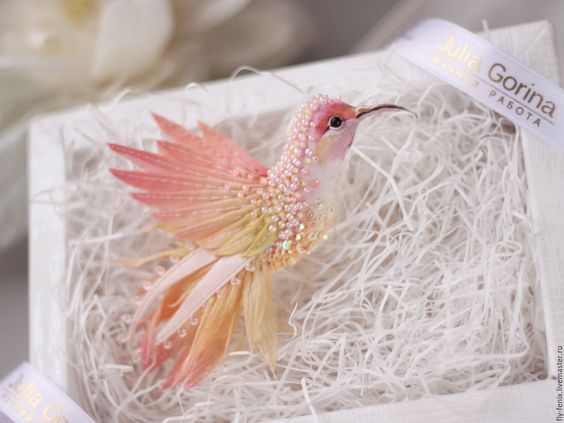
While we’re here, let’s add Julia Gorina to the list:

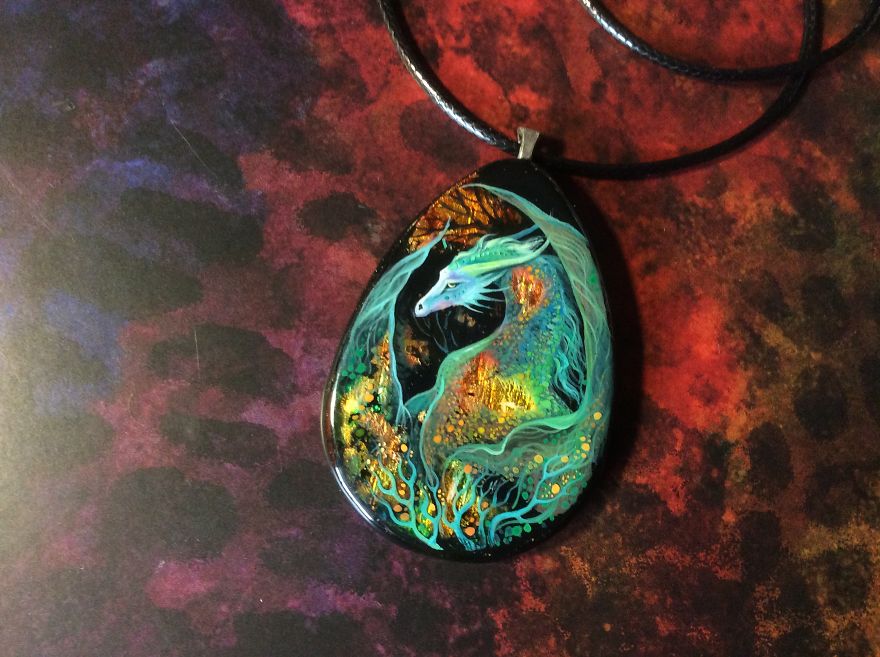
And Tatiana Verkhovskaya:

It never ends. But today is a new day. Today is the day I begin my climb to my rightful place as The Best At Crafts. I’ll take you through my journey.

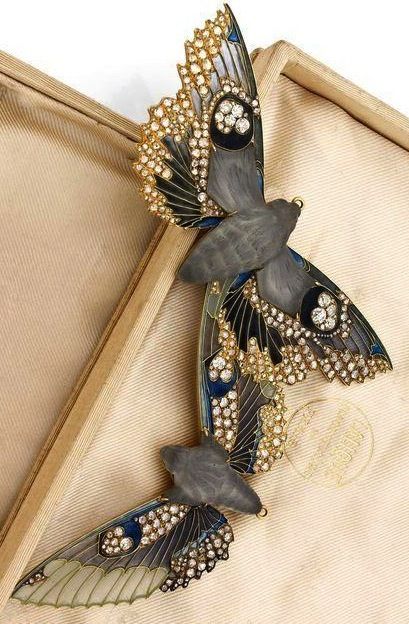
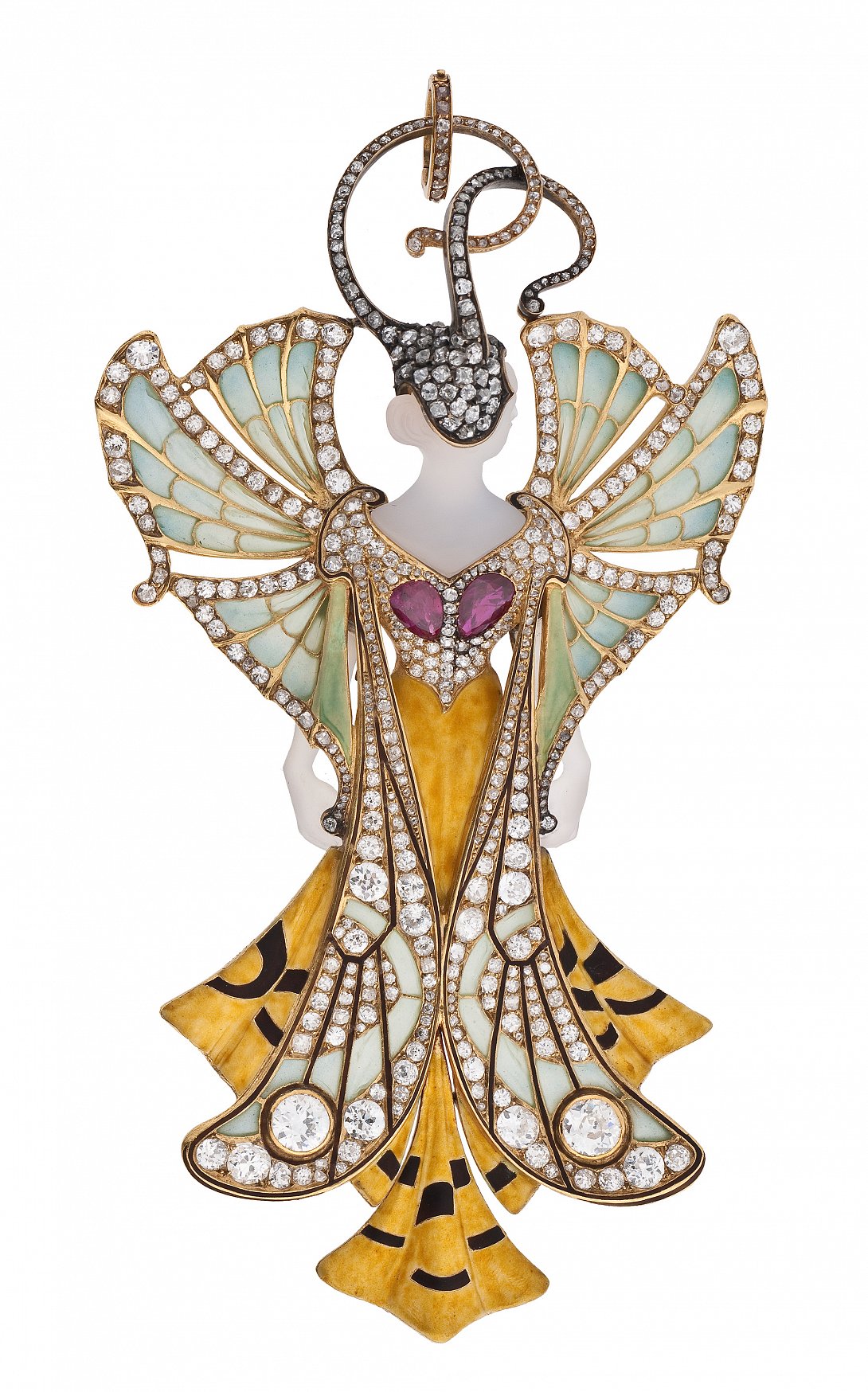
I like jewelry. I like early 1900s fancy jewelry with enamel and plique a jour (enamel with no back, kind of like tiny stained glass) and diamonds and gold. Unfortunately I do not have the kind of money to buy all the things I want. So I’ve decided to figure out how to make it myself in far less expensive mediums like wire and resin and crystals. I made a folder of inspirational images to draw ideas from.


I started with this one:

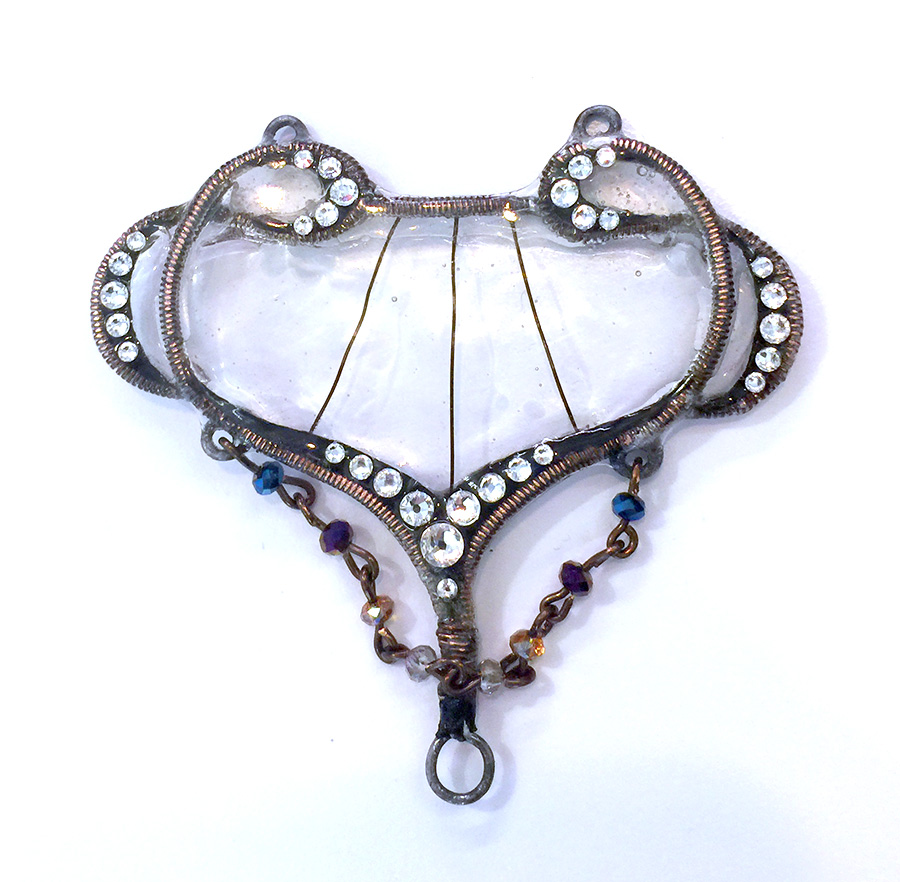
I wanted a really simple shape with thicker and thinner parts where the diamond sizes are graded and the diamonds are on a dark background like tarnished silver. I only used stuff I already had in my apartment, so I wrapped some gold wire in some brown wire and soldered loops so it could hang and made sure all the shapes were closed because I intended to dip the shape into that plastic stuff that Sakae uses for her kanzashi.

I learned oh, oh so much during this process. Like if the wire is made of aluminum it does not want to be soldered. And if you have a big open space in the middle of your piece the plastic dip material will not go across it, you need little struts to break up the space. AND why people don’t have thick wires at in their plastic dip pieces is because of The Glop. More on that later. But I got it to a decent place. I wired, then I soldered, then I dipped, then I failed, then I picked off all the plastic, then I did it again, then I failed again, then I finally got it right, then I covered it in a thin layer of UV resin, then I painted delicate black calligraphic lines on the thicker edges, then I adhered graded flat-back crystals along the black paint. The final product looks like this.

With my hand for scale.

Here is The Glop situation I was describing.

Okay. Good start. Things I will do in the future:

  • Use raw copper wire with copper solder so it adheres more easily and the solder isn’t as noticeable (the solder I used was the standard silver-colored one and it’s REAL noticeable)
  • Spray it with a water / baking soda mixture to make it brown
  • If the “windows” are small I will use thinner wire to avoid The Glop
  • Try UV gel topcoat instead of UV resin because the resin is thick, prone to bubbles and has a yellowish cast
  • The black acrylic paint worked fine, that’s staying
  • Using UV resin with a paintbrush to attach the crystals also worked fine, that’s staying too

I’m psyched about where this is heading. I feel lots of growth and potential in this. Soon all of Siberia will be mine for the taking, craft-wise. Stay tuned for more on this as it happens.

Why graphic design is so, so very important.

Tuesday, January 2nd, 2018

I was watching the Rose Bowl the other day (not because I wanted to but because my employee is from Georgia and I was trying to be supportive) and I noticed something interesting. Did anyone look at the playoff semifinal logo? Anyone?

Because to me it looked like something else, something commonly expressed using parentheses in that way.

The best part is in researching “parentheses vaginas” I found this link. I am not alone in this thinking.

http://mgoblog.com/mgoboard/college-football-playoff-logo-chosen

Please, if you’re designing an important logo or chart or website or presentation of any kind, I beg of you, consult your nearest designer to avoid catastrophes like this:

The bounty of the Internet is endless.

Monday, December 25th, 2017

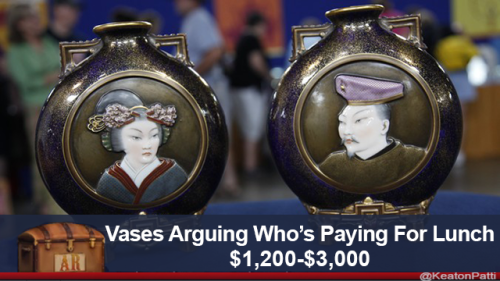
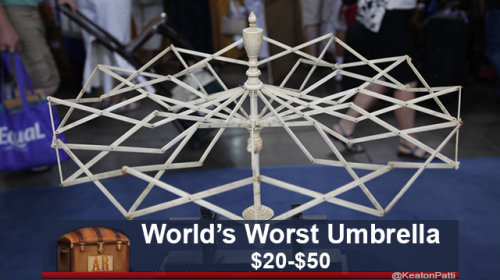
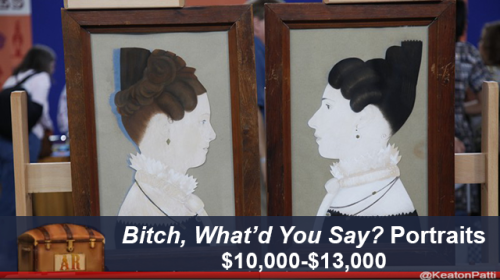
1. There’s a guy named Keaton Patti who loves Photoshop. He fixes screengrabs from the PBS program Antiques Roadshow and makes them truthful and real and I certainly appreciate all his hard work.
3c4 ab32932567261eb8e690714db50e19a5 f14 tumblr_oknk8lYN4E1sug43ho1_500 tumblr_ol873tKE4I1sug43ho1_500 tumblr_olh7ncfxJq1sug43ho1_500 tumblr_olhvvrn1Su1sug43ho1_500 tumblr_olizq1lPar1sug43ho1_500 tumblr_oluiz1q6H01sug43ho1_500 tumblr_olzr4o2Wwd1sug43ho1_500 tumblr_omsdegEWRv1sug43ho1_500 tumblr_on0oqq1XBE1sug43ho1_500 tumblr_on2pf8i2Cj1sug43ho1_500 tumblr_on4enhVnCC1sug43ho1_500 tumblr_on6b8q7Tsf1sug43ho1_500 tumblr_on14qrkqEg1sug43ho1_500 tumblr_onc02xCNQ81sug43ho1_500 tumblr_onjbp6pUpe1sug43ho1_500 tumblr_onjfjjieqZ1sug43ho1_500 tumblr_onnew05MqG1sug43ho1_500 tumblr_onnsveoViq1sug43ho1_500 tumblr_onsn2e0FaU1sug43ho1_500 tumblr_onusrfOL3C1sug43ho1_500

He has more of this and other stuff on his Tumblr.


2. Have you heard “Sweet Dreams” played on a collected of floppy disk readers? No? Well, I can fix that. (Thanks for introducing this to me, B.)

https://www.youtube.com/watch?v=oGfkPCZYfFw


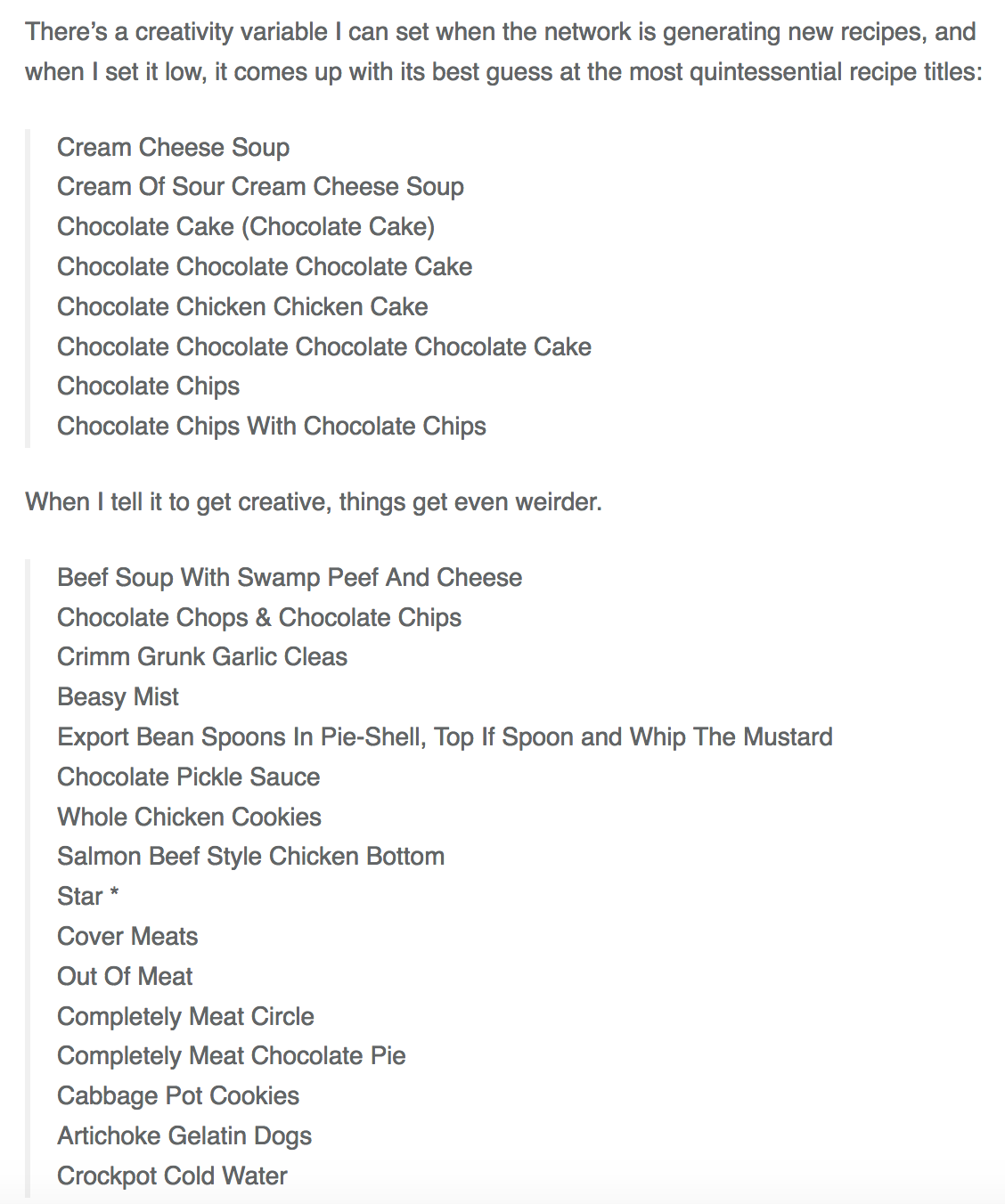
3. This is self-explanatory and I start ugly-laughing every time I read it.

17630058_1358297977549653_2443569579794525705_n Screen Shot 2017-04-04 at 12.12.52 PM


4. I could watch this video all day.

http://www.thisiscolossal.com/2017/04/blooming-kinetic-sculptures-built-with-wire-by-casey-curran/


5. There’s a page on Reddit called Ambien thoughts. People go there after taking the popular sleeping pill and write down their thoughts. I find it HIGH-larious (see what I did there?). Some of the comments are fine and normal:

And then there’s all the rest of them. Hoo boy. Don’t do drugs, kids.


6. I love calligraphy. I love bugs and fruit and plants. Ergo, this is magnificent. I mean, those cherries. <3 <3 <3

http://publicdomainreview.org/collections/the-model-book-of-calligraphy-1561-1596/


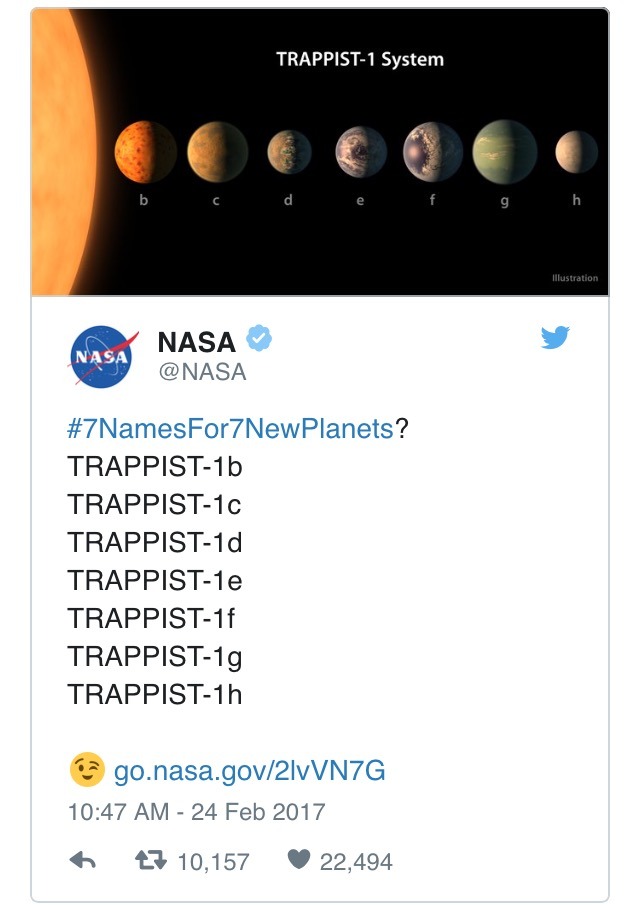
7. And finally people, who apparently never freakin’ learn, made a poll so The Public could name seven new planets. The Public responded accordingly.

Additional item that reinforces my point that you should never let The Internet name anything ever:


Gifts for the holidays.

Thursday, December 7th, 2017

It’s that time of year again, nearing the holiday season, but I wanted to share some handmade options for gift-giving that could be cherished long after the festivities. I’ve discovered that selecting something truly cherished by the recipient, particularly if it’s handcrafted, makes the idea of receiving it even after December quite appealing. Consider, for instance, personalized gift hampers brisbane filled with carefully curated items tailored to their tastes. Here are some of my stores to support.

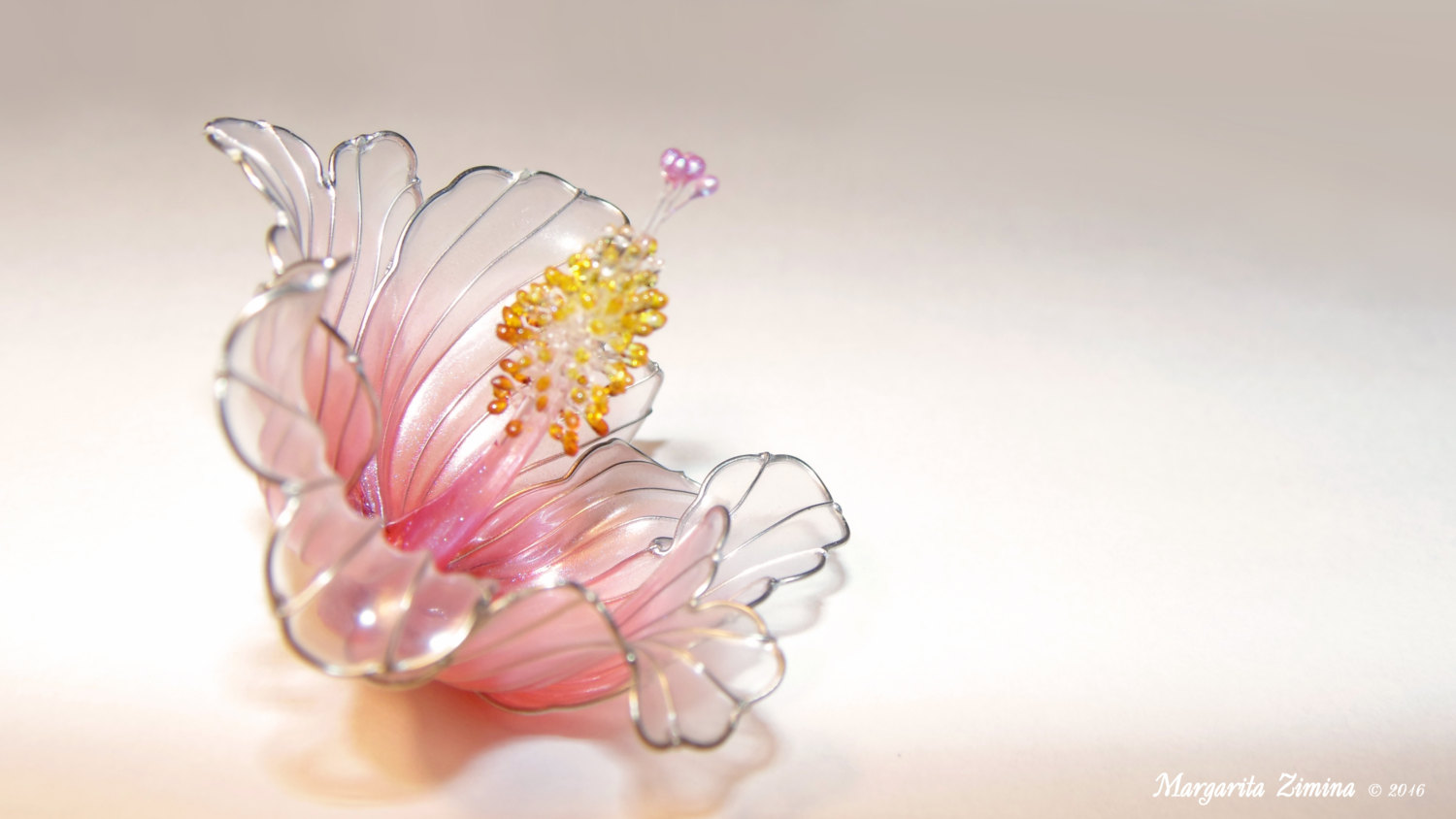
1. Margarita Zimina. Margarita does dipped flowers in the style of the famous kanzashi designer Sakae. While it is straight-up impossible to buy Sakae’s work you can actually get Margarita’s work. I know that because I own two of her pieces and they are stunning. She’s lovely to communicate with and her pieces are incredibly beautiful in person. Big recommend from me.


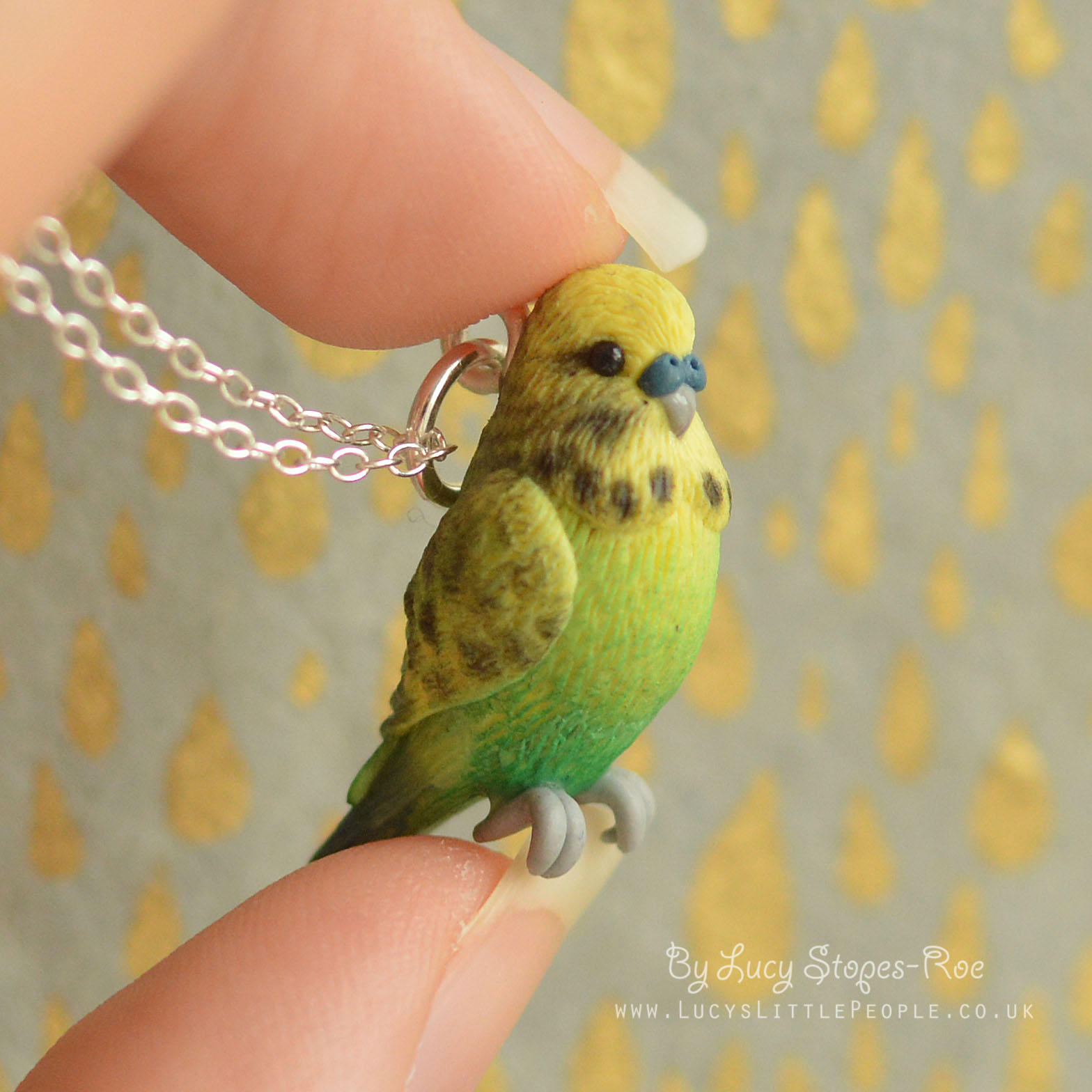
2. LucysLittlePeople. Lucy makes tiny polymer charms of birds or your pet (if you send her a picture) and they are super-accurate and give me cuddly feelings in my heart. No surprise I want that pigeon. Honestly though, I would like any of her work, it’s so sweet.


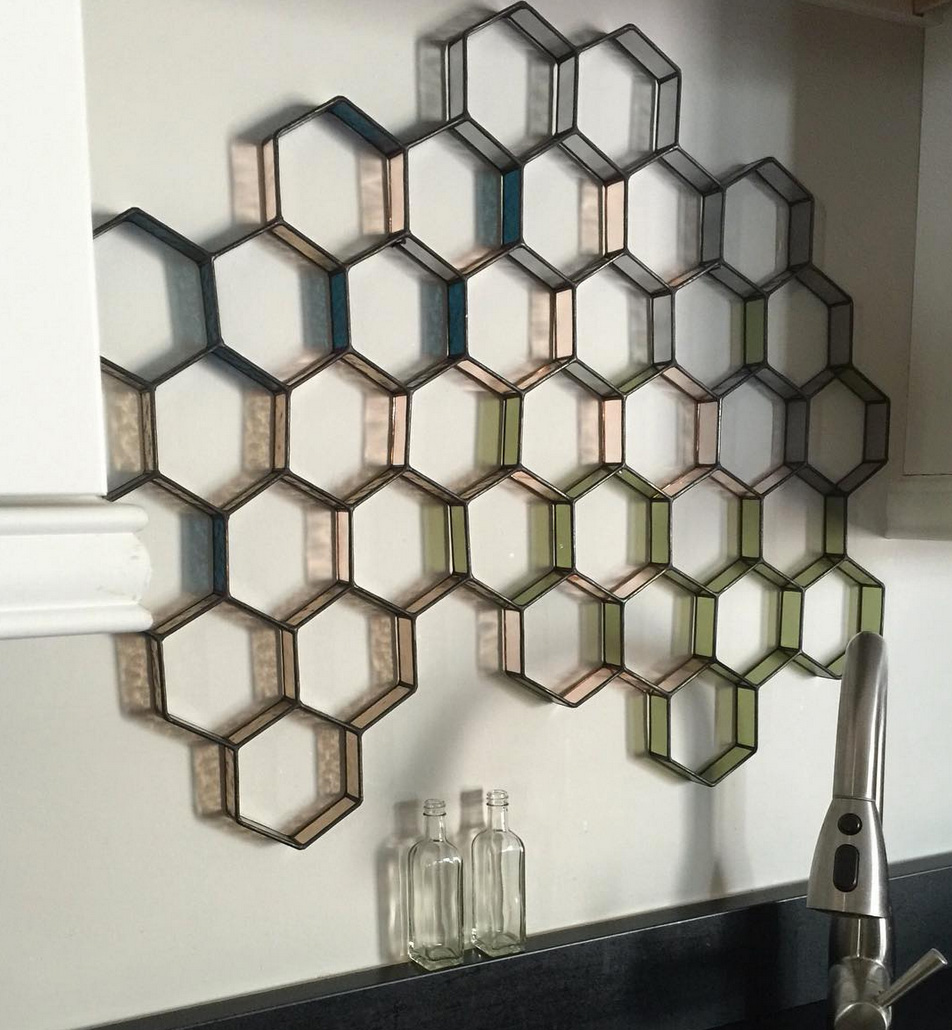
3.  Bespoke Glass Tile. Lesley Green does predominantly geometric shapes (which are precise as hell, mad props to her, that is hard) but she also makes some organic items like the cactii. I could stare at her work all day as the sun moves across the sky. I love the layering and the use of three-dimensional space.

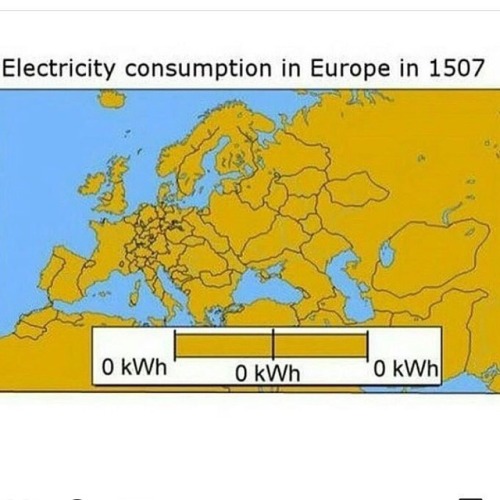
Y’all need some charts. Allow me to supply them for you.

Tuesday, November 28th, 2017


And The Most Useless Chart of All Time.

It’s an animal post!

Saturday, November 25th, 2017

1. A woman put a camera near her bird feeder and the pictures she gets are straight-up gold. Her name is Lisa M. Ca (but it should be Lisa M. CAW, amirite everyone? Hello? Anyone?). Here is a picture of her camera setup.


I think my favorites are the doves because I’m a sucker for doves (PigeonLover 4 Lyfe) but the, and I quote, “Grackle with a Snackle” is pretty great as well.

I highly recommend going to her blog and looking at all the bird pics. They drop your blood pressure really fast. So calming.

https://ostdrossel.tumblr.com/


2. A picture of alligators (or possibly crocodiles) in a river. With reflective eyes. I love the deep blue water and the orange retinas. Photo by David Moynahan.


3. I think we should return to this form of reproduction because I am 100% not feeling the “Imma rip my way out of you” technique we as humans are using now. Methinks time for an upgrade.


4. What my day would be like in Toyko: Wake up. Put on oven mitt. Go to squirrel park. Hang out with squirrels. Go home at night. Repeat every day following.

https://kotaku.com/inside-japanese-squirrel-gardens-yes-squirrel-gardens-1465052392


5. And while this isn’t technically an animal it is still nature-related so I’m putting it here. It’s a chandelier made with living algae. It helps clean the air.

Here’s an article about it. https://www.curbed.com/2017/9/27/16372820/air-purifying-plants-algae-chandelier-julian-melchiorri

Guatemala, Post 5.

Friday, November 17th, 2017

More Antigua! But first, other things.

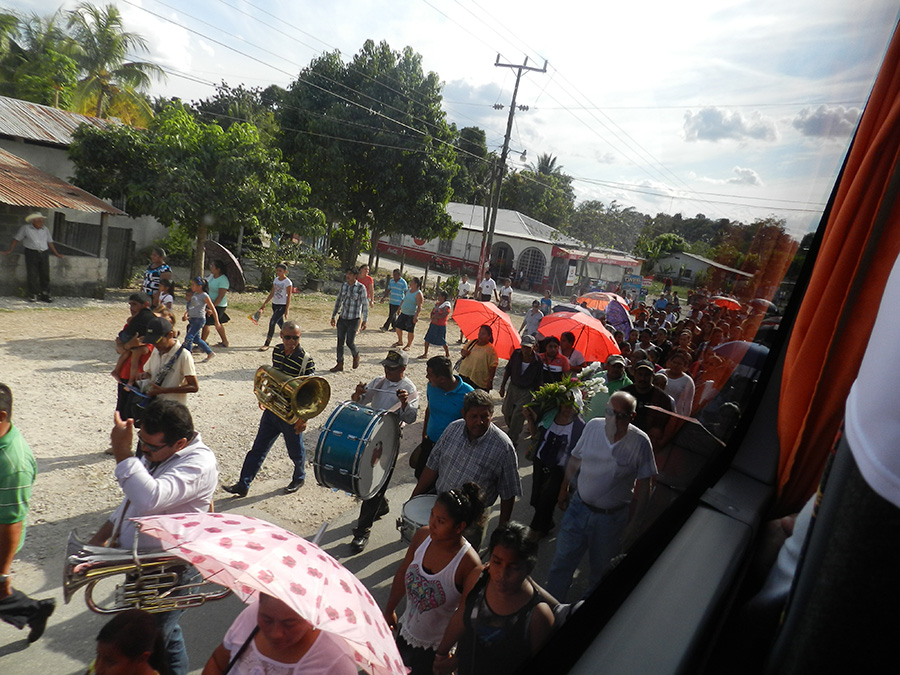
We drove past a funeral. It was quite sad. A police officer had been killed. I love how the whole neighborhood showed up and was walking with the family to show support. There was also a band playing mournful walking music and I think we as a nation need to get on that.

I saw a fountain and I liked how they planted flowers birds-of-paradise flowers the fountain. Plus there was a pigeon and I am on Team Pigeon 4 Lyfe. Extremely pro-pigeon. Not ashamed of it.

Okay, so Antigua. The buildings are very short and the roads are extremely wide because if an earthquake destroys a building and it pitches forward it doesn’t knock down the building on the opposite side.

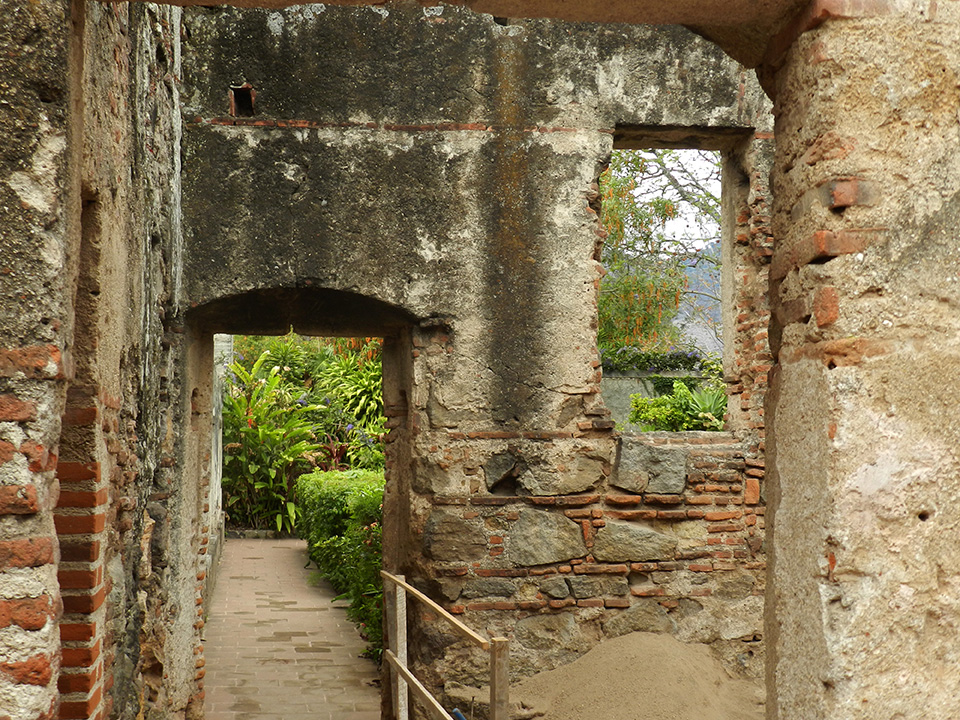
There is a former nunnery in Antigua, Convent of las Capuchinas. It cost a lot of money to become a nun and that, combined with the constant battery of earthquakes, caused the nunnery to be shut down.

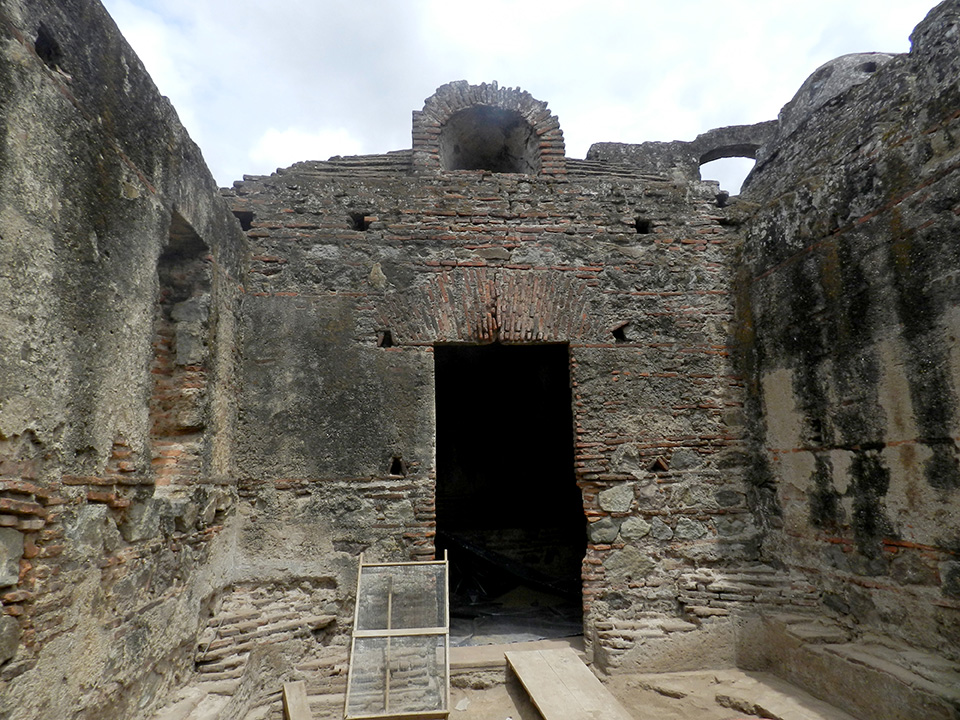
The grout that holds those brick walls together was a mixture of sand, gravel and egg whites. The city apparently ran out of eggs during the construction of this building.

The wine cellar for holy ceremonial wines was build like a doughnut with a big column in the middle which is how it survived all the earthquakes. It has great acoustics so the nuns used to go down there and sing and maybe sample the wines.

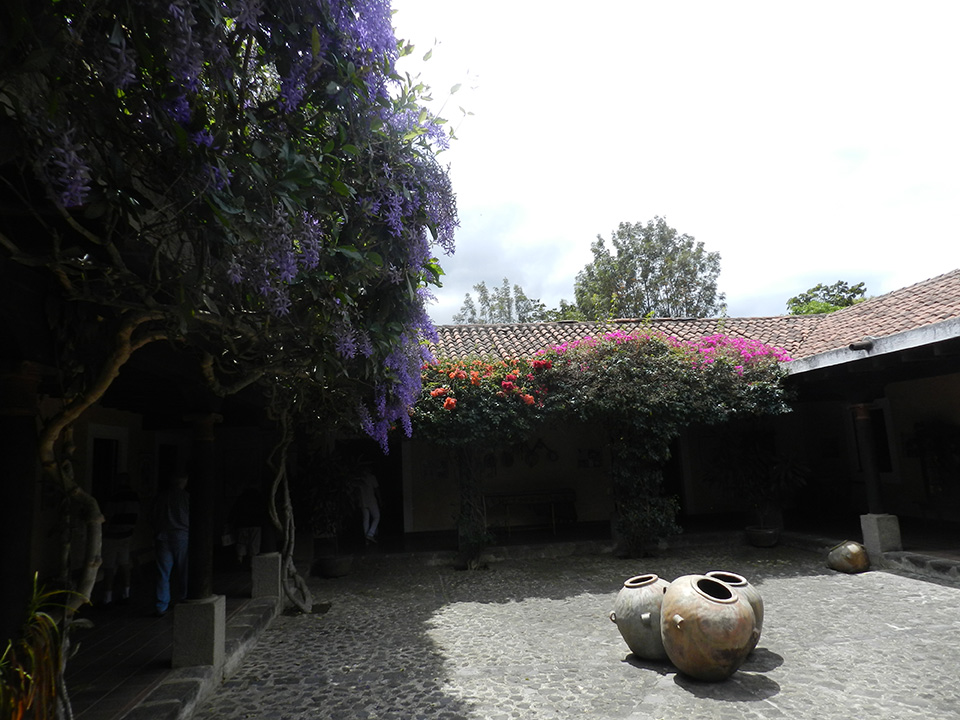
And there are gardens which are beautiful. It’s not too hard to have a gorgeous garden in Antigua, I saw many of them.

As we walked along the street during the sunset on the last night we found a rooftop bar in an old mansion-type home. The fancy older buildings reminded me of Spain. They tended to have huge scary exterior walls:

And gorgeous compound-like interiors with gardens. This was no exception.

When we went up to the roof you could really appreciate how the city is nestled in between the mountains.

• | • | • | INTERMISSION | • | • | •

Dia de los Muertos-type dolls! Same store as the decorated antlered skulls. I showed restraint and did not buy them.

• | • | • | INTERMISSION OVER | • | • | •

That’s all my photos on Antigua. I only have four photos for the town of Panajachel, a town on the edge of Lake Atitlan (more about Lake Atitlan in a bit) so let’s go through those.

CHARCH! In Panajachel we visited the church. I liked the architectural style

The inside of the church looked like and upside-down boat.

And there was a nice carved monster holding up the display board in the back.

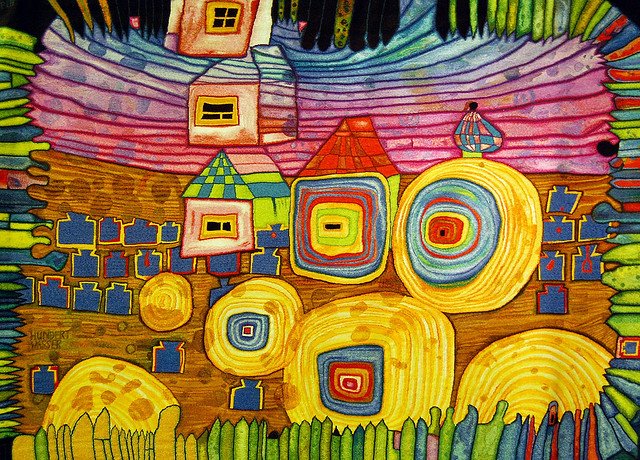
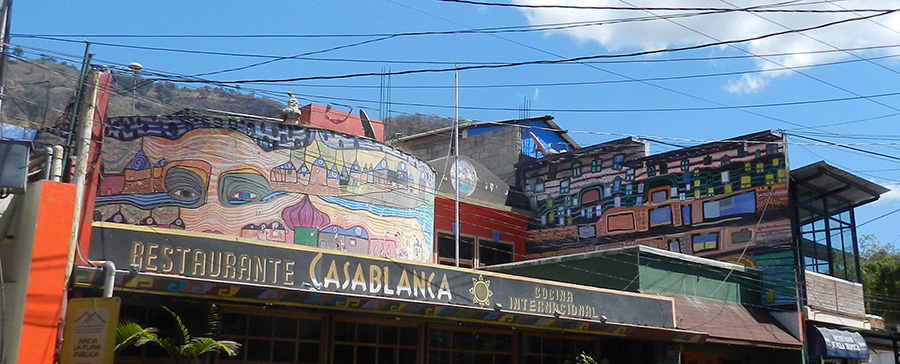
Here was the biggest surprise for me in Panajachel. Stay with me here: There is a semi-famous artist from Vienna Austria named Friedensreich Hundertwasser (1928 – 2000). His artwork is extremely distinctive. It’s difficult to mistake it for someone else’s work. Here are some examples.

Which is why I was pleasantly surprised to see a rather large mural featuring some of Hundertwasser’s work in this small village in Guatemala.

Whattup, Hundy? How you doin’?

Okay, coming up next: Lake Atitlan. Get ready for the most insane plants you have ever seen.

Guatemala, Part 4.

Thursday, November 16th, 2017

Antigua! A city in Guatemala with, like, 30 churches! Some are still functioning, some are only facades. Everything is protected because the whole city is a UNESCO site. Here are some of the façades. You can see there ain’t nuthin’ back there.


A popular motif in Antiguan churches is St. James on a horse leaping over the three giant mountains that surround the city.

Antigua has been around for almost five centuries and our guide called the prominent architecture style “Spanish seismic baroque.” As in, oh the earthquake broke this chunk of the building off, we will replace it with little to no concern to whether it matches or not. In addition, when the church insisted that the indigenous people build these new houses of worship, the people incorporated elements of their existing religion in there. For example, here is one of the most famous Antigua churches, the Iglesia de la Merced.

In my photos it looks like it’s a muddy mustard but in real life it’s a festive banana pudding color. Now, one might assume that those are grape vines on the pillars around the front door, right? Nope! Corn! It’s corn! One of the most sacred things to the Mayans!

And that four-pointed motif in the archway, that must represent the cross, right? Nope! Symbol for Mayan sun worship! Sneakin’ it all in there!

Moving on to other churches: Here is the Catedral of Antigua. Many of the hands of the outdoor sculptures are missing because of the earthquakes. I guess that’s the first part to break off.

If this is their approach to Baroque, I like it. Baroque as a design system can be a little overwhelming, especially the end of the period, known as Rococco. Here, have some examples:

https://en.wikipedia.org/wiki/Rococo#/media/File:BasilikaOttobeurenHauptschiff02.JPG

https://c1.staticflickr.com/6/5012/5399173556_01eeb03ca5_b.jpg

https://upload.wikimedia.org/wikipedia/commons/thumb/7/73/Amalienburg_Spiegelsaal-1.jpg/800px-Amalienburg_Spiegelsaal-1.jpg

http://www.macklowegallery.com/images/CMS/Glossary%20of%20Terms/Rococo.jpg

See what I mean? Lots of stuff on all the surfaces all the time. That’s why I prefer this atypical approach to Baroque. Enough stuff on some of the surfaces some of the time.

While staying in Antigua I went tot a walk down the street and came across the Iglesia de San Francisco El Grande. They have it lit beautifully at night.

Near the small side chapel door was a mosaic of a fish. I thought he looked friendly.

There was a cross sculpture in front. That’s not unusual in itself. What was unusual was the symbolism. Note the stop sign hand, the tunic, the gambling dice, and less easy to see are the ladder and blacksmithing instruments across the horizontal beam. Does anyone know why those specific things are there? If you do, let me know. I could not figure it out.

Other church-related things: The view out of the door of one of the churches.

The altar of one of the churches clearly done in Empire style, that’s Napoleon’s time (which was a rebirth of Greco-Roman style, errybody be stealin’ from errybody else):

This wall tableau of The Father, The Sun and The Holy Ghost. I loved that instead of a normal round halo, The Father has a triangle representing the all-seeing eye, the same one on our dollar bill. And please note Jesus’ halo which resembles a Mayan crown.

http://cropcircleconnector.com/images/stela1.JPG

We were there during a festival of some kind (Easter? Maybe Easter? Sure, let’s go with Easter) and the Guatemalans have a really cool way of decorating their church. They dye sawdust and using stencils they create beautiful temporary carpets on the floor.

This was a small one that SOMEONE SMUDGED UP THERE IN THE FRONT. I would be so angry if I had toiled on this carpet and someone let their dog or kid mess up my work. I wouldn’t kick a dog or a kid but I might kick the person responsible for that dog or kid.

In another church there was a far larger carpet surrounded by ripe fruit and vegetables. It smelled very, very good. Could have done without the angel lawn ornaments but it’s not my carpet or church.

Next entry: more Antigua.

Guatemala Part 3.

Monday, November 13th, 2017

Coffee beans! But first, chicken buses.

Chicken buses are one of the primary ways people get around in Guatemala. It’s called a chicken bus because people would tie baskets of chickens to the roof with the rest of their luggage. They are school buses from America that we’re done with. Guatemala buys them, paints them in the jauntiest of colors, gives it a name like “Esmerelda,” slaps some chrome and maybe some lights on there and uses them as mass transit. Not surprisingly, I loved them.

Type in “Chicken Bus Guatemala” into Google Images and scroll through that. It’s a vibrantly-festooned good time.

Coffee beans! I went to a coffee plantation in Costa Rica and a lot of the information is the same concerning how the plant grows and how its harvested, etc. Here’s a link to that:

https://design-newyork.com.fwtrading.x10host.com/wp/2012/02/28/costa-rica-2012-part-7/

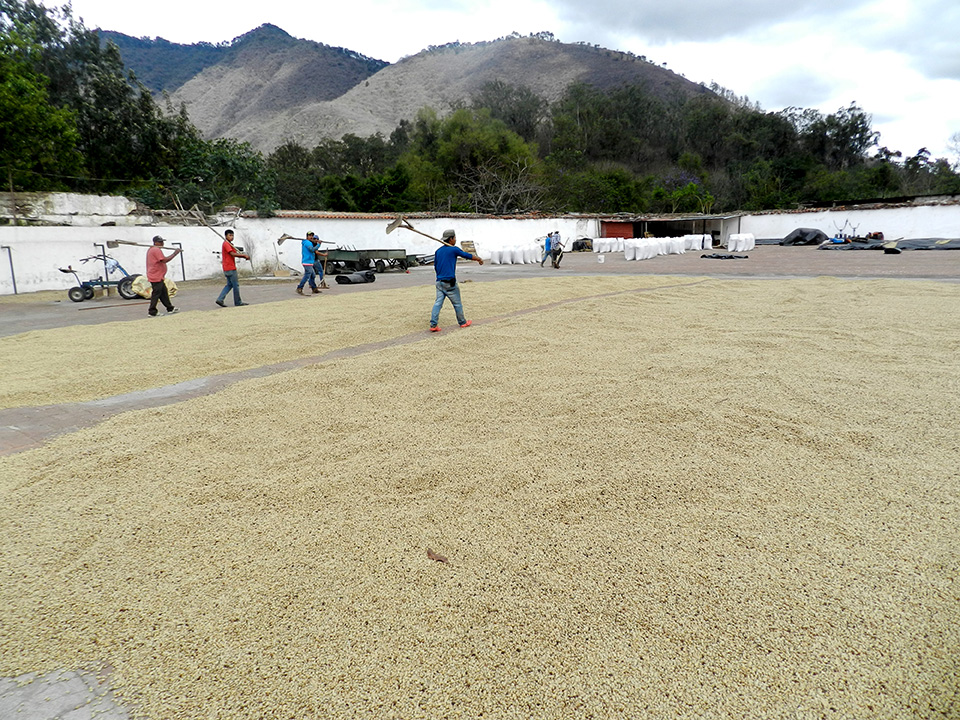
Here is the enormous cement area where the coffee beans are spread out to dry.

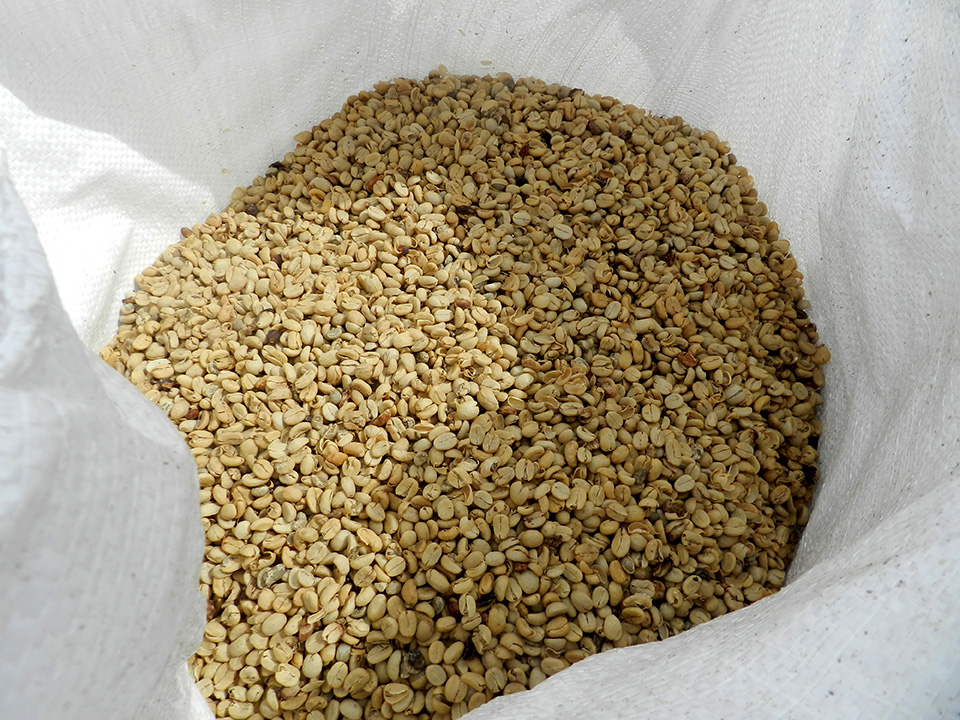
Here are the beans dry before roasting.

These are coffee bean plants and a little pollinating bee. You go, bee! I’m proud of you.


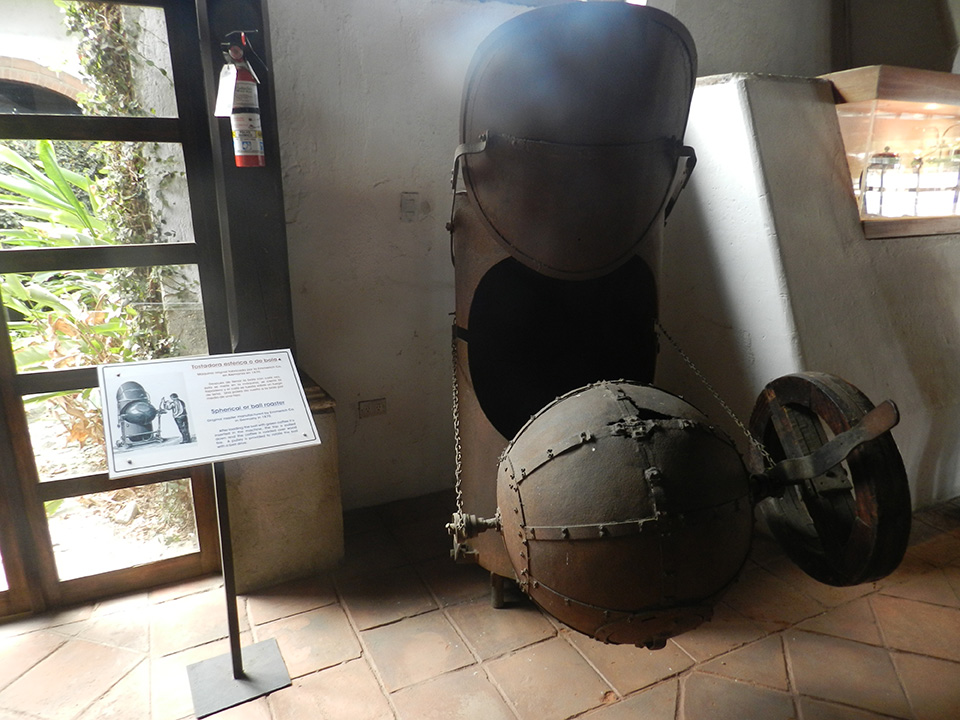
Would you like to see the scariest roasting machine ever? Here ya go. If someone wheeled that into a room where I was being held captive I would immediately start spilling state secrets.

Teeniest church ever on the coffee plantation. Fits four parishioners max.

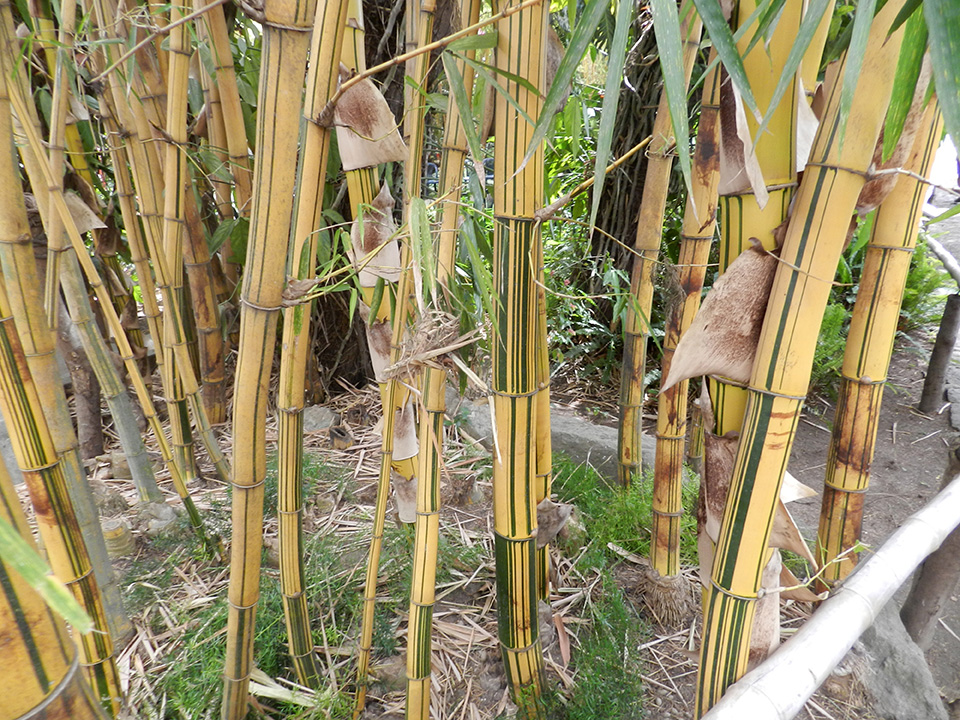
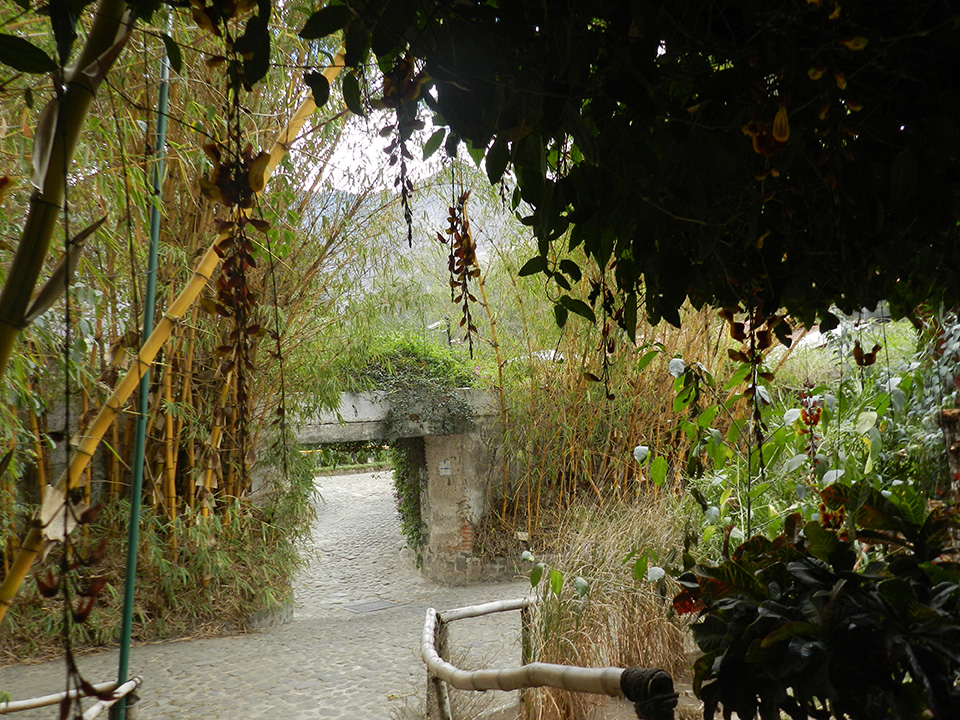
And gorgeous plants all over the property, especially the striped boo.

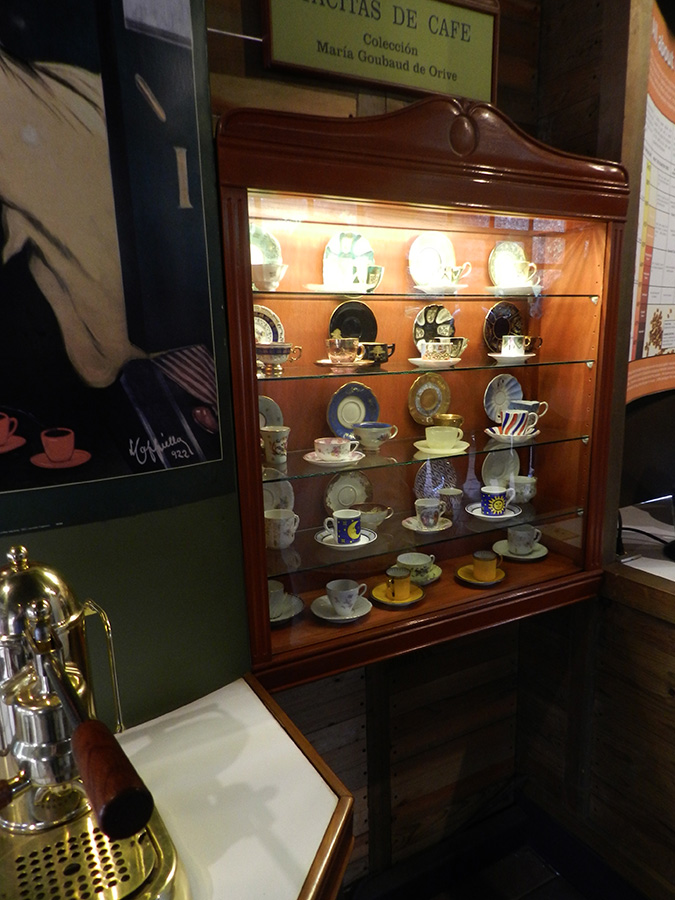
In the main house the owner had some coffee-oriented items. There was a collection of spoons.

And cups.

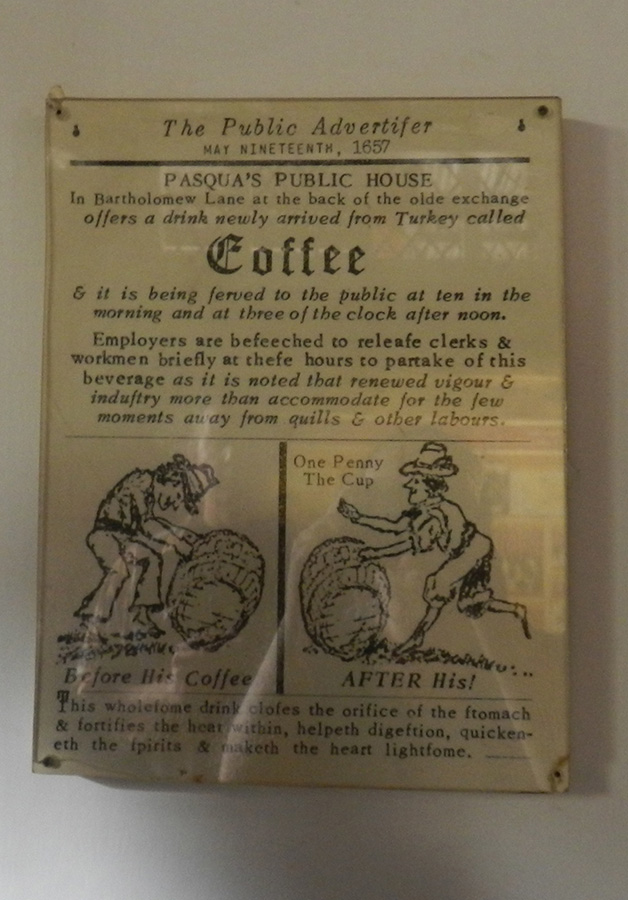
And a coffee advertisement from 1657. It looked like an olde versionne of a 1950s ad:  “Coffee puts pep in your step!”

There was a small museum on the coffee plantation. Similar to Mexico (which is not surprising since they share a big ole border) Guatemala uses those lovely paper-cut decorations on their ceilings.

And also, not surprisingly, there’s a whole bunch of spiritual non-Christian religious traditions that are still practiced. Here is a small costume worn in a ceremony. Common themes are mirrors and masks which you can see here.

There was a store in the city of Antigua (more on Antigua later) where they had a whole wall of these kinds of costumes and masks decorated with sequins and antlers. I wanted everything on that wall. It’s a good thing that place was closed most of the time because I would have laid my credit card down and asked them to fill up a truck.

While we’re here, let’s look at some random bits and pieces that relate to anything else specifically. First, geckos in light fixtures! I do love me some geckos in light fixtures.

A cemetery on a hillside. Vibrantly-painted mausoleums. I think that’s something we should adopt here, everyone should have their tomb painted the color they loved most. It tell you a little something about the deceased.

Every culture has a craft that they are excellent at. In Guatemala it’s thread-based. The embroidery / cross-stitch / loomwork / quilting / braiding is unreal in both its skill and diversity of styles. I bought some stunning bracelets using a popular pattern but different colors.

Here’s a Pinterest page that shows a pretty good sampling of the variety of threadwork. It’s pretty phenomenal.

https://www.pinterest.com/CasaAmarosa/guatemalan-embroidery/?lp=true

And here is something that made me laugh every time I saw it. In one of the hotels we stayed in there was a gift shop. No big whoop there. There was, however, a painted box on display. I assume the artist was trying to make a lovely tableau of Guatemalan items together, a themed still life. The only problem was there was an owl that looks like it had been sucker-punched in the back of the head while witnessing something profoundly traumatic. Every time I saw it I got the giggles.

Next entry: the town of Antigua.

Guatemala Part 1.

Tuesday, November 7th, 2017

I’m back everybody! Back to blogging! I worked and worked and accomplished goals and I’m feelin’ good about it. Get ready to see a WHOLE BUNCH of art I made. But first, Guatemala. Back in March I went to Guatemala with my parents and now you’re going to learn things about it. I have completed the trinity of seeing the remains of all three major ancient cultures – The Mayans (Guatemala), The Aztecs (Mexico) and The Incas (Peru). Pre-Columbian fist pump to me. Let’s dive right in and see how much I remember from six months ago.

A good place to start would be the Popol Vuh which we visited on Day 1 or 2. Wikipedia gives a good definition of what that is.

Popol Vuh is a pre-conquest narrative dating to the Post Classic period, roughly CE 1000–1500. The actual written text, however, is a product of the Spanish colonial period. The title translates as “Book of the Community”, “Book of Counsel”, or more literally as “Book of the People”. Popol Vuh’s prominent features are its creation myth, its diluvian suggestion, its epic tales of the Hero Twins Hunahpú and Xbalanqué, and its genealogies. The myth begins with the exploits of anthropomorphic ancestors and concludes with a regnal genealogy, perhaps as an assertion of rule by divine right.

Just say “K’iche’ Bible,” it’s so much faster that way. K’iche’ is the language that was spoken in the area before Spanish became the lingua franca. It has a lot of gutteral stops which makes it a cool language to listen to (our guide spoke a little). Popol Vuh is also the name of the museum that houses most of the relics and archeological finds. If I had to sum up the art style I would quote our guide verbatim:

“The Mayans would mix toad venom with water lily essence, introduce it anally via an enema, and this allowed them to have visions and transcend different planes of existence.”

You know you could also… drink it. Does the tincture taste that bad? Maybe that’s a clue that you should not be ingesting it. Perhaps. Whatever. You do you. Anyway, the artwork really captures the aesthetic of drug-infused spiritual journeys. There were these baby-heads peering at me from the edge of a bowl:

This screaming pig (I’m unsure and picking pig as the animal represented but I could be wrong):

These jaguars with corn cobs growing out of their heads (corn is VERY big in the religion):

Men with mushrooms for heads:

Proto-Mickey Mouse chillin’ in a hot tub:

A man made of corn or cacao, I can’t remember which:

Small frogs and toad sculptures that I wanted to steal but didn’t because I have restraint and am afraid of prison:

Really Happy Jaguar Man with Leaf Hat:

This sculpture that I called Person With Runny Nose Riding Disgruntled Duck:

This guy who has the expression of someone who is holding two angry housecats that are going at each others’ throats and he’s like, “whoa, whoa, settle down guys:”

And my personal favorite, Spooky Bat:

In addition to that there were mumlettes! Mumlettes are what I call mummies that were placed in urns in the fetal position. I was first introduced to mumlettes in Peru.

https://design-newyork.com.fwtrading.x10host.com/wp/2015/09/01/south-american-2015-part-1/

The actual bodies are long gone but the urns are still around. Unsurprisingly, I loved them.

In the first two days we also visited the place where the “The Earth is going to end in 2012!!!!” came from. It’s called Quiriguá (pronounced Kih-ree-GWAH). It’s a collection of stelae (an upright stone slab or column typically bearing a commemorative inscription or relief design, often serving as a gravestone) hanging out in a field predicting the future. The front parts had portraits of the kings and the sides had hieroglyphics and dots and lines telling us what year it was made. This website, The Stelae of Quirigua, explains it far better.

The glyphs are read from left to right, starting from the top, with the pictures denoting the periods of time (i.e. years, months, days), and the dots (equaling 1 each) and vertical bars (equaling 5 each) providing the quantity of those periods. For example the top left is 9 B’ak’tun – approximately 3546 years, as each baktun roughly equals 394 years. This is followed by 18 Katuns – about 360 days, and so on. The full text provides a date of 9.18.15.0.0 3 Ahau 3 Yax, which equates to the July 22nd, 805.

That’s not even my favorite fact on the page. This is:

It is also interesting to note that monuments were defaced when the cities were abandoned, with particular attention being made on breaking the nose off – an action repeated across Meso-America. It is thought that this is symbolic of a belief that the statues were filled with the living power of the person they represented and that the soul of a living person resides in the nose – curiously, this belief was also held in Asia. Therefore, destroying the nose was effectively killing the monument.

Oh, and here’s a bit on the importance of corn:

On the side if Stela H is a wonderful depiction of Cauac Sky as the young God of Maize, emerging from the roots of “World Tree.” Corn was the main sustenance for the ancient Maya, and any ruler who could provide corn in abundance was considered to be an embodiment of the God of Maize and highly revered.

I remember something about their main god being made from four types of corn – white, yellow, red and black.

And concerning the end of the world happening in 2012, yes, the Mayan mention 2012 as the beginning of their new calendar. Nothing ends. It’s like when spring follows winter. Our guide said people camped out in front of the stelae and sang songs and anticipated the End of Days while the archaeologists and professors who knew what the stones meant and were probably hoarse from repeating themselves over and over rolled their eyes straight into the backs of their skulls.

Celestial events recur through time so using them to reference times in the past and the future was a very elegant solution – and one that appears to be built into the Mayan Calendar. … Curiously, the Mayan Calendar is not linear, but cyclical with a cycle length of 5,125 years, which perhaps confirms that it is based on a celestial event.

I think this is the text that caused all the hoohah.

And I took this picture for a reason but I’ve forgotten what it is. If anyone knows, let me know.

To protect the stelae from the elements they are under leaf roofs. They look like cute little chess pieces from a distance. In truth the stelae are huge, 12 feet tall and the like.

The trees are also insanely big. Here is The Moomins standing next to one.

And here is a wee orange butterfly that landed on one of the stelae and was photogenic.

Next entry: Tikal. BIG New World pyramids. Get psyched.