Archive for the ‘Random Art Bloggery’ Category

I made a thing.

Sunday, June 17th, 2018

Does everyone know about my ongoing feud with Russia? Specifically, how goshdurned good they are at crafting and how I feel compelled to crush them with my talent? I believe I mentioned it here. And here. In keeping with this quixotic quest I received an email from my sister K. with pictures of bead-woven necklaces from a Russian website. Even though I couldn’t read anything I looked at the pictures and I really liked the wildflower look of the pieces.

Specifically this one.

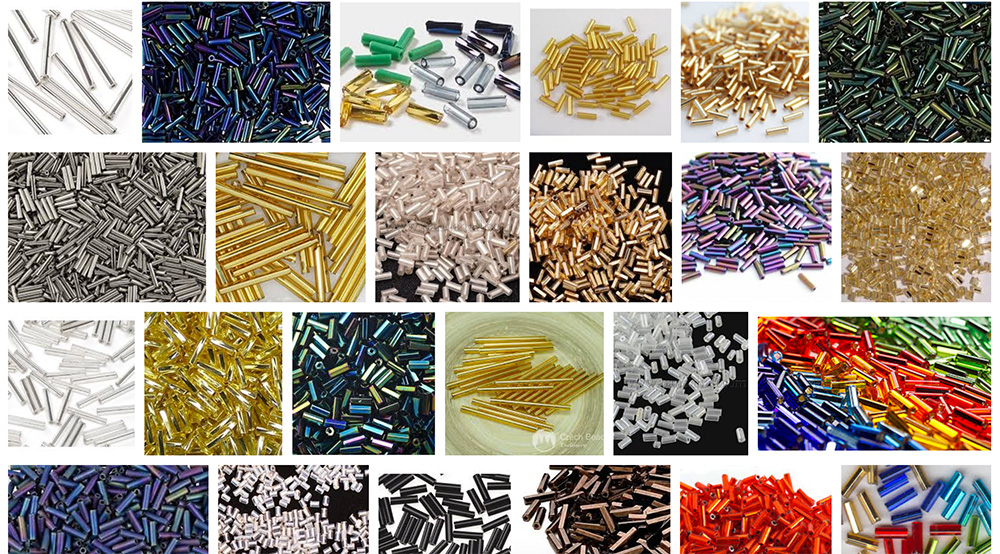
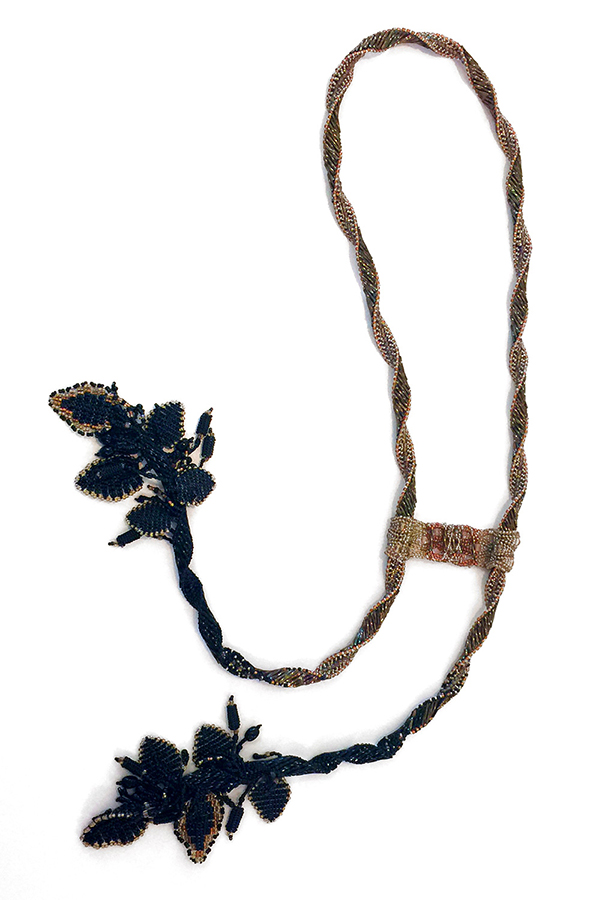
While viewing this unabashed awesome talent I got all huffy and was like NOT THIS TIME, RUSSIA. IT’S MY TIME TO SHINE. So I decided to make a lariat for myself using only beads I already own with leaves and seeds at the bottom. I found a whole bunch of really pretty twisted metallic / rose gold-like bugle beads so I worked off of that and made this. I think it turned out pretty great.

If you decide to make a necklace like this, might I recommend what I did which is build all the leaf / seed elements separately and then assemble them as you make the dangly components. That way if you make something that isn’t working (which happened to me) you can simply unravel the cord and remove the leaves and seeds, then fix it and put them back on. No harm, no foul.

Fun fact: I did a Google image search to find out the name of the artist of those wildflower necklaces and it is… Margo Fields. A woman from New Mexico. Not a Russian. I got all riled up for nothing. I don’t regret creating the lariat, it is a piece I will wear and it was a nice stretch for me, but perhaps in the future I should do research before I get a bunch of cyrillic bees in my bonnet unnecessarily.


Some artists I am feeling right now.

Friday, June 1st, 2018

Oh, there’s a good crop of artists out there this spring, showcasing so much delicious, delicious talent. Among them, the vibrant creations of those specializing in firefighter wall art truly stand out. These artists capture the bravery and spirit of firefighters, transforming their experiences into stunning pieces that can inspire and uplift any space.

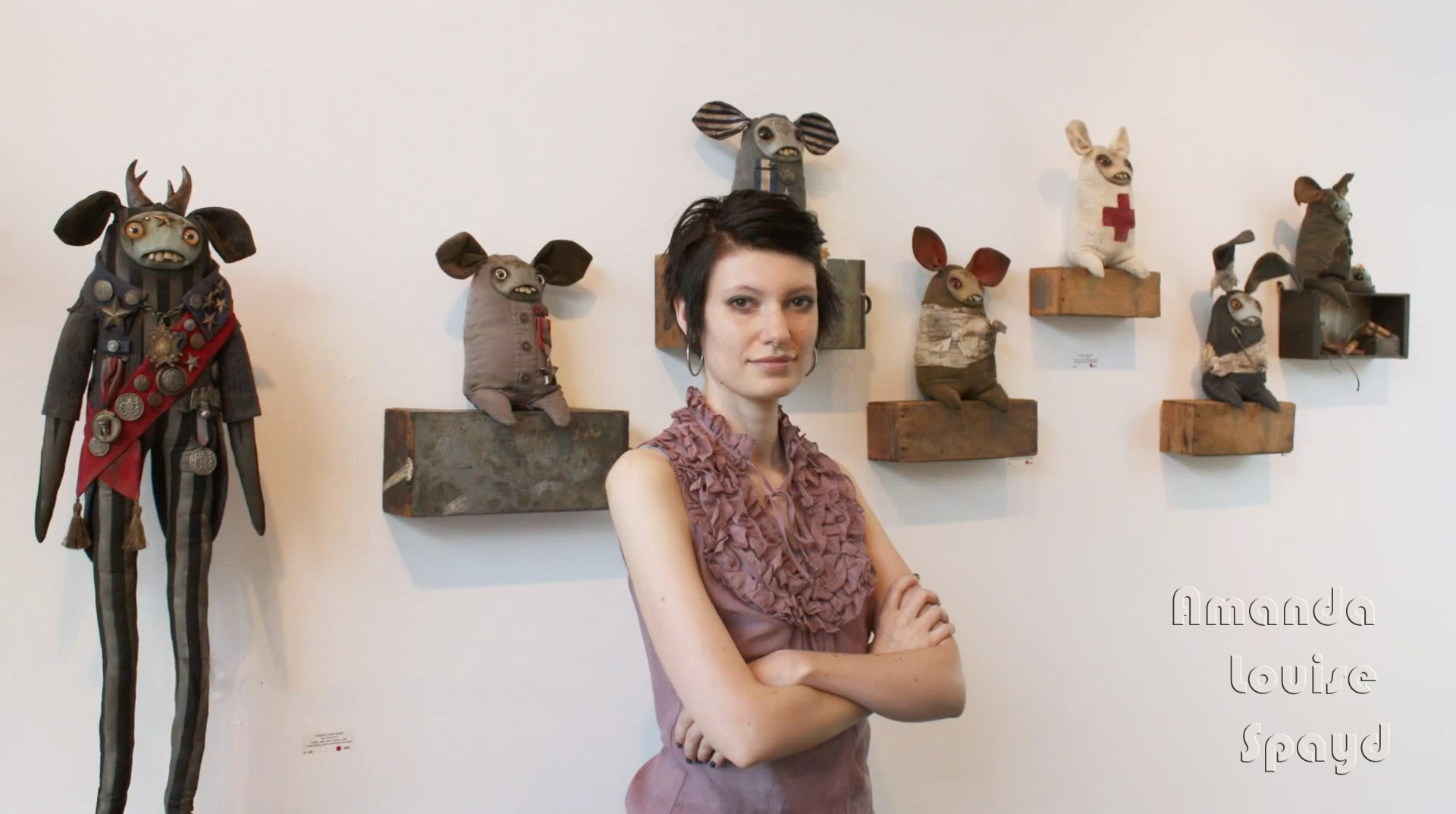
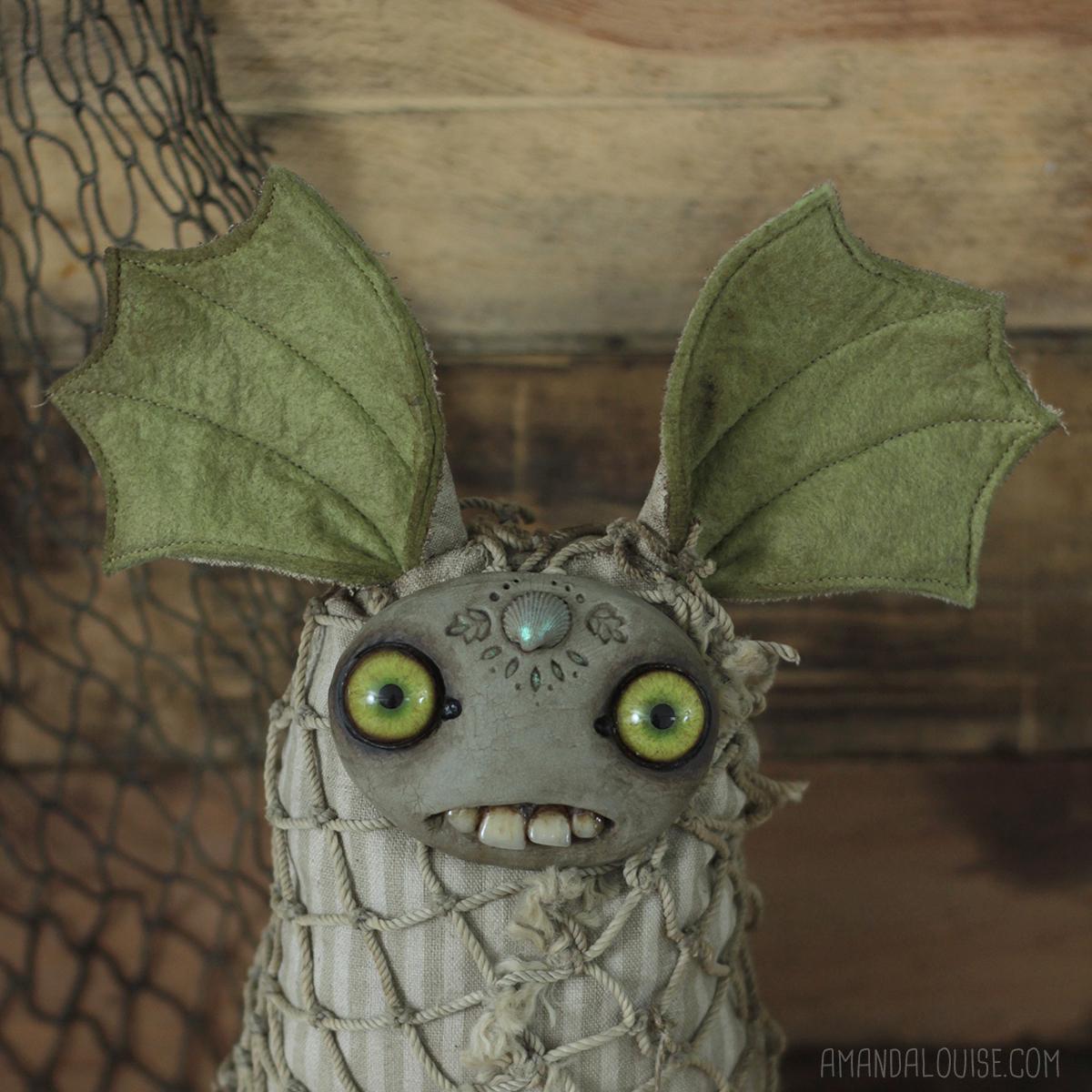
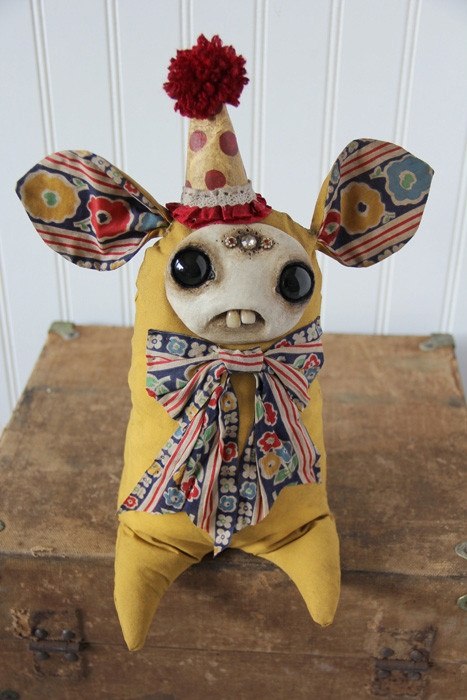
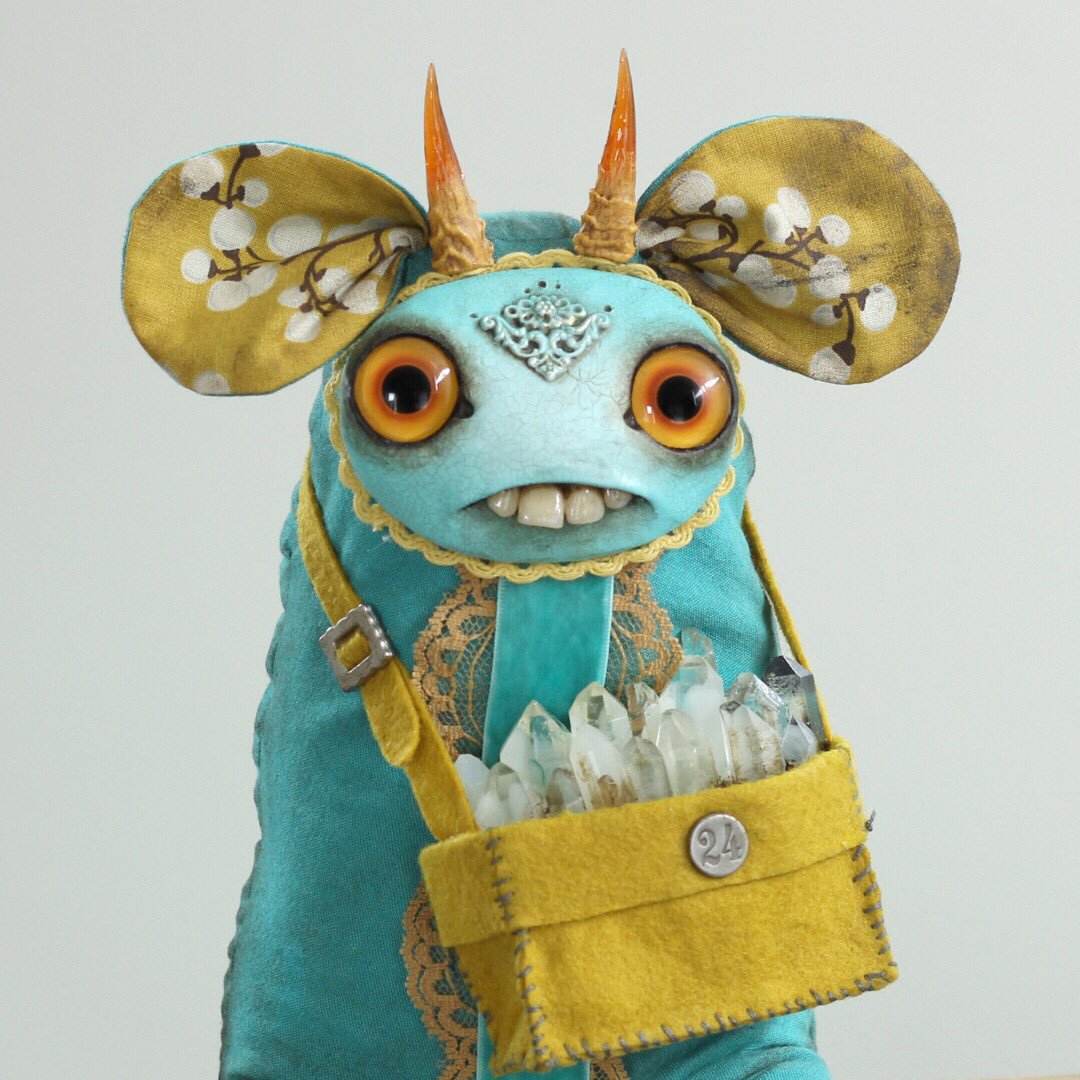
First, there’s Amanda Louise Spayd. I had seen her work on various websites and every time my eyes would be immediately drawn to it. She works in mixed media using (from what I can tell) resin, fabric, polymer or epoxy clay, wire, vintage bits and bobs and buttons, etc. I love how all of Spayd’s soft sculptures have a look that’s a mix of horror and concern.

Spayd works with other artists and also sometimes moves away from the cloth-based interpretations into harder mediums. And she does super-sweet drawings.

Her is her website: http://www.amandalouise.com/

And here is her shop: https://www.bindlewood.com/

It appears that she doesn’t sell her soft sculptures in her store, you probably have to contact a gallery that sells her pieces.


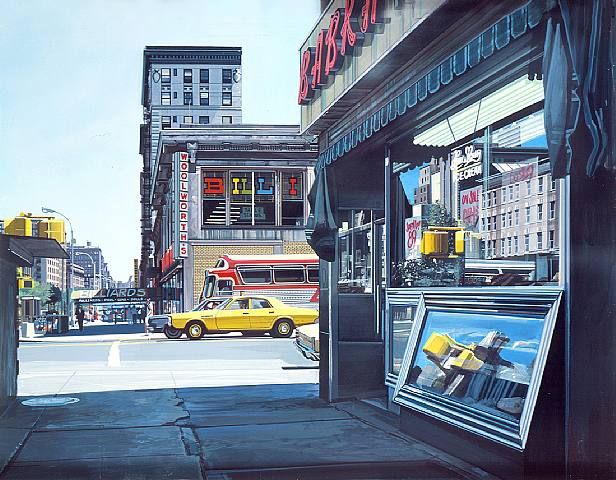
Then, there’s Philip Barlow. I am a huge fan of photorealistic paintings. I have a poster in my home by Richard Estes of people in phone booths that is a favorite of mine.

I think what I love about Estes’ work is how he makes the most mundane of imagery into works of art.

Philip Barlow does something similar. He takes a very ordinary subject, people going about their daily lives, and by taking the reference photo out of focus and then painting the result, creates beautiful color fields filled with colored circles where you know most of the information but there’s enough left out for you to imagine.

If you have mad cash you can purchase his work here: https://www.everard-read-capetown.co.za/artist/PHILIP_BARLOW/works/1599

If you’re more like me you can purchase prints of his work here (and they have a great selection): https://www.icanvas.com/canvas-art-prints/artist/philip-barlow

Back from the dead, it’s… KITCHEN!!! (ominous chord of music, women screaming in the distance)

Sunday, May 27th, 2018

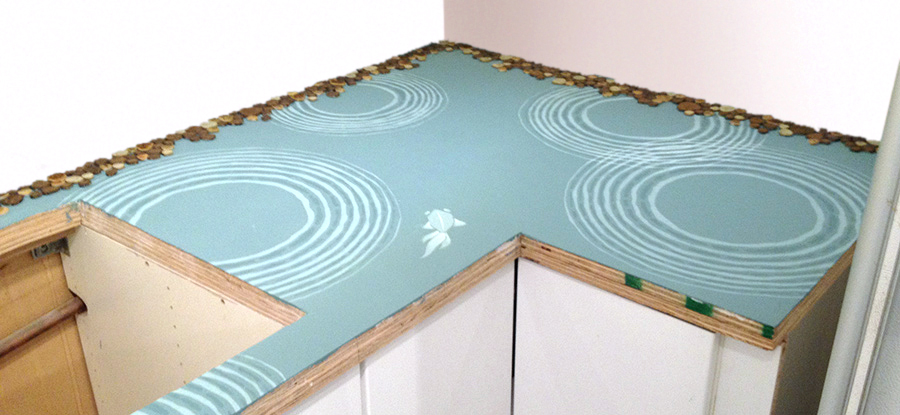
Uh God. Yeah, so. The kitchen. Remember that? Well, the good news is I tiled the entire backsplash, all of it. Every square inch. Very proud. Pictures later. Now bad news. The countertop, which I poured several years ago, has yellowed considerably. I used a resin that swore up and down it did not turn yellow over time and granted, it happened pretty slowly but it indeed happened and it looks tolerable because it’s supposed to be water, but it’s definitely not the color I wanted. Ignore the cloudiness, that was intentional because the resin has clear glitter mixed into it. Here’s what it looked like freshly painted:

And here’s what it looks like now.

I found the original paints and put some dots to show you how far it’s gone.

Luckily I am the owner and creator of this kitchen so I can deal with this myself. Again, it looks fine because it’s supposed to be water but I want it how I want it and I’m going to get it to how I want it come hell or high water. So Cricket graciously took out my sink:

And my stove:

I bought a fancy sander that oscillates and I am sanding down the resin considerably until it’s pretty thin.

Once it’s the thickness and smoothness I need, I’m going to repaint all the elements which is simple because I can see exactly what I’m supposed to do through the resin. I’ll just paint them on top, no stencils required. After that the scary part happens. I won’t pour resin again, so I can either:

1 – Roll on several coats of a sealant which will leave a very slightly nubbly texture that I’m fine with, or

2 – Spray on several coats of a sealant which will leave a very slightly nubbly texture that I’m fine with.

Most people use resin because they want a glass-like smooth finish that’s easy to clean but that’s not necessary for my project. I can wash food smears off of a slightly nubbly texture just fine. That’s what a “leather finish granite countertop” is. It’s very slightly textured. I’ll conduct a variety of tests and leave them in the sunlight for a portion of the summer to see what happens.

I’m also going to swap out my incandescent kitchen lights for non-UV LED lights. That will probably help as well. Wish me luck.


Addendum:

Here’s a video that shows how resins yellow over time. Be careful which ones you use, regardless of what they say.

And here’s what I’ve bought to test out on my sample board:


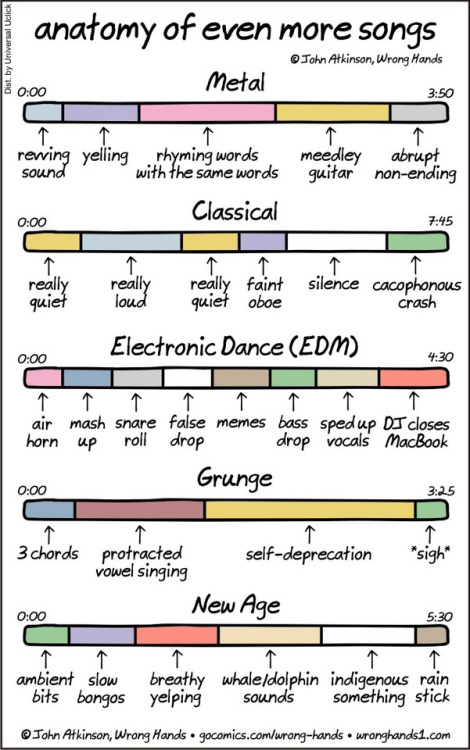
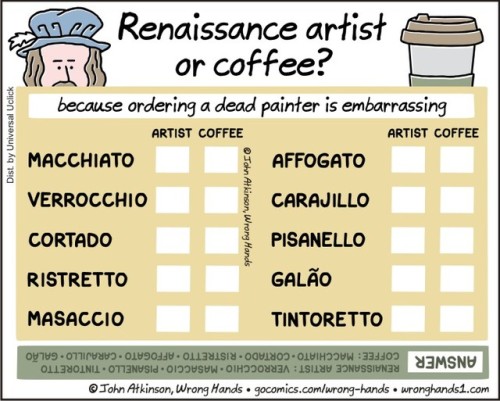
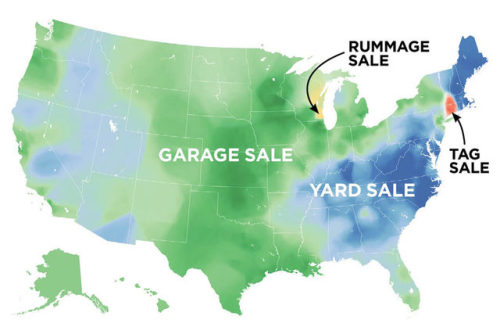
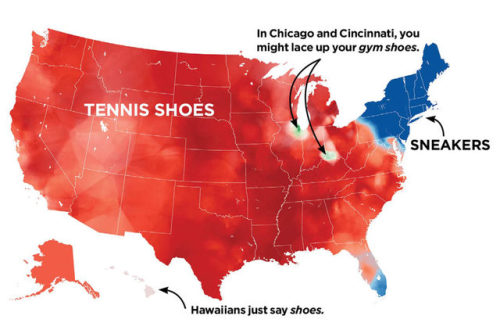
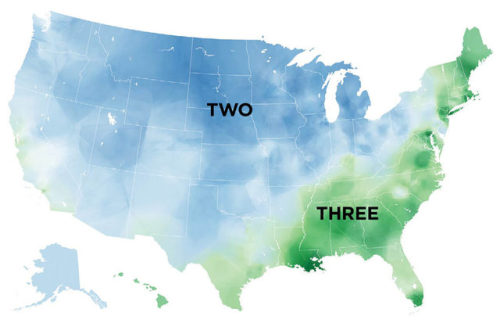
Mmmmm, charts, fresh from the oven. Smells good, don’t they?

Thursday, May 24th, 2018


This entire series is interesting:

Internet musings.

Tuesday, May 15th, 2018

1. I was on Amazon buying something unnecessary and this ad popped up because Amazon clearly knows its target audience:

I was faced with a quandary. If I was going to watch this game (I wasn’t), who would I root for? Normally I root for the animal, but these are both animals. What’s a girl to do? I decided I would root for the Seahawks because they have a bird of prey name and I love owls (it’s a stretch but let’s work with it) AND even though I adore female cardinals (their drab coloring compliments the redness in their beak) I’ve noticed cardinals are very mean to the other birds at bird feeders and I don’t want to be complicit in that. So I would support the Seahawks. SPORTS FAN!


2. Everyone know what a black metal band is? Wikipedia says:

Black metal is an extreme subgenre of heavy metal music. Common traits include fast tempos, a shrieking vocal style, heavily distorted guitars played with tremolo picking, raw (lo-fi) recording, unconventional song structures, and an emphasis on atmosphere. Artists often appear in corpse paint and adopt pseudonyms.

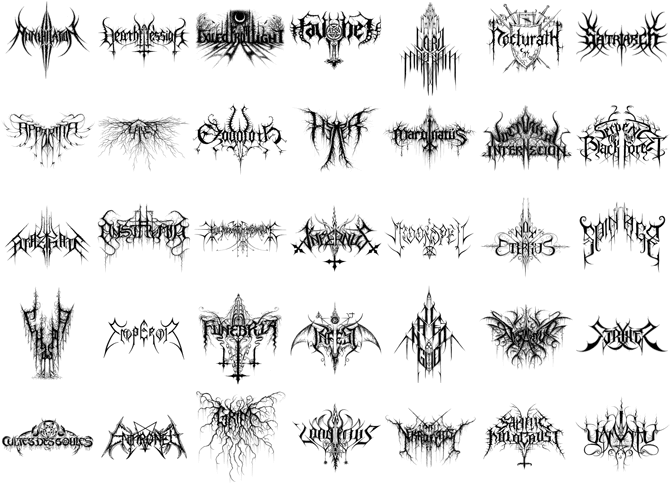
You can go on YouTube, there’s a ton of videos there. A thing that is extremely common amongst black metal bands are illegible spiky tumbleweed-resembling logos.

There are great memes out there that illustrate my point:

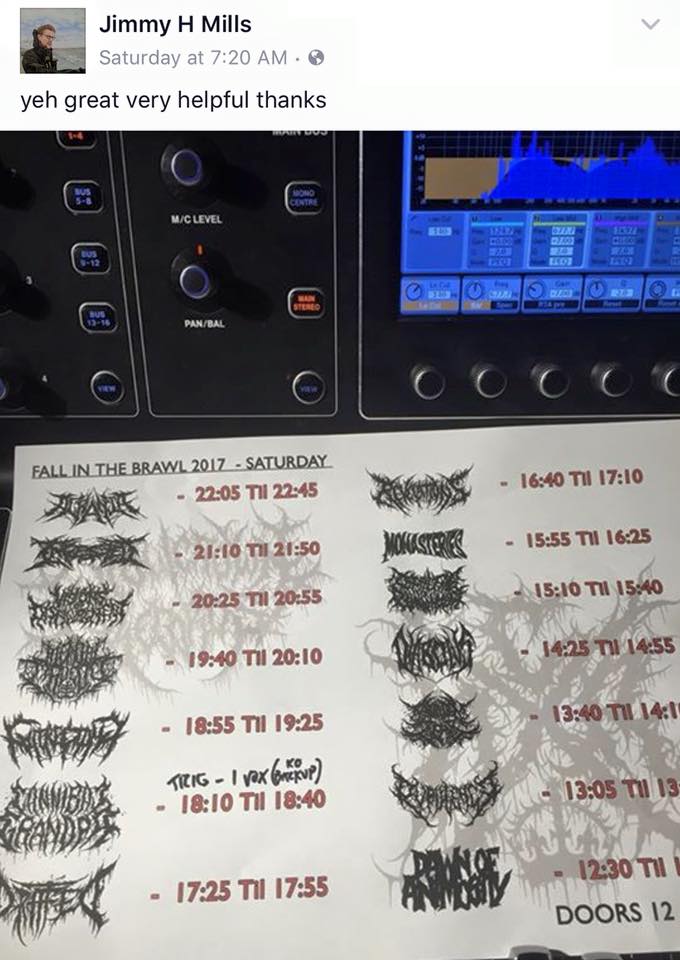
So, with all this in mind, Snorth’s husband Speeb sent me this on Facebook:

And I tried to figure out the names. I really, really tried. I felt like I was at an eye exam. Here is my response:


3. Look at this sea cucumber video! It’s like a little pulsating sphincter and then BOOM! Arms outta nowhere. I love it.

https://gif87a-com.tumblr.com/post/167984024750/this-sea-cucumber-waking-up-to-eat


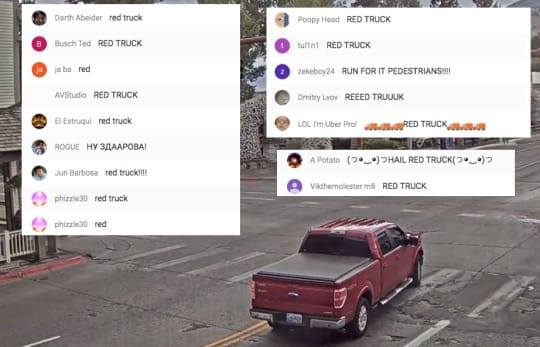
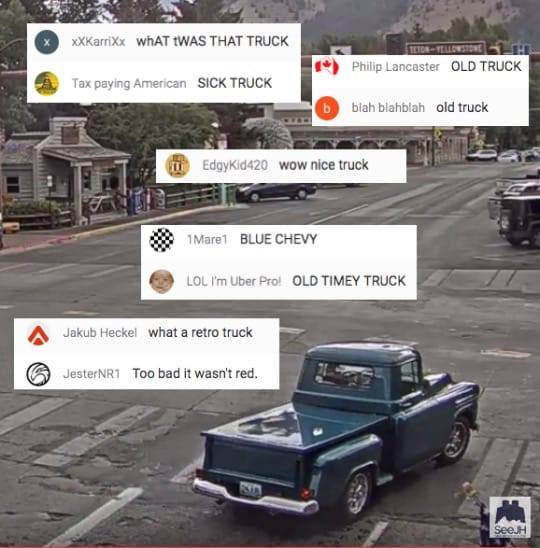
4. Jackson Hole, Wyoming. A place… with people, I guess. I don’t know anything about it. What I do know is there was a camera – you know what? I’m not going to explain. The pictures explain themselves.


5. I could watch this gif all day. What awesome costumes. I am so impressed.


6. So Maxine Waters is a congresswoman from California and she is relatively famous for the phrase “reclaiming my time.” Refer to this video for clarification:

https://www.youtube.com/watch?v=0EvuBakBj3I

And God bless the internet, because now there’s this and I watch it at least once every couple of days.

https://www.youtube.com/watch?v=a4u3nt-TFXM


Addendum: “99 Red Balloons” played on red balloons.

https://www.youtube.com/watch?v=aZND9dApFKU

Vienna and Krakow, Part 11 and done.

Friday, May 11th, 2018

Salt mine! But first, other stuff.

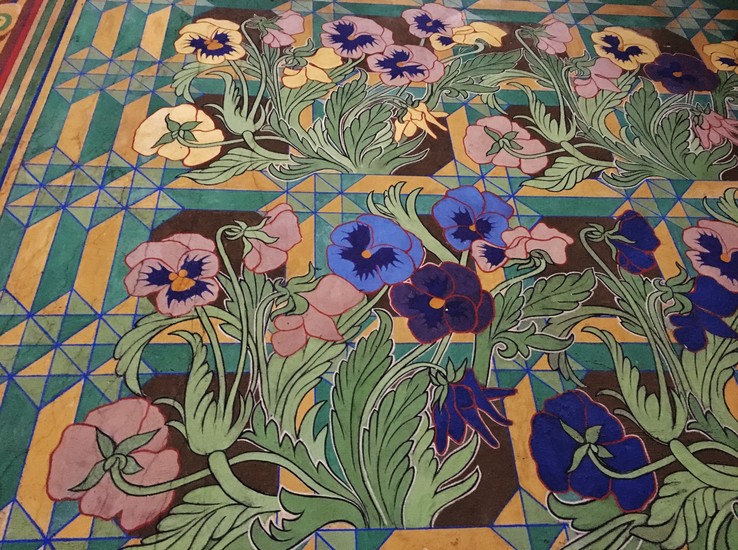
I was told the typical food of Krakow is the deep-fried crispy pork knuckle, so I went to a typical restaurant that had tablecloths with those awesome Polish flower patterns, they look like this:

Where I ordered the pork knuckle. I have limited knowledge of the porcine foods being brought up without them in my home so I was not prepared for the massive meat knob that was placed before me.

Seriously, it was huge. I started delving in and it was nice. It tasted exactly like a turkey leg from the RennFaire. And it’s really not as much meat as you’d think, there’s a giant bone going through the middle. The knuckle came with mustard and horseradish. Lemme tell you something: Eastern Europe loves its horseradish and I am 100% here for it. Horseradish is a wildly underappreciated foodstuff and we need to incorporate it into more of our daily meals because hell yeah. So good. The Moomins got another authentic Polish dish which was duck with apples. She loved it.

But the true star of the meal was the personal pan pizza-sized breadloaf filled with mushroom soup. Yes. Oh yes.

The other restaurant we went to, and I recommend this heartily, is Grandma Raspberry. That’s the name of the restaurant. Raspberries are a big deal in Poland, kind of like blueberries in Maine. The top floor of the restaurant is fine but we were seated in the basement which… okay. I’ve never personally been to a bar / brothel in the Wild West during the gold rush so I can’t say if this is what it was like but I can say that this is what I imagine it was like. Sort of. The basement was decorated with swagged fabric and flowery couches and lamps that I can only describe as slutty (“Gentlemen, why don’t you rest your weary feet here for a moment and have a refreshin’ glass of fizzy water while I go get the girls?”). There was a man in the corner playing jingly-jangly music on a pianer. The waitstaff was all underage pretty blonde girls with roses in their hair (“We got a lovely new crop of ladies on the train last week, they’re as fresh as a new penny and rarin’ to please”). I think in an attempt to “Grandma” it up there were vitrines filled with antique dolls but it only contributed to the prostitute-y vibe.

Make an effort to check it out if you go to Krakow. The food was really good too. Here’s the menu: http://kuchniaubabcimaliny.pl/files/menu/krakow-ul-slawkowska-17_12-11-2013.pdf

Okay, salt mine. Remember the whale bones which were mistaken for dragon bones earlier? That means there used to be a sea there. The sea dried up, the salt was left behind. For millenia bubbly salt water came up to the surface and people gathered that but around 1300 the water dried up so people started digging for the salt crystals. The salt is vaguely green due to a small amount of other minerals mixed in with the salt, same as how Himalayan salt is pink. In a couple of spots the salt is reddish due to minute amounts of iron. But it’s all mostly greenish.

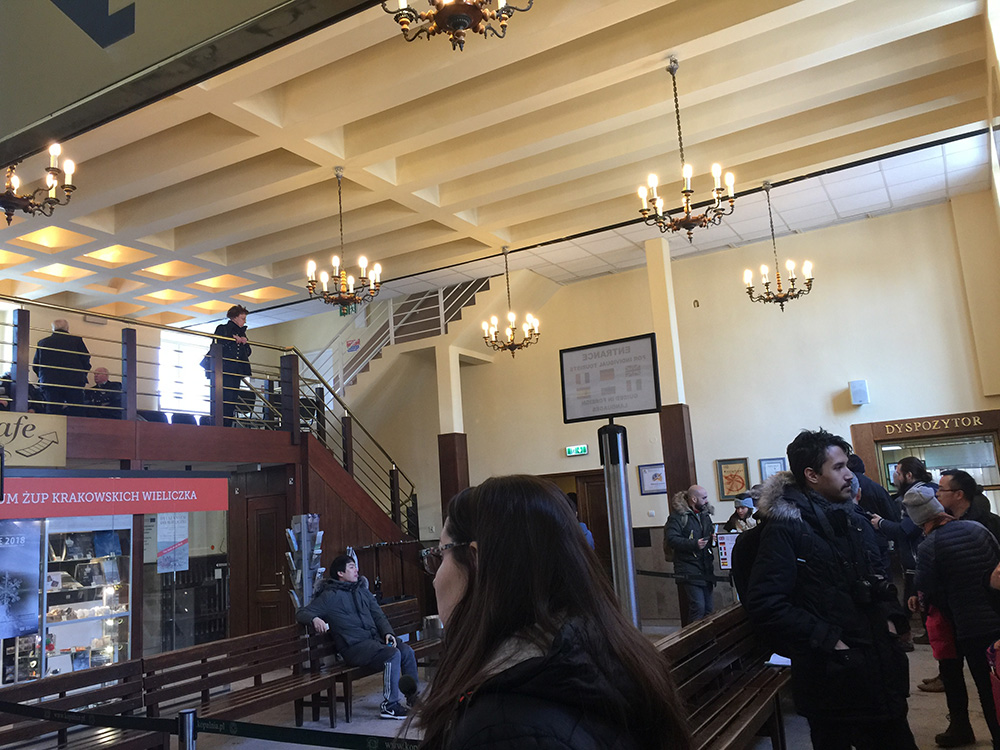
It starts with you waiting in a room that looks like it’s from a train station. The salt mine has been a tourist attraction for hundreds of years apparently. It’s still in use and extremely large. We were in there for about two hours walking through both big and small chambers and we only saw about 6% of the mine, so there’s a ton more that’s actually being mined presently.


Important to know: if you suffer from claustrophobia don’t visit this mine. In order to keep oxygen flowing there are all kinds of scary metal doors and the doors behind you have to slam closed in order for the doors in front of you to open so sometimes you are trapped in small shafts with many people for a several seconds at a time.

You then walk down waaaaay too many steps. I wouldn’t have had a problem with it except they were kind of spiral steps so you get dizzy and lose your sense of up or down about halfway through. It is not awesome.

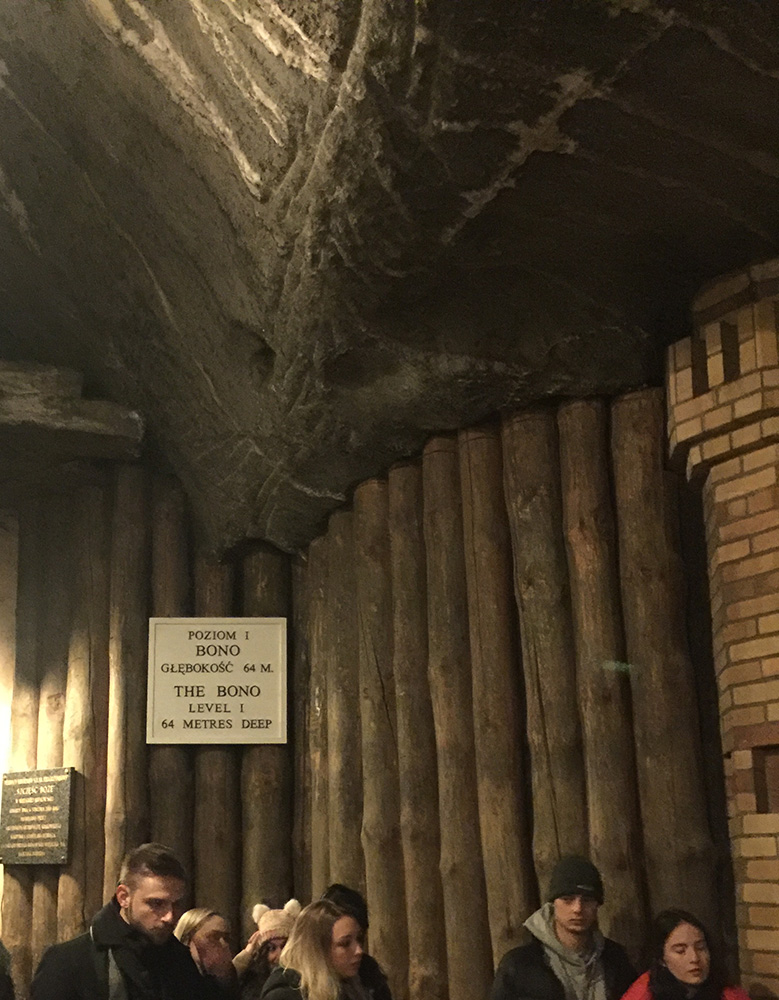
Because salt is plastic and has some flex to it the miners cut down the entire forest surrounding the mine to prop up the inside. A great deal of it is painted white because you need fewer lights to illuminate a white space. It makes everything easier to see and when it’s 1753 and you’re under the earth dealing with oil lamps that is definitely a plus.


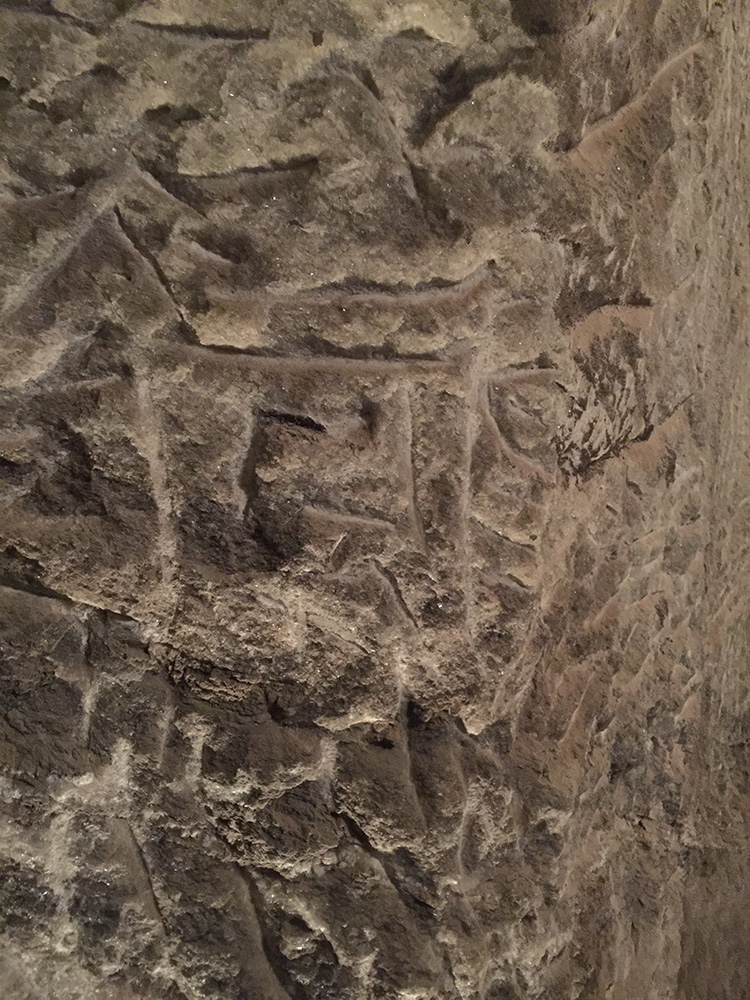
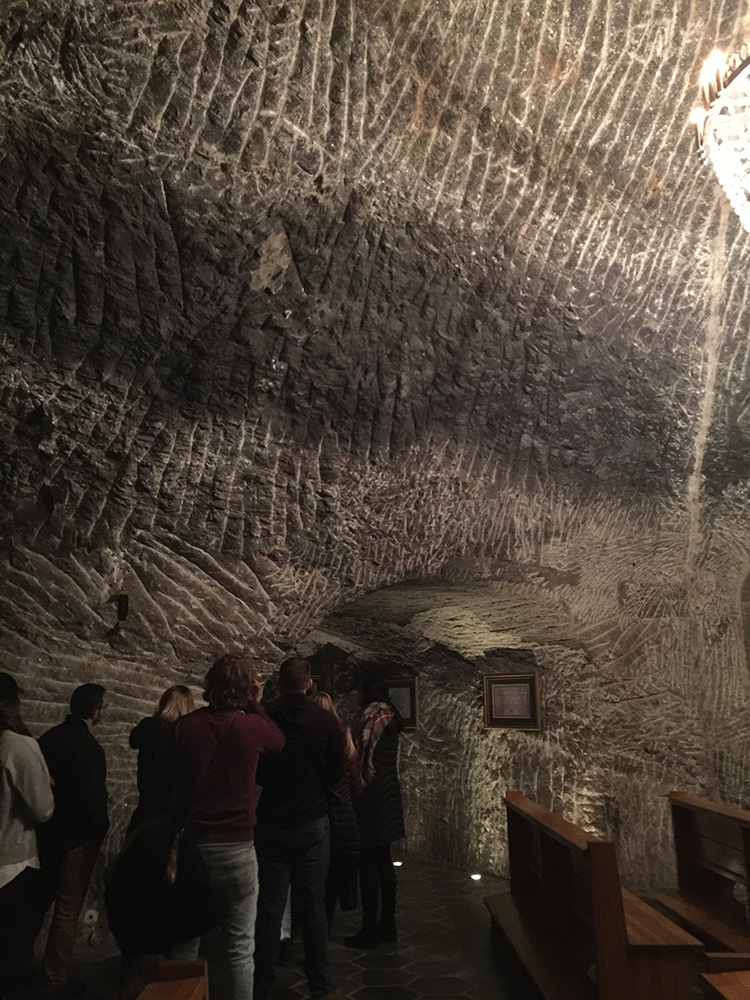
Until fairly recently the miners used their own back-breaking labor to chop the salt out of the walls. Now they use machines and dynamite but in the parts we were in you could clearly see the pick marks from the pick axes.

And in some places moisture got in and made what is called “salt cauliflowers.”

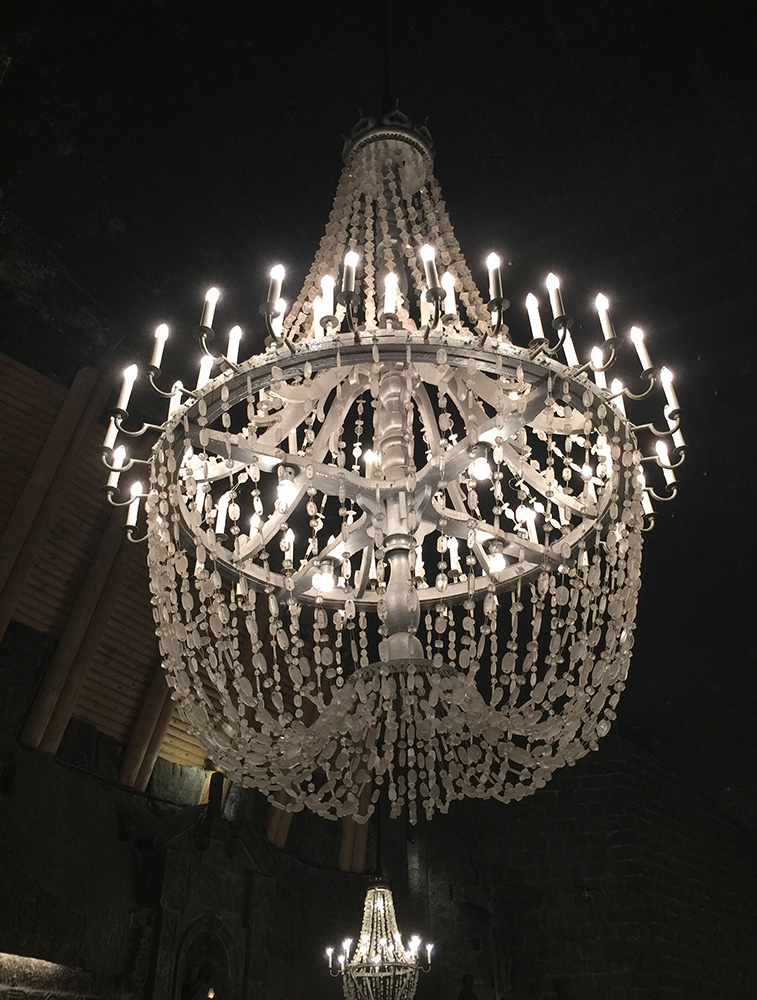
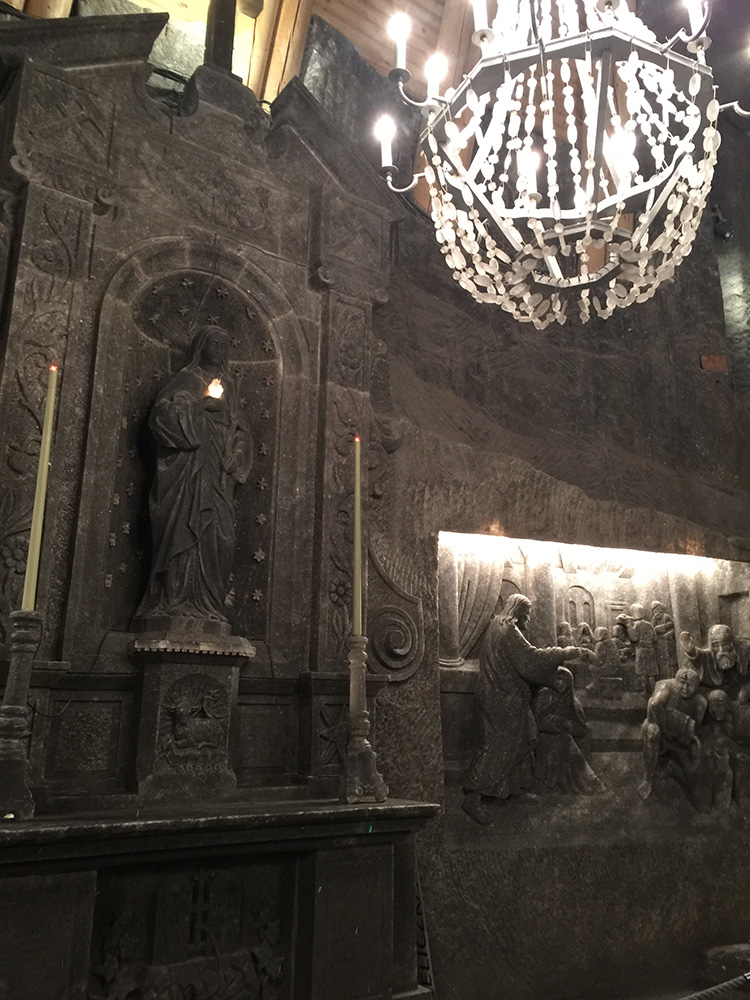
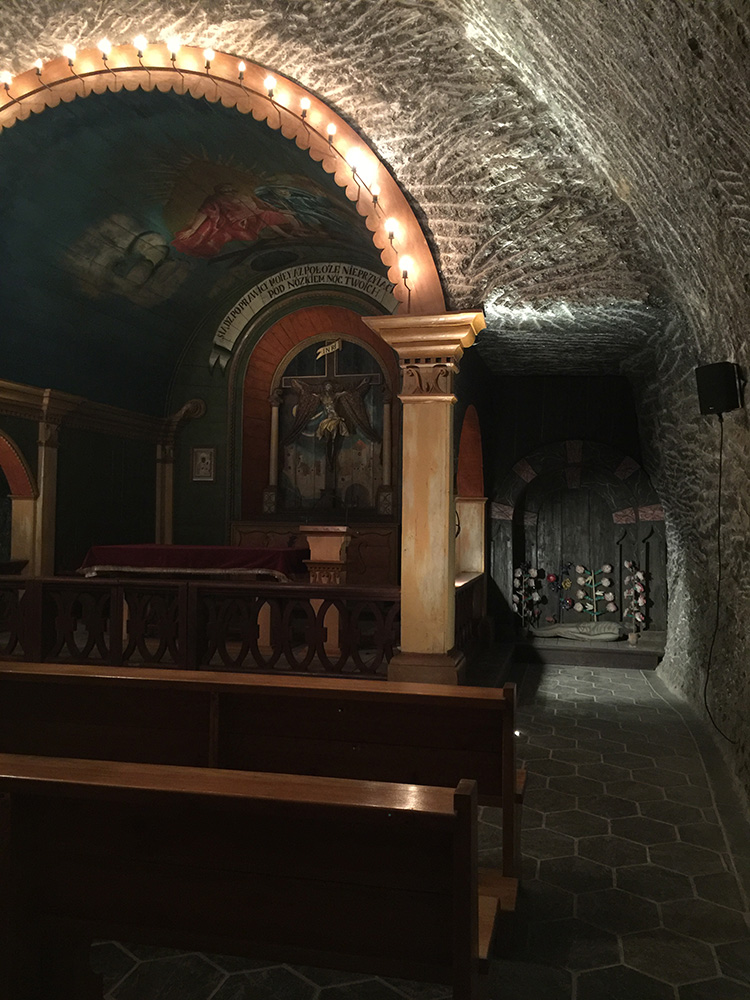
The early employees there were apparently treated really well. They were paid decently and they only worked eight hour shifts. The only problem is they had to walk up and down all those gazillion stairs. Some of the workers had artistic skills and that’s where the coolness of this place kicks in. Being super-devout Catholics they carved a chapel. The floor, the walls, the chandeliers – all carved out of salt and all by mine workers. It’s very impressive.


There are other chapels throughout the mine but they have non-salt elements. WHICH IS CHEATING.

There are pools of saltwater and no surprise here, they are very salty. In the 1800s there used to be rowboats you could rent and paddle around down there but a boat tipped over and three people drowned so no more rowboats.

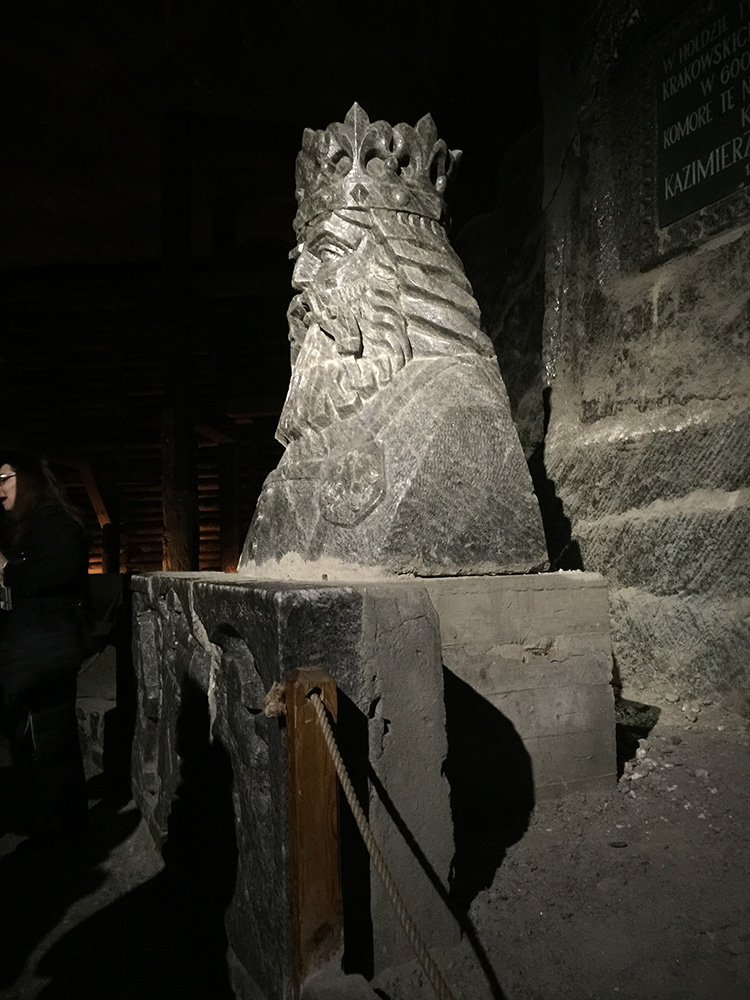
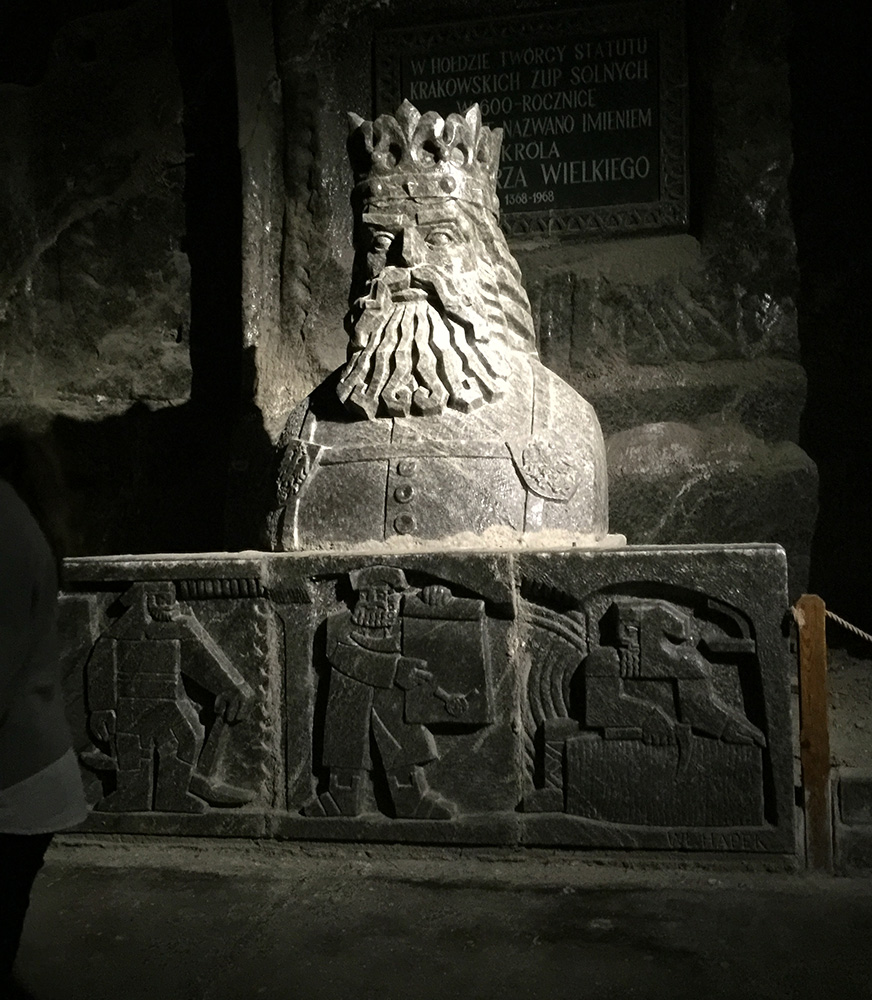
In addition to the chapels and pools there are niches with sculptures, both religious and non-religious. There’s King Casimir the Great who, it is said, “inherited a Poland of wood and died in a Poland of stone,” implying that he built up Poland and brought it into the modern era (as modern as it gets in 1350).

They have gnomes that come to life at night and help the miners (TRUTH. FACTS. POLAND.)

There’s Princess Kinga and the story of the mine. Taken from Wikipedia:

There is a legend about Princess Kinga, associated with the Wieliczka mine. The Hungarian princess was about to be married to Boles?aw V the Chaste, the Prince of Kraków. As part of her dowry, she asked her father, Béla IV of Hungary, for a lump of salt, since salt was prizeworthy in Poland. Her father King Béla took her to a salt mine in Máramaros. She threw her engagement ring from Boles?aw in one of the shafts before leaving for Poland. On arriving in Kraków, she asked the miners to dig a deep pit until they come upon a rock. The people found a lump of salt in there and when they split it in two, discovered the princess’s ring. Kinga had thus become the patron saint of salt miners in and around the Polish capital.

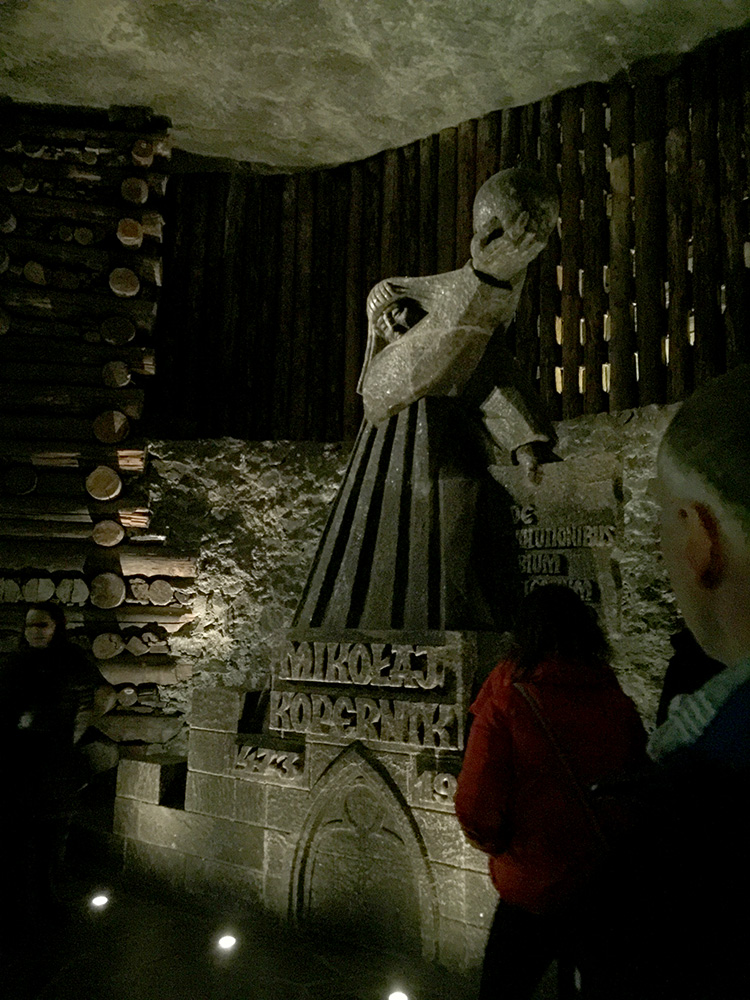
There are a couple of people I do not recognize:

And Pope John Paul II who I very much recognize:

As we headed out we walked through the giant room where wedding receptions are held. It is pretty common for people to get married in the salt chapel.

In a children’s play area there are anthropomorphic salt crystals harvesting… themselves, I guess.

And if you’re wondering did I lick a random probably unclean wall? I most certainly did. It tasted pleasantly salty.

Okay! That was my trip to Eastern Europe (you should go) in winter (but not in winter). Now back to art and internet posts.

Vienna and Krakow, Part 10.

Sunday, May 6th, 2018

Okay, we covered the depressing. Back to the positive things humanity has contributed to history.

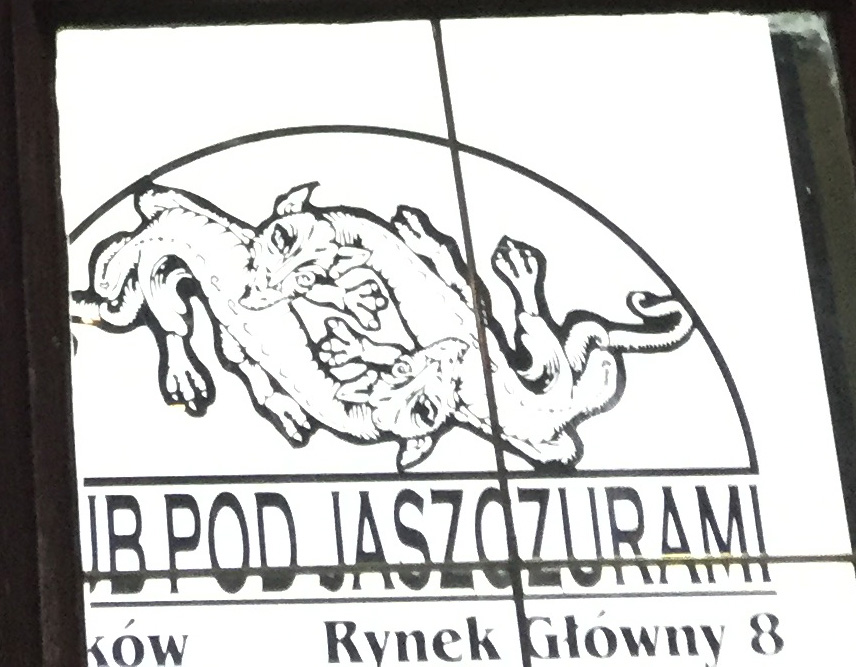
But first! A doorframe. I saw a Baroque doorframe with angry… weasels? Lizards? Dog griffons? I couldn’t tell. Thankfully, the club made their logo a line drawing of the guardian beasties so that mystery was solved right quick. Thank you, Klub Pod Jaszczurant.

This was our heated towel rack. I developed a deep and powerful relationship with this towel rack. I would come back from sightseeing frosty with crisp extremities and drape myself on this towel rack. I think the towel rack and I are married in some villages, so intimate was our contact.

In one of the churches I visited I saw a ceiling motif of the ten commandments. Now I’ve always seen them split even in two, five on one side and five on the other. Here it was the first three on one side and seven on the other, which I found odd. I asked my dad why they did that and he said the first three commandments deal with your relationship with God, where the remaining seven deal with your relationship with your fellow man. Ergo, the uneven split. Knowledge!

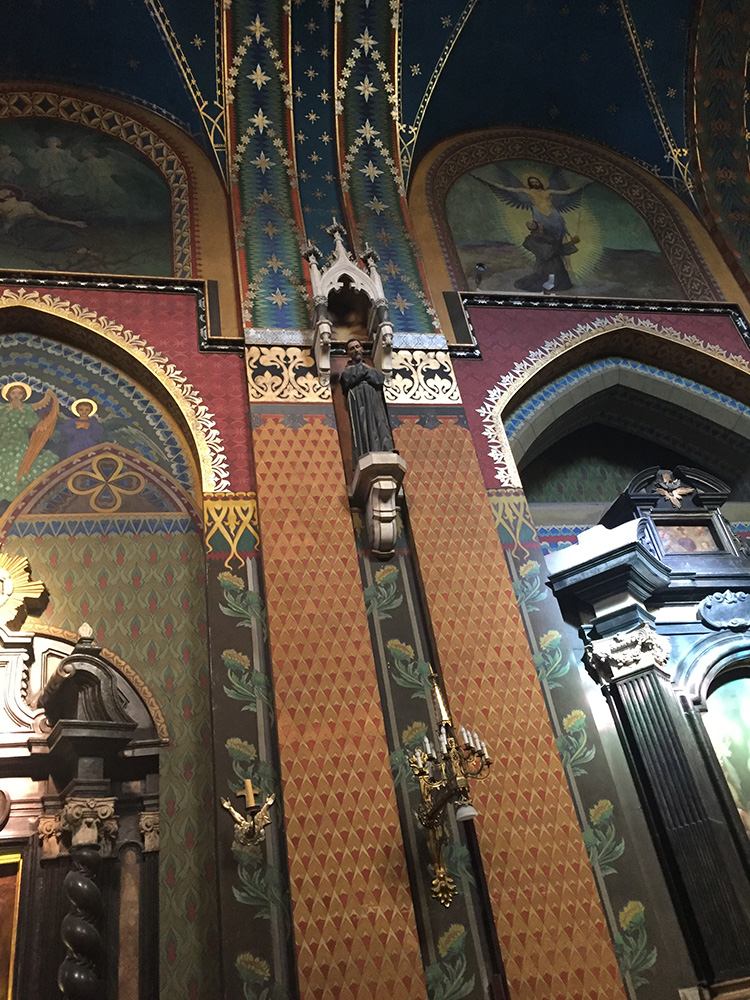
So if you remember I mentioned that when a building needed repair in Krakow they repaired it in whatever style was popular at the time of the repair, not the style that was popular at the time of the building’s creation. This worked out well for me because one whole church interior was fixed and painted in the Art Nouveau style which is my favorite artistic movement.

The windows were stained glass in the Art Nouveau style but they weren’t very good so I didn’t hurt myself trying to take pictures of them. The church was very dark and the windows were very bright and my camera was like, “What… precisely… are we going for here” so I didn’t fuss with the windows.

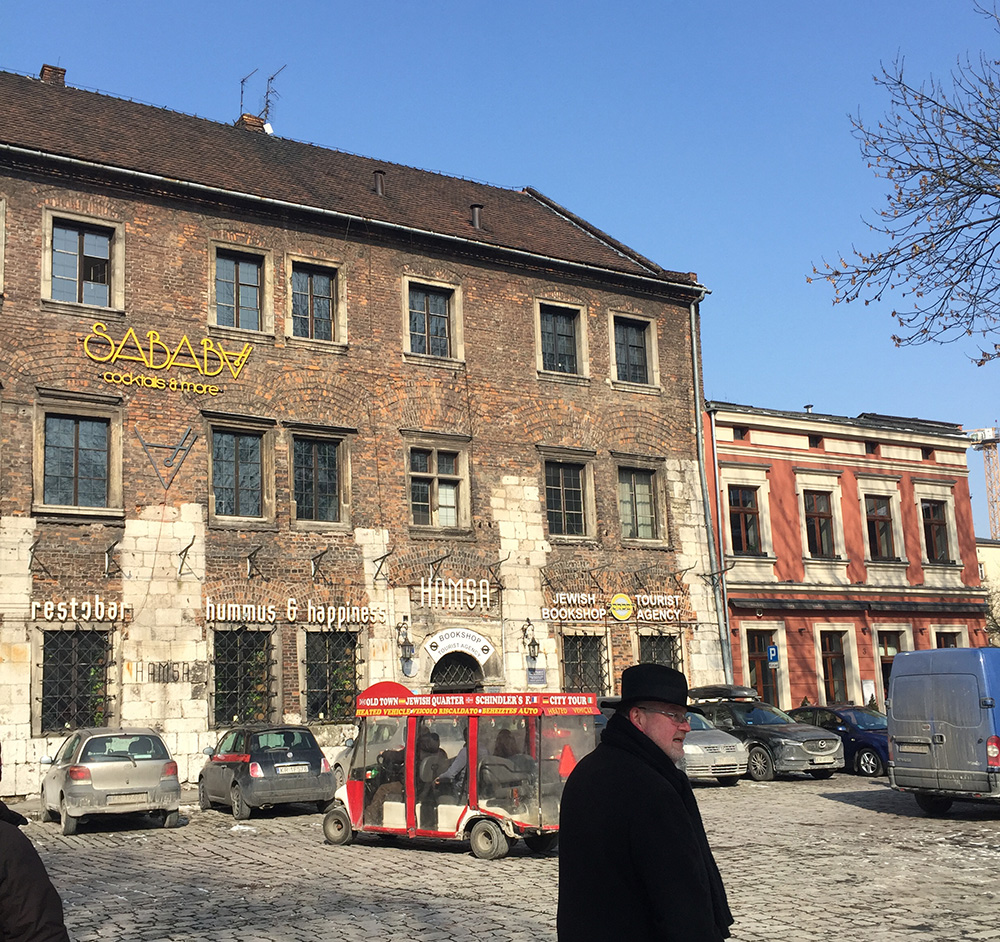
Before WWII Krakow had a ton of Jews. Now it’s got about 200 permanent resident Jews but approximately 700,000 Jews visit Krakow every year so the former Jewish district has been turned into a sort of cultural center with restaurants and museums relating to the community that used to live there.

Most of the buildings are around a small town square. This was the oldest remaining building from 1300-something.

Here’s the school off to the side. I like brickwork and am a sucker for a good brick building. Mock me if you must, I will find solace in my bricks.

Here’s a bit of Roman wall. The Jews were sent outside the city limits at one time and it’s cool to see where the city limits used to be.

This was the butchers market. In the center of this octagonal building is where the actual kosher killing happened and then the stalls where you would buy the meat. Now there’s a vintage and second-hand market there on certain days in the stalls.

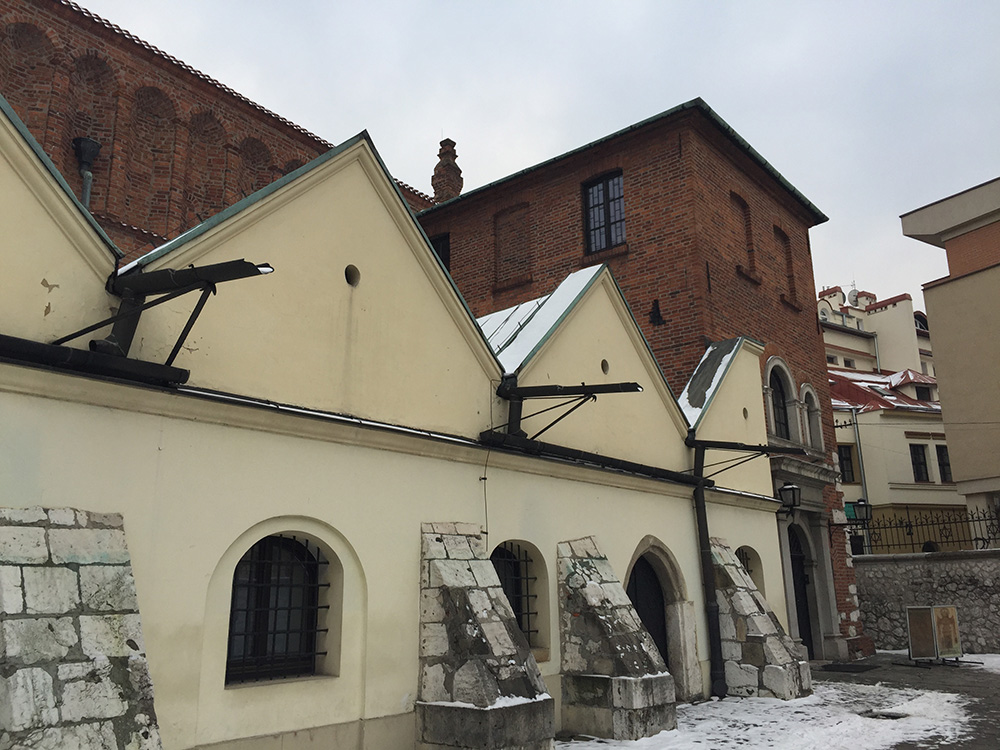
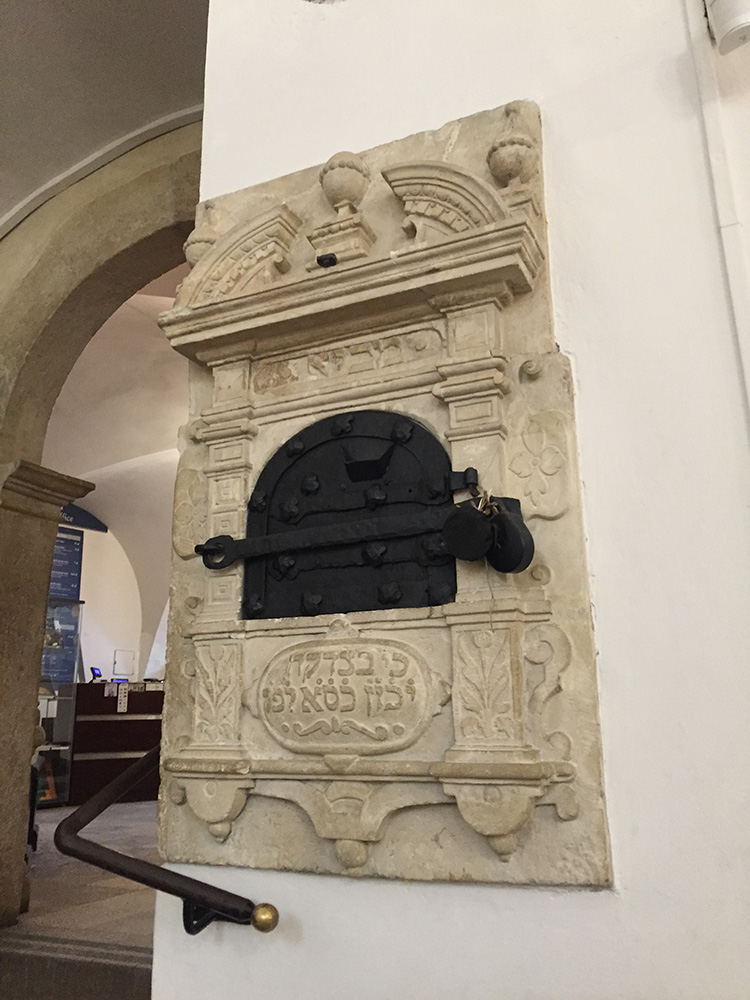
The Old Synagogue (so named because it’s from the Renaissance) is now a museum. It has a really lovely clean interior with several original elements remaining.

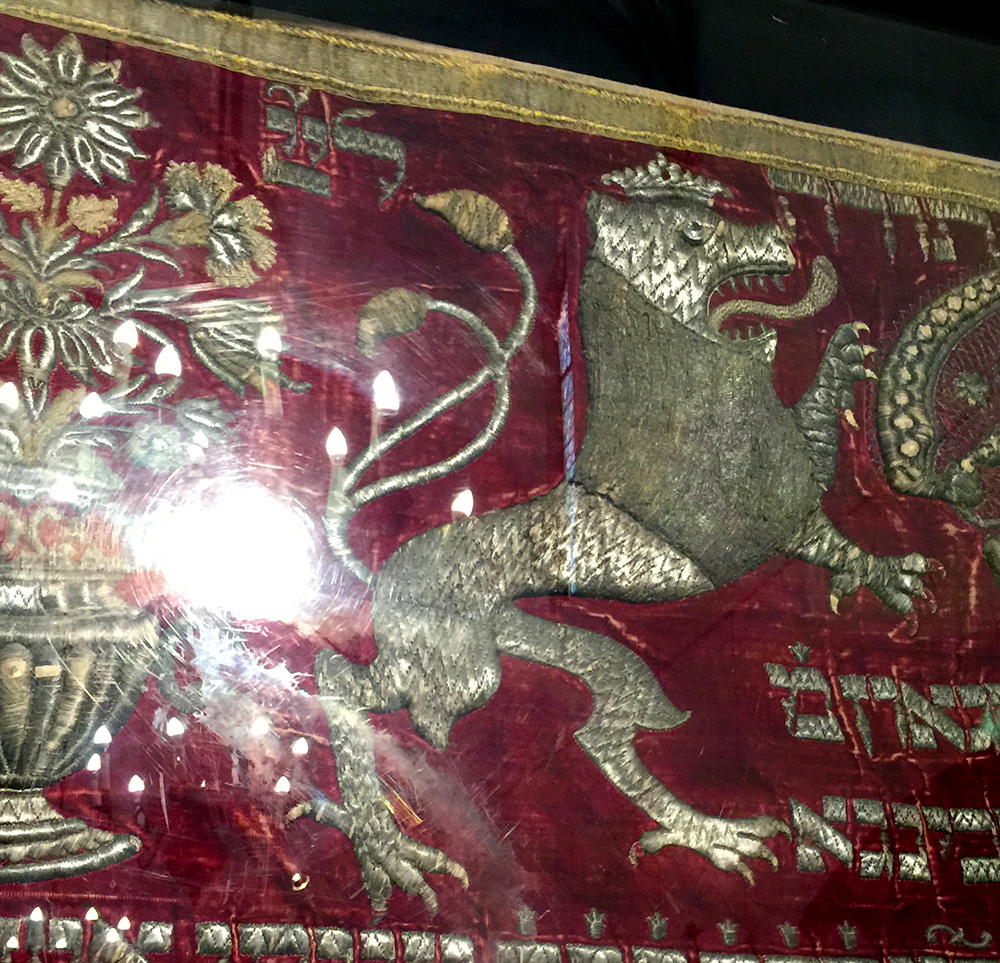
The main thing I took away from visiting this museum (which I recommend, it’s small but excellent) is that Jews loooooove lions on their religious objects and, bless their hearts, they cannot make a decent lion for all the money in the world. There was these ones:

And this:

And these cheerful failures:

And my personal favorites from the 1700s that I call “If I’m going to get lions wrong I’m going to get them epically wrong.”

Brief moment of grimness (listen, it’s Europe, it’s Jews, things are going to get crappy, it’s unavoidable). We walked through the former ghetto. This was the SS office in the center of the square.

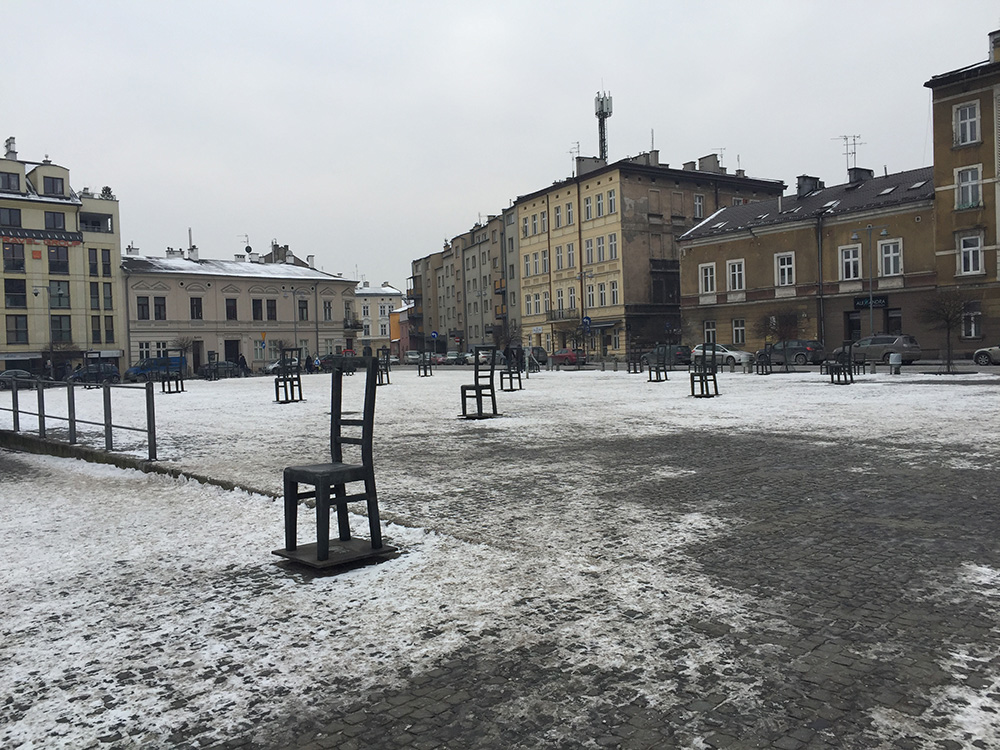
After the ghetto was liquidated and everyone in it was sent to concentration camps, the Nazis threw all the furniture in their apartments out of the windows and the square filled up with furniture. So as a memorial the square is filled with bronze chairs. Some believe it represents all the furniture that was thrown out. Some say they are waiting for their owners to come back (spoiler alert: it never happens). It’s a very impactful memorial.

We also went to the Remu Synagogue. From Wikipedia:

The Remah Synagogue, is named after Rabbi Moses Isserles c.1525–1572, known by the Hebrew acronym ReMA (pronounced ReMU) who’s famed for writing a collection of commentaries and additions that complement Rabbi Yosef Karo’s Shulchan Aruch, with Ashkenazi traditions and customs.

I was interested in going there because I heard a story (remember, we’re in Krakow where there are no myths and fables, only TRUTHS and FACTS) that Rabbi Moses Isserles wrote a book that was very important and then he buried it in the backyard where a tree grew out of the book. Then when Rabbi Isserles died he was buried under that tree as well. When people tried to dig him up to move his body to a better cemetery the tree smacked the crap out them with its branches (“No move body! I smack!”) and when bombs were dropping the tree bent over and protected the body from damage. I love that this rabbi is protected by something that is half Whomping Willow from Harry Potter and half Groot from Guardians of the Galaxy. I wanted to see the tree and wandering around an old cemetery is always on my list.


Headstones had lion fails as well. This one looked like Courage the Cowardly Dog screaming.

Someone had taken the broken headstones and embedded them on the back wall.

The interior of the actual synagogue was very small and cute.

And it took me a while to figure out why there was a lobster on the ceiling because, hello? Sooooo not kosher? But apparently there were the signs of the zodiac around the perimeter of the room (which still makes very little sense because isn’t that Greek mythology, whatever).

Next entry: The Salt Mine! With the Salt Church! And that’s the end of the trip.

Vienna and Krakow, Part 8.

Sunday, April 15th, 2018

Hey everyone! I apologize, I was doing great there and then I got caught in a vortex of work where I had to, and I am not kidding about this, learn a massive amount of the animation program After Effects in a week. Yeah. That happened. I mean, it’s still happening but if I have to look at another keyframe tonight I will punch an innocent so I’m going to talk about Krakow. Krakow! Home of depressing Jewish history! Let’s get into it. Oskar Schindler from the movie Schindler’s List, remember how he was a good guy? Spielberg lied to us. Here’s the truth: Oskar Schindler was a Nazi which we knew. BUT his factory was a German camp. The workers did 12 hour shifts every day, 7 days a week. In the morning they were given black coffee and a piece of bread, lunch was soup with sausage and dinner was black coffee and with a piece of bread. They lived in barracks behind the factory so Schindler wouldn’t have them getting sick or wasting time walking from a nearby camp every day. It was like this for YEARS. And after the war Oskar fled to Argentina with all the other Nazis. He never did the famous scene where if he sold his watch he could save one more or any of that. He wasn’t a hero, he was just pragmatic. Sick or dead workers can’t work. You may address me as Jessica The Truth-Spewer And Dream-Killer if you’d like from this point on. I’ll understand.

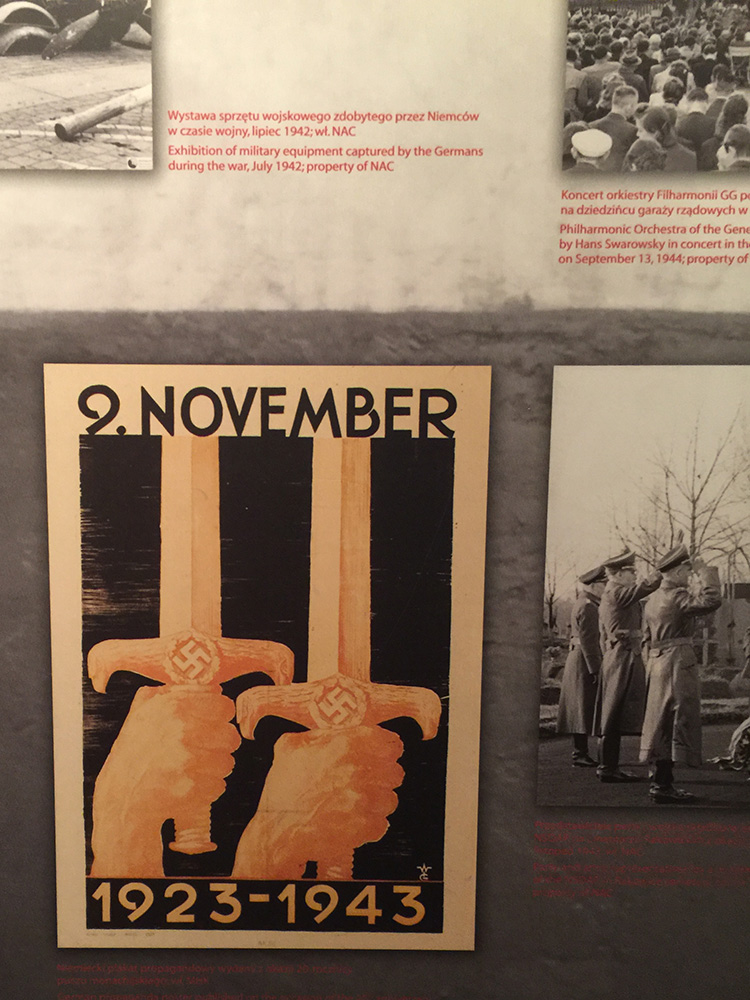
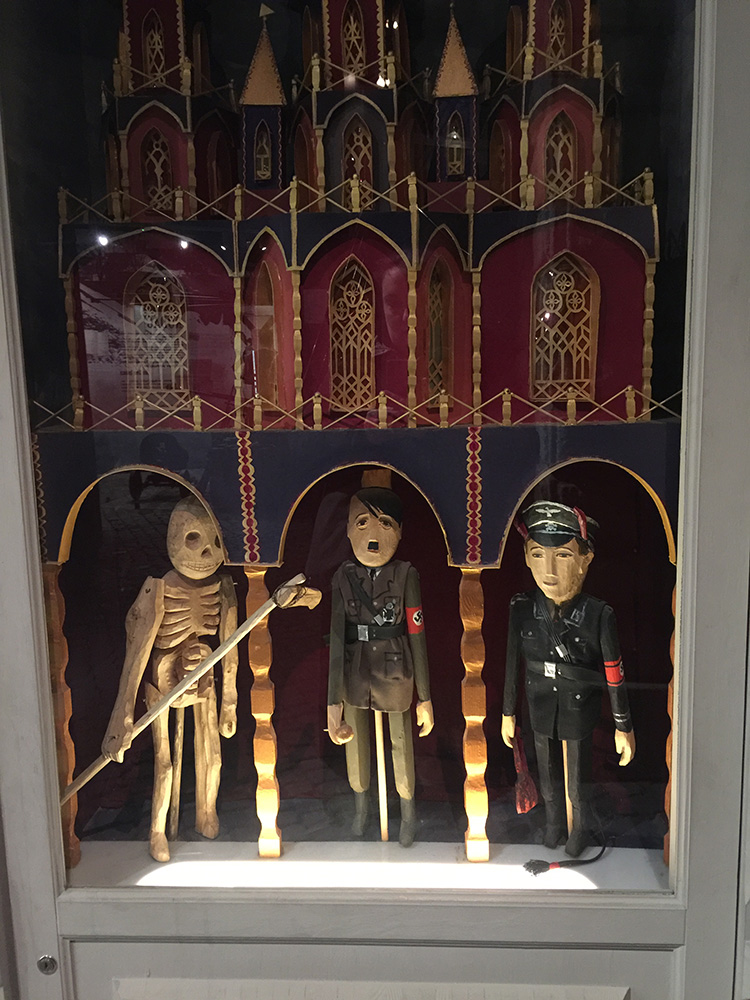
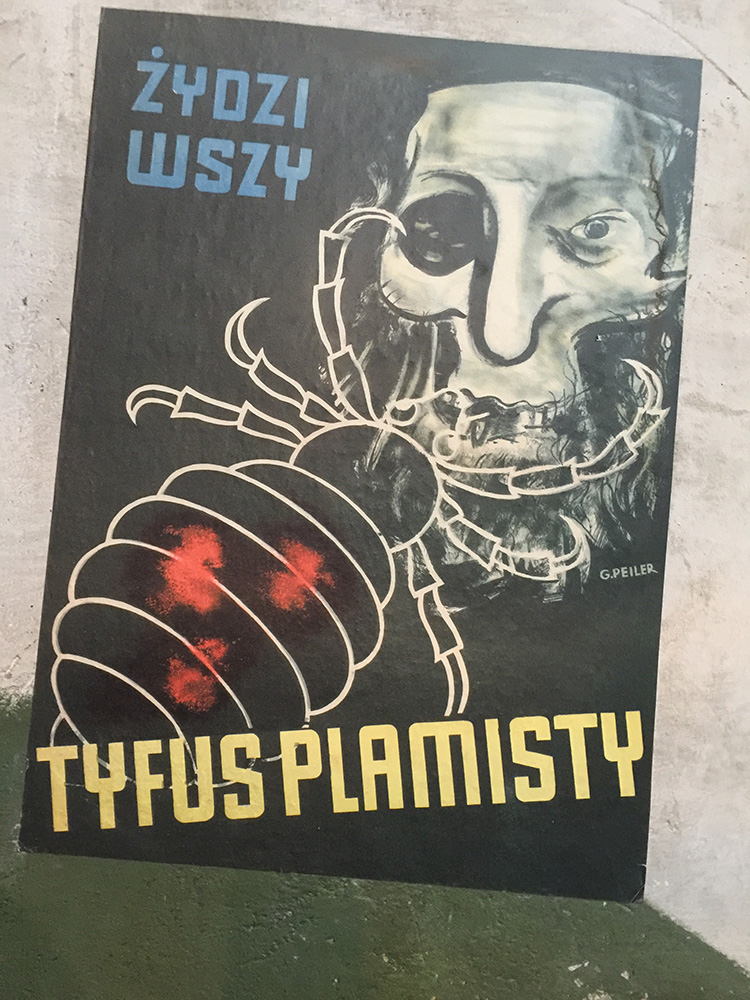
The Schindler factory has been turned into a museum and the major exhibit, which is a collection of the buildup to the war and then the occupation in Poland, is creepily excellent. The reason I say “creepily” is because you walk through it and sound in piped to set the scene which makes it very personal. The Moomins and I felt much more of an impact when we were there than when we were at Auschwitz where everything was scrubbed down and sanitized. I was quite a bit shook up but I took some pictures when I remembered to use my camera.

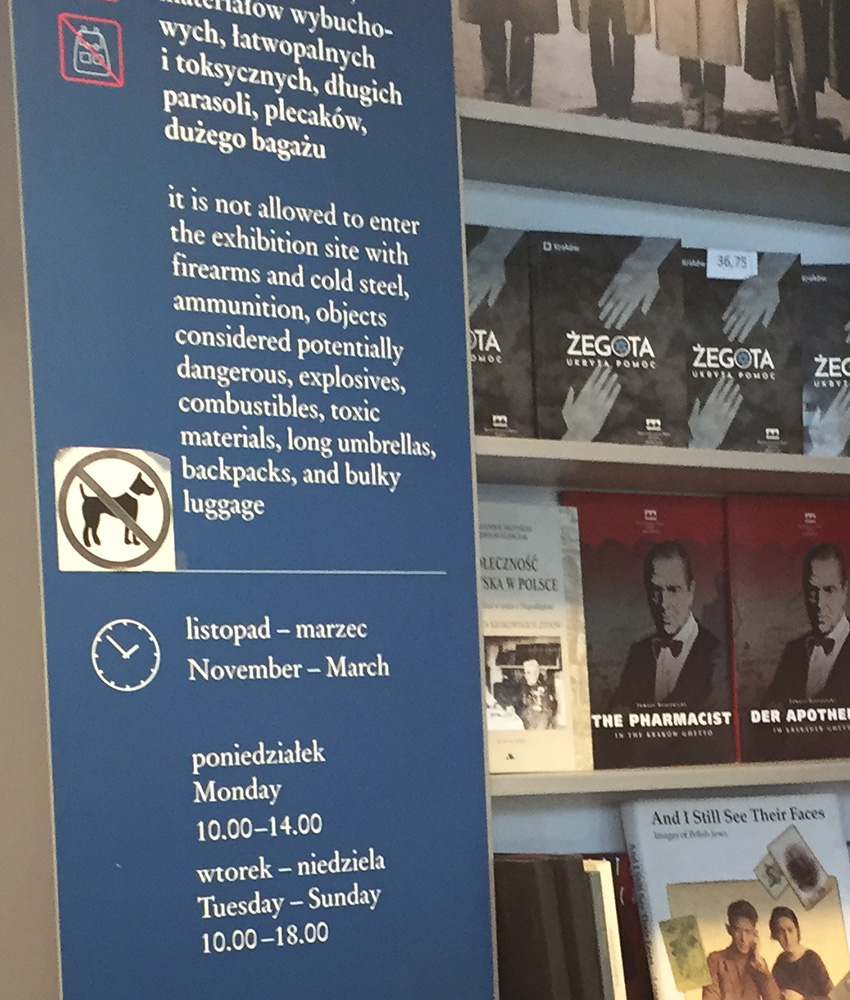
Oddly worded sign in the entrance of the museum.

I looked up what “cold steel” is and it is, in the Wiki’s words, “an American manufacturer and seller of knives, swords and other edged weapons and tools based in Ventura, California. Special Projects is a division of Cold Steel Inc. that produces a line of tools and weapons such as Spetsnaz-type shovels, sjamboks, and spears. Additionally a line of tomahawks, axes, and hammers is marketed under the name of The American Tomahawk Company.” So I’m guessing they’re saying no weapons of any kind.

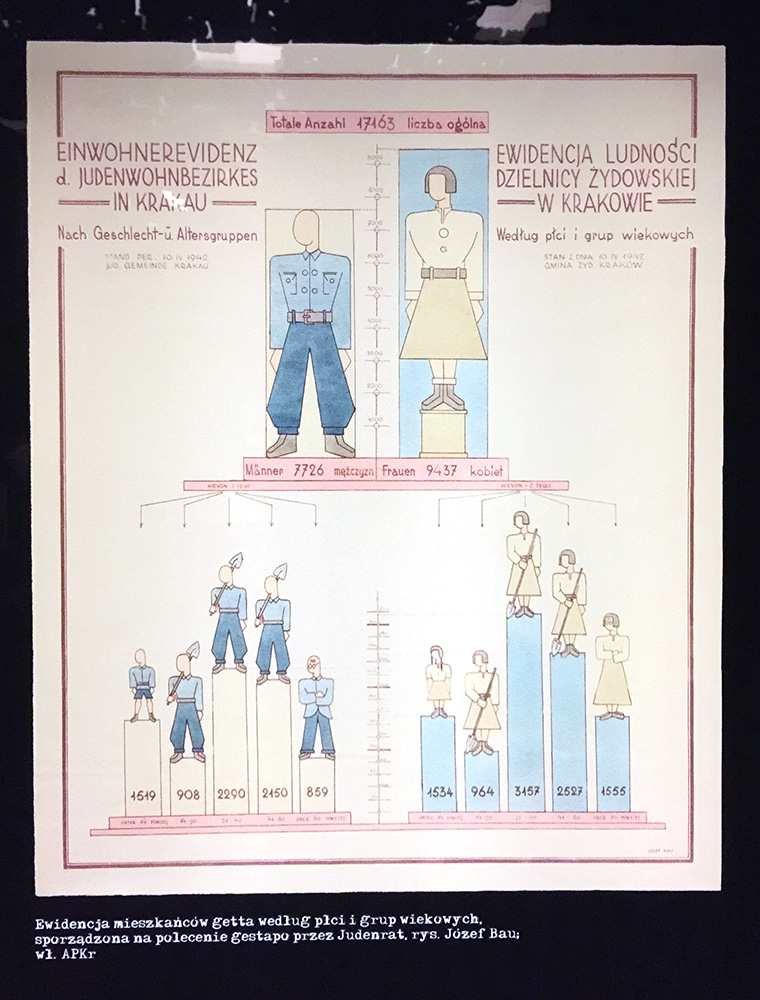
The Germans required detailed reports on how everyone was doing in the ghettos so someone made this handy-dandy chart of how many of each age group of people. Aside from the grim subject material, I very much liked the design style.

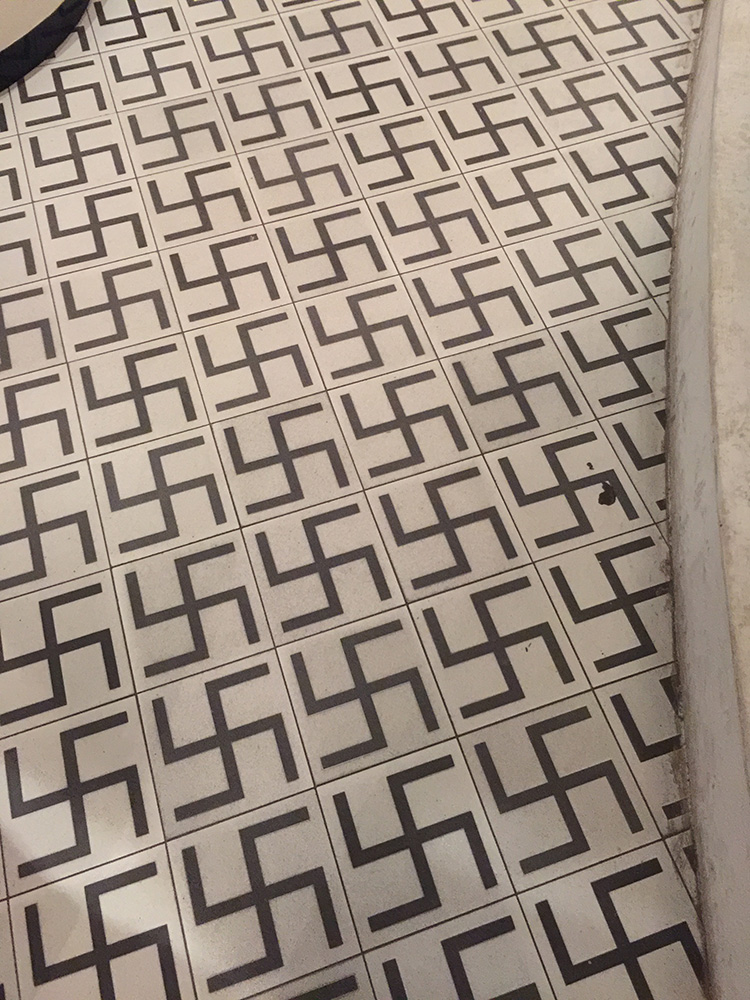
Ugh, this tiled floor. Tough to walk on. I felt like it was leeching bad vibes into the soles of my feet. It didn’t help this music was playing simultaneously. The whole mood was ominous to the nth degree.

Other elements from the exhibit.

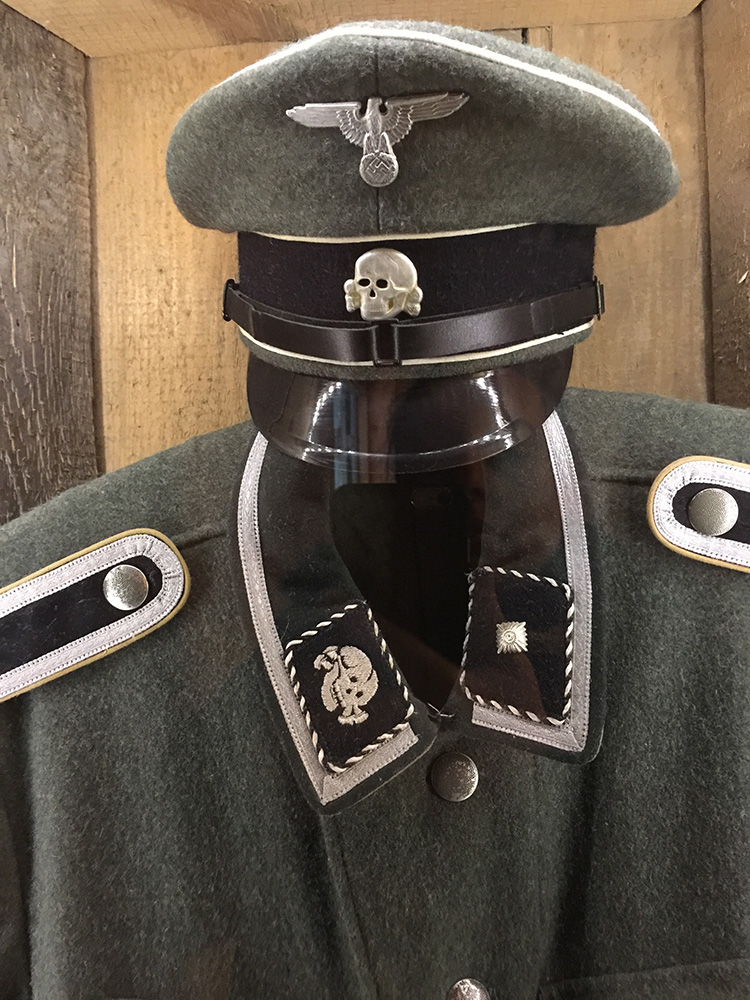
This one made me grin. There’s a British comedy skit referencing this particular uniform that I immediately thought of.

https://www.youtube.com/watch?v=hn1VxaMEjRU

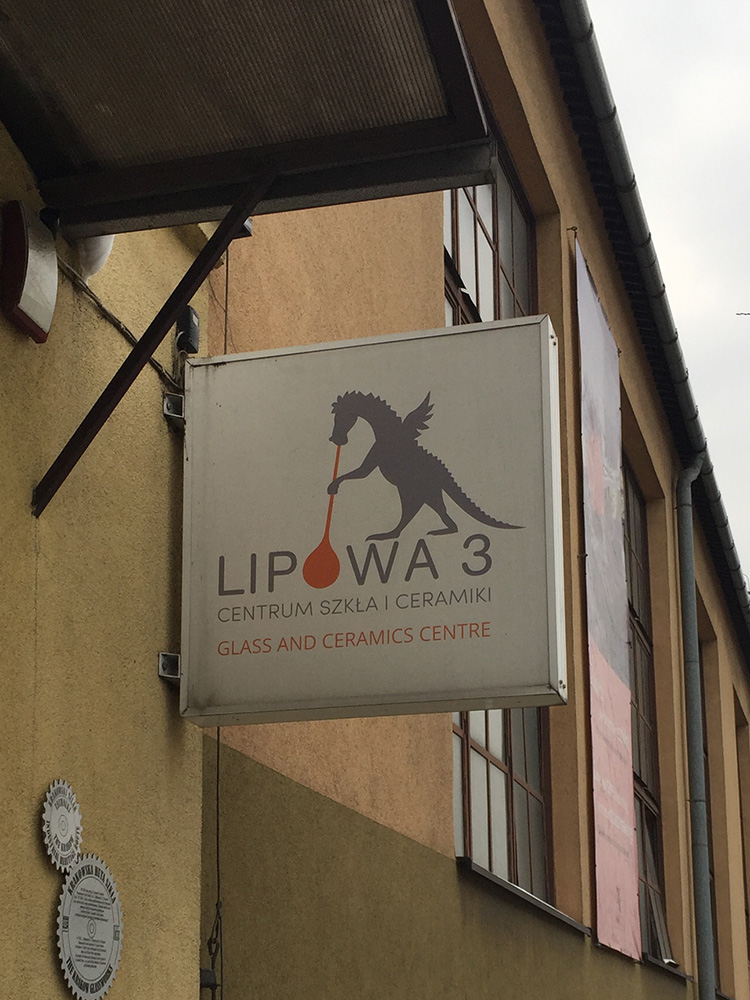
That’s enough staring into the horror of mankind for today. Since the Schindler factory was in the industrial part of town the factory across the street had been turned into a glass-blowing and ceramic space. Please note that the logo was a dragon blowing glass. Never forget the dragon is real! NEVER FORGET.

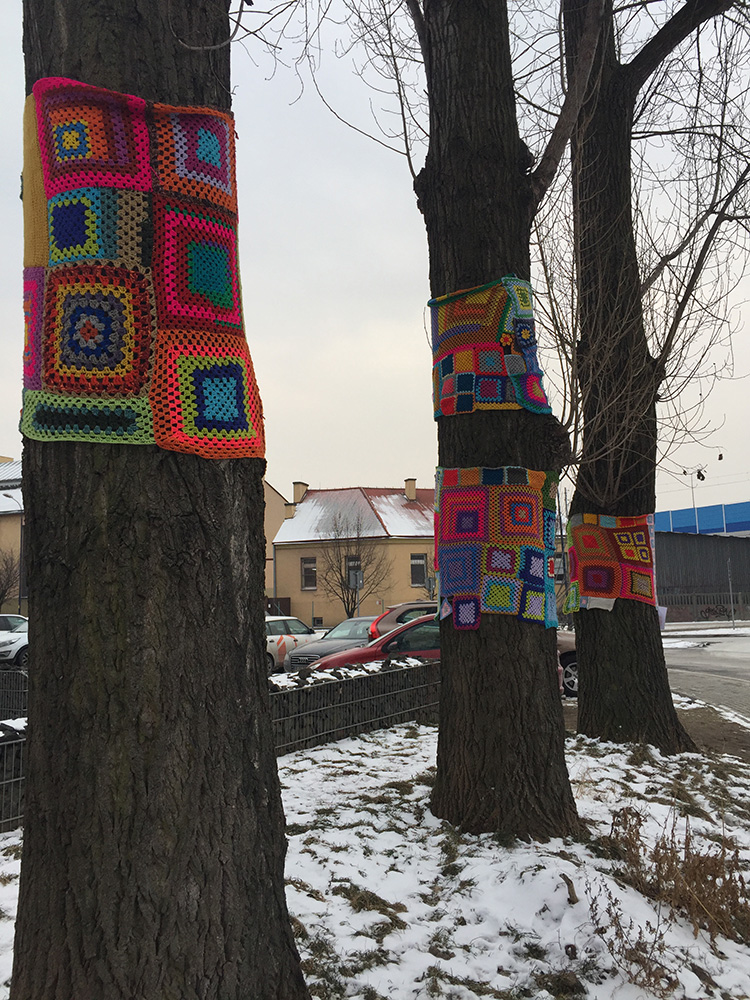
And because the industrial part of town has many artist’s studios it was not surprising to see the knitted trees.

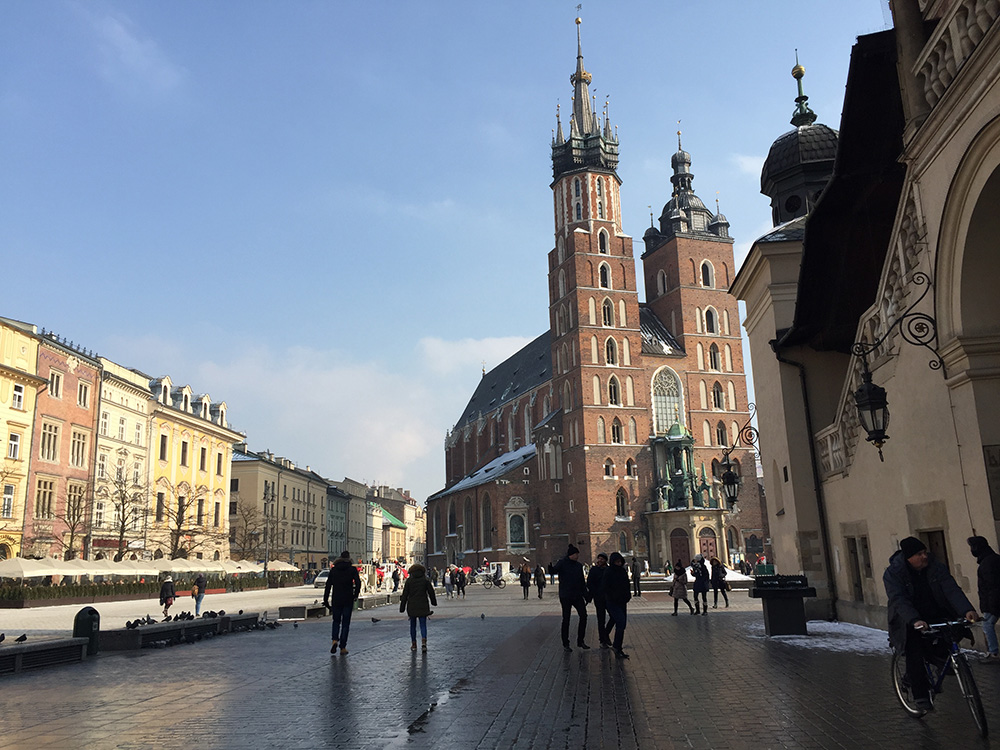
Aside from the major cathedral in Wawel Castle there are approximately eight thousand other churches in Krakow. I only visited a handful but they were pretty great. My favorite was St. Mary’s Church in the Old Square.

Here’s some knowledge on it:

Built in the 14th century, its foundations date back to the early 13th century and serve as one of the best examples of Polish Gothic architecture. Standing 80 m (262 ft) tall, it is particularly famous for its wooden altarpiece carved by Veit Stoss (Wit Stwosz).

On every hour, a trumpet signal—called the Hejna? mariacki—is played from the top of the taller of Saint Mary’s two towers. The plaintive tune breaks off in mid-stream, to commemorate the famous 13th century trumpeter, who was shot in the throat while sounding the alarm before the Mongol attack on the city. The noon-time hejna? is heard across Poland and abroad broadcast live by the Polish national Radio 1 Station.

I heard and saw the trumpeter when I was there. He was perched near a window in one of towers and when he finished he waved his very shiny trumpet out the window and we all waved back and cheered. It was a very jocular medieval moment. You’ll also note the two towers don’t match. Why? I’ve decided it’s because under no circumstances should there be any symmetry in any Polish architecture ever. Please refer to the Wawel Cathedral for additional proof.

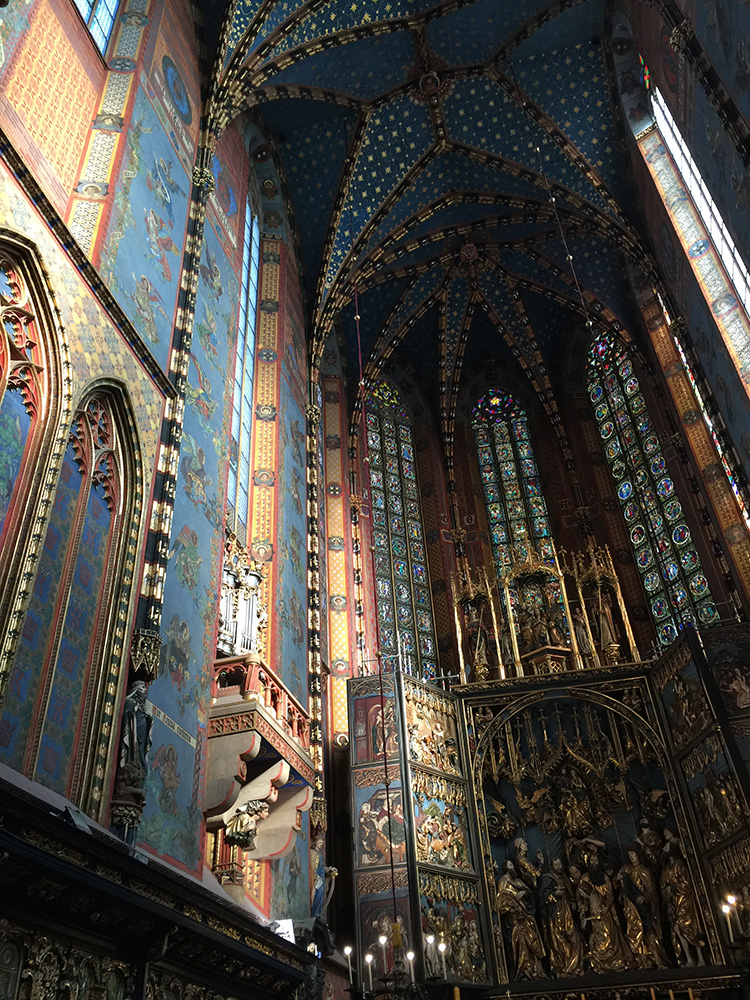
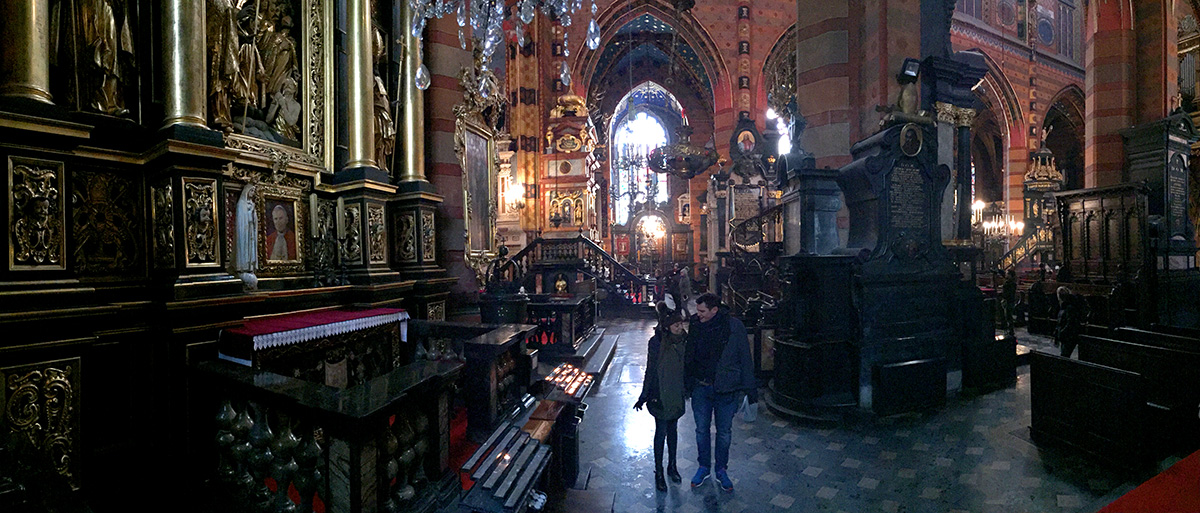
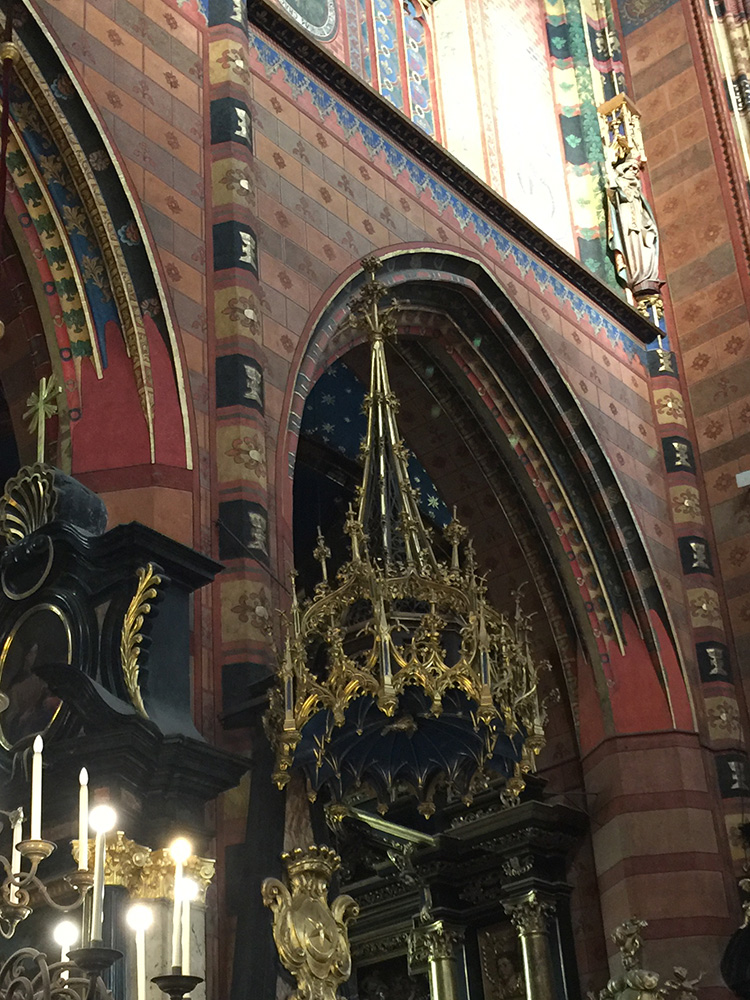
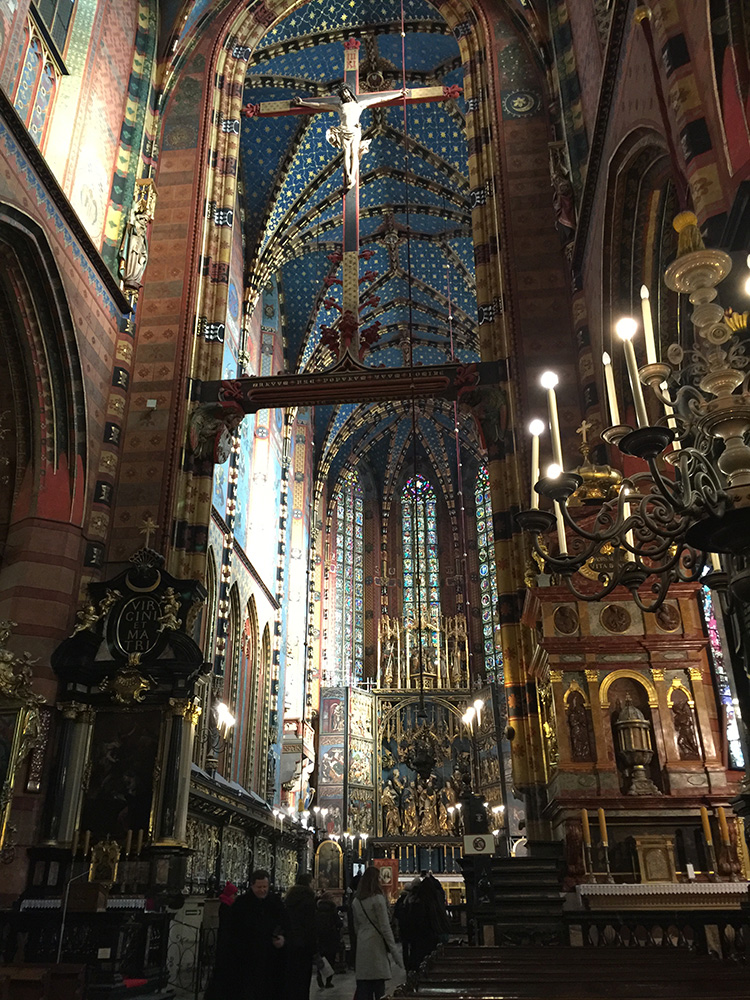
The exterior is lovely, but the inside was redone in the 1800s and completely polychromed and it is IMPRESSIVE. My breath was tooken away.

The only painted portion that bothered me was at the base of the curved arches when they turned into the pillars. That red part looked unfinished and a bit sloppy, like they could have done more with that. I normally wouldn’t be bothered by that but it really stood against all the excellent and detailed artwork all over the everything else.

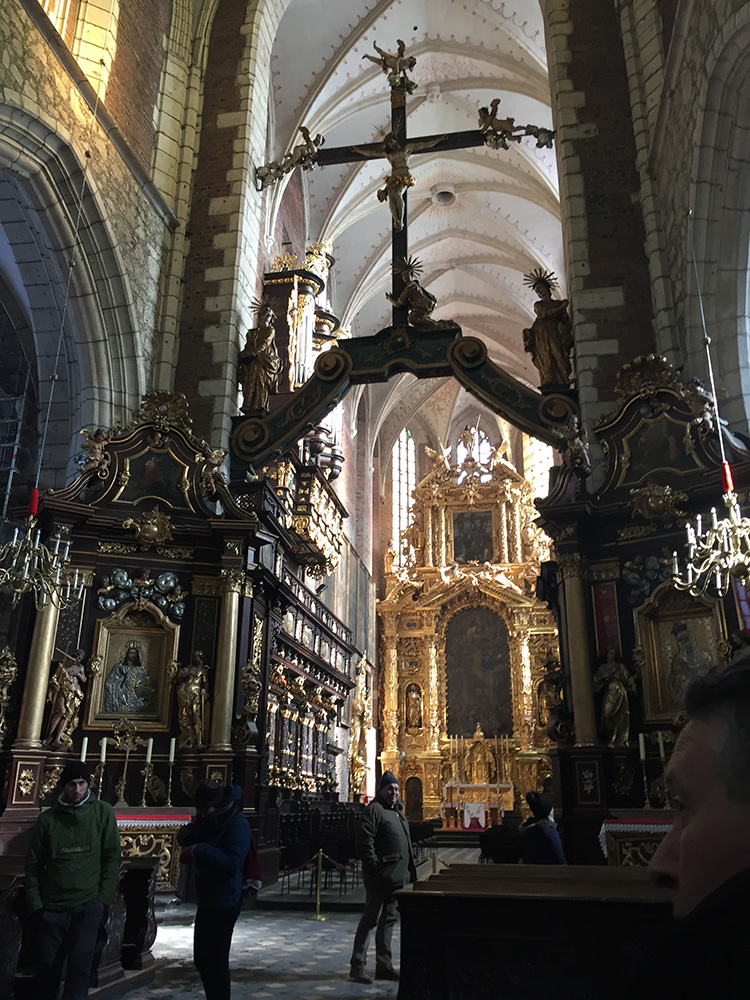
A cool bit I noticed in several Polish churches was putting an arch at the of… the aspe? The front where the priest conducts services from. I forgot what it’s called. That place. Anyway, before that tube starts they put an arch or a bar with the crucifix on it as like a kind of gate. It’s notable to me because it’s unusual, I don’t see it in other countries’ architectures. I thought is was an interesting touch. It’s like it’s saying, “This church may be dedicated to this saint or that saint, but Jesus comes first. Don’t forget.” Here it is in St. Mary’s Church.

And here it is in another church.

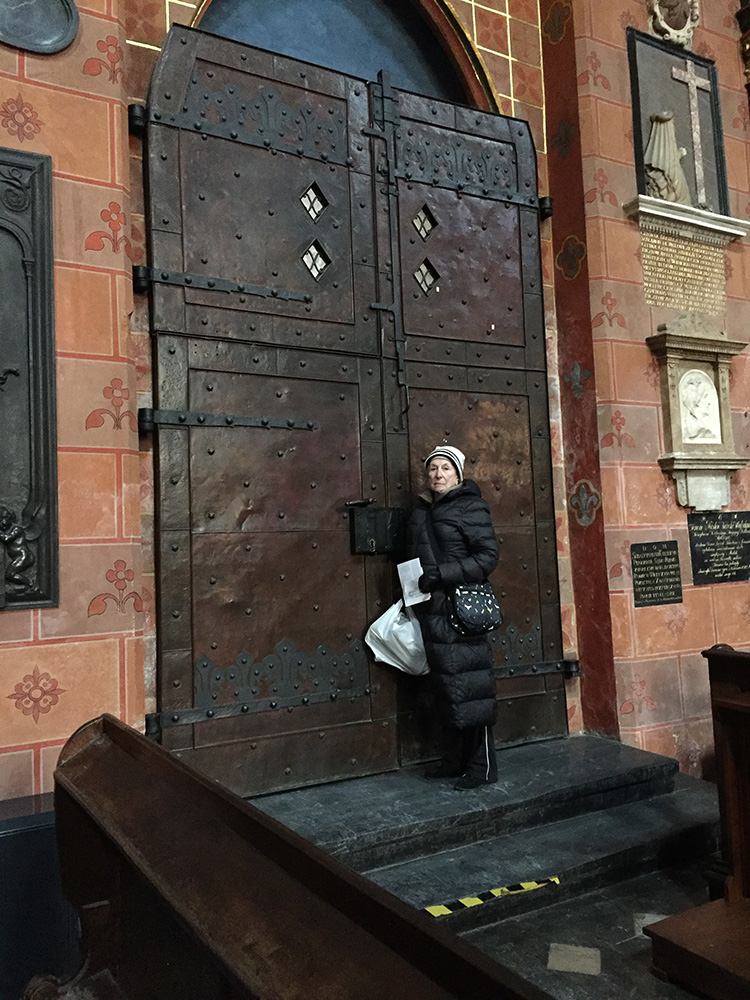
Moomins got very excited about a set of extremely large medieval doors and insisted on me taking a picture of her with them. So please enjoy this photo of The Moomins with a set of extremely large medieval doors.

And I was slightly less excited but still somewhat excited about this icon because it’s the first time I’ve seen an icon done in what I consider the Russian style, with the metal plate over the body. It reminded me how close I was to where my ancestors are from (Latvia, Lithuania, Ukraine). It’s the closest I’ve ever been.

Coming in the next entry: I’m undecided. Should I cover Auschwitz and get it over with like pulling off a bandaid or should I show some of the nicer things and then finish up on that awful note? I guess we’ll find out.

Vienna and Krakow, Part 7.

Tuesday, April 3rd, 2018

You ready for more Krakow? Cuz you’re about to get it.

Krakow is located in a really interesting place. It was once a saltwater sea there. That’s why there’s a huge salt mine nearby, it’s the dried remains of the sea. In addition there were people there 120,000 years ago, and rhinos, and mammoths. We’ll get to that in a minute. Here’s an Wikipedia article on Stone Age Poland:

https://en.wikipedia.org/wiki/Stone-Age_Poland

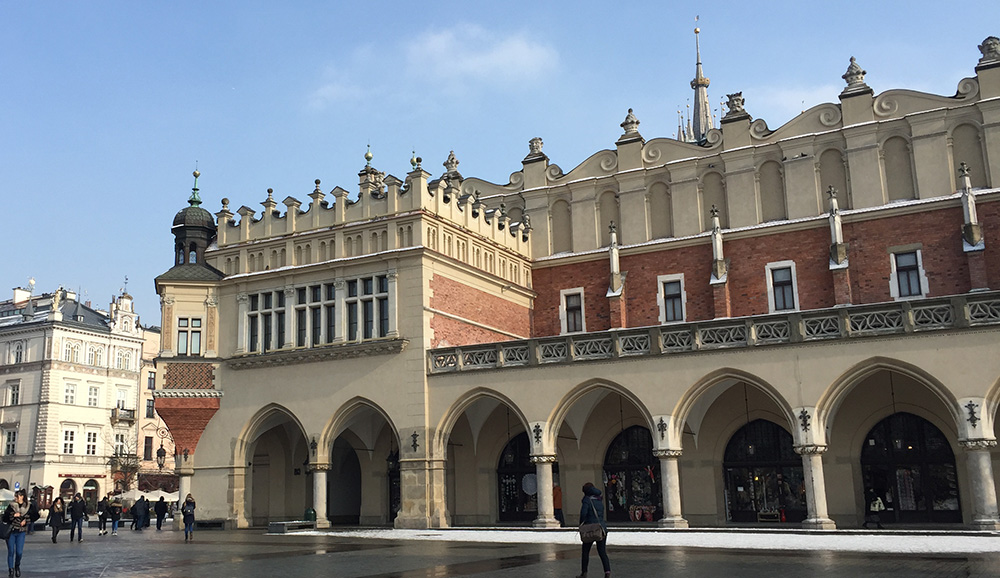
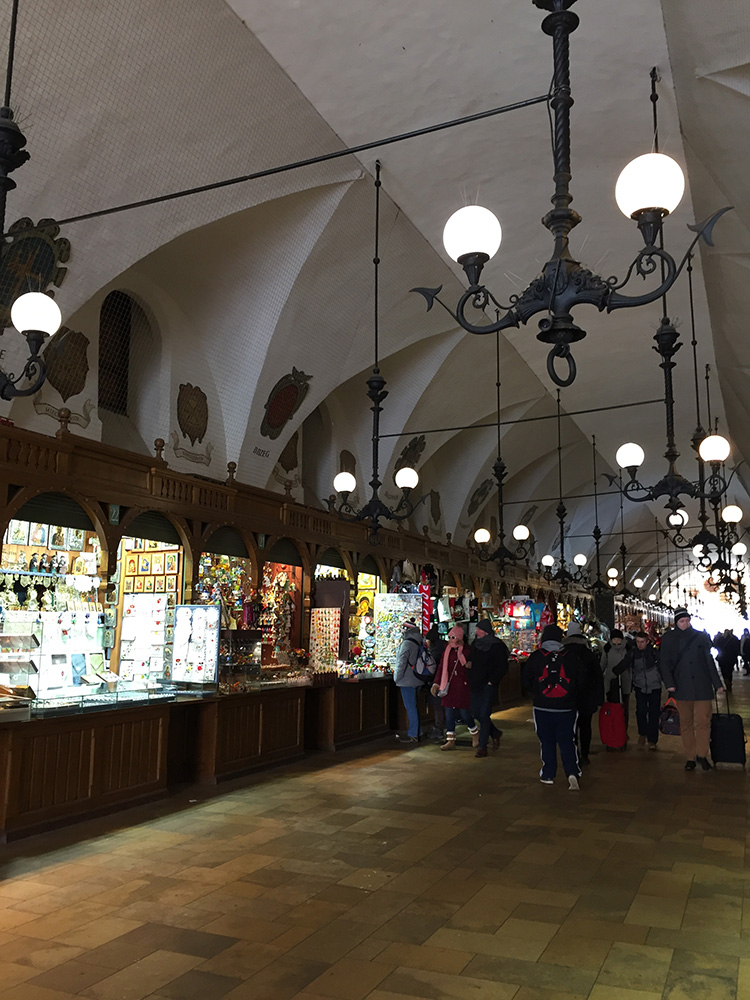
Back to architecture in Krakow: in the center of the Old Square is the Cloth Hall which was a massive market for centuries. Now the stalls are filled with vendors selling crafts and tourist items and the second floor is a museum of paintings.


There are seals and crests painted all over the walls for different areas of Poland. This one was my favorite: a sword with two fish gritting their teeth.

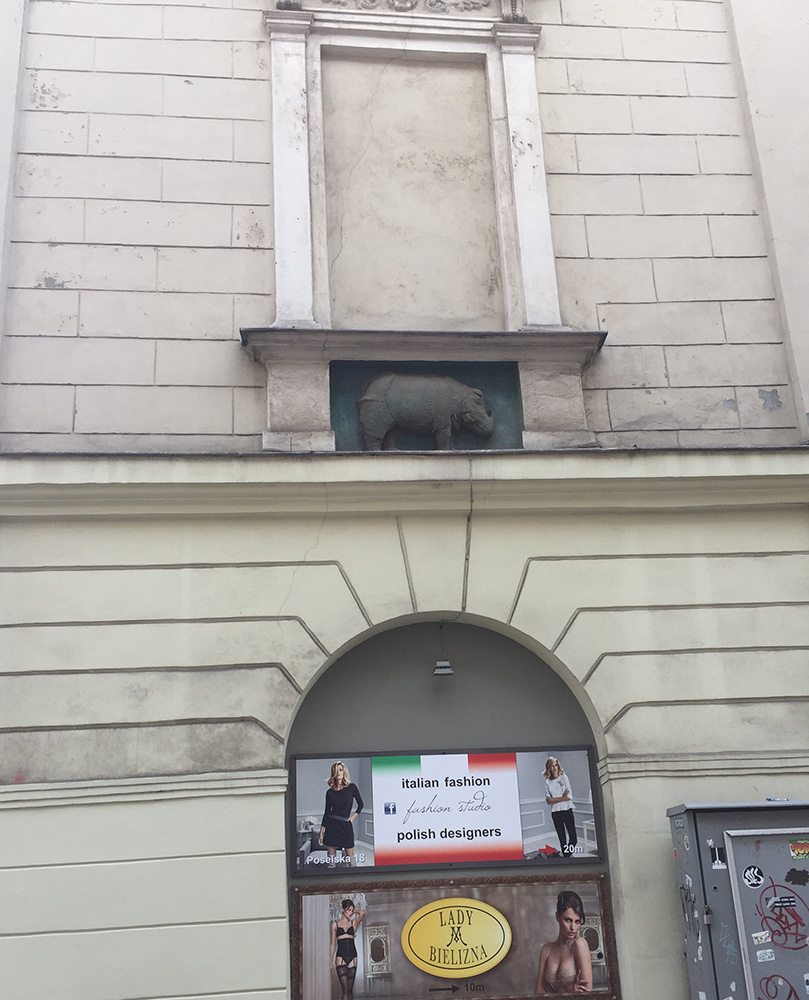
Education for everybody is a relatively new development in Western history so I imagine the reason there are sculptures over the doors of some of the older houses was a sign of who lived there to the illiterate. I saw a ton of them. I got pictures of a rhino and a lobster.

An aspect I adore in the architecture I saw was how when chunks of major buildings needed repair or burnt down no one made any attempt to match the style of the original, they used whatever style was popular that day. That’s how you end up with facilities that l0ok like they were hot-glued together from other mismatched bits. Let’s look at Wawel Castle. It’s kind of noticeable from the outside but wait, it is all made clear when we approach the Cathedral inside.

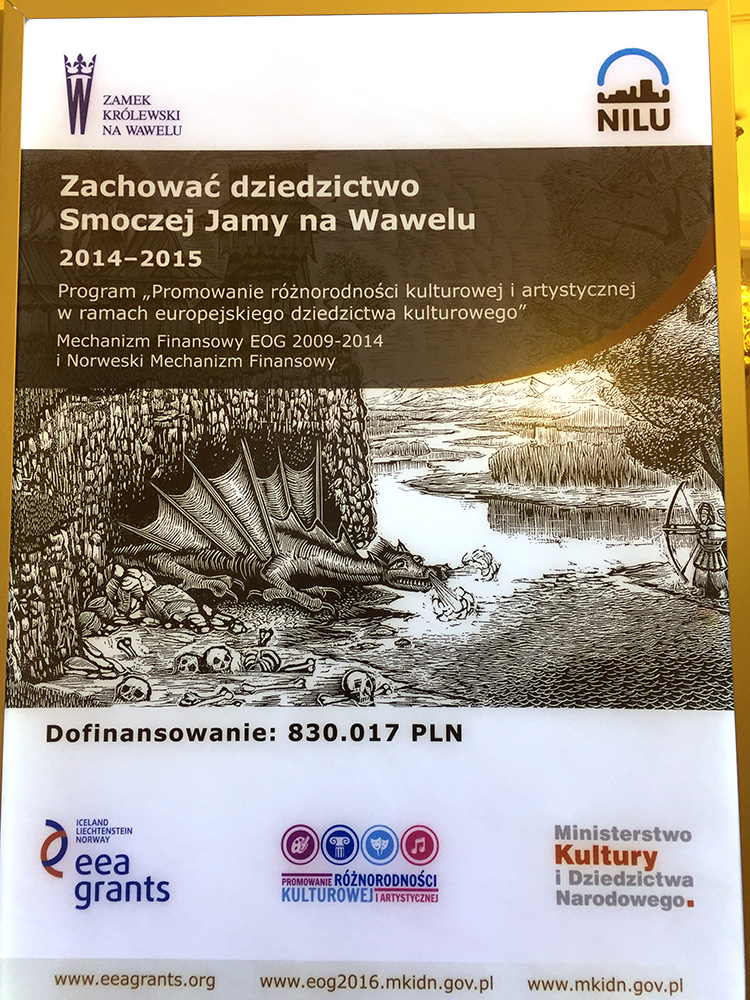
Just so you know, this is where the dragon lives. And in case you forget, you are reminded everywhere you go within the castle walls. Here’s the 100% true story of the not-made-up Wawel dragon (name: Smok Wawelski).

The Wawel Dragon tale takes place in Kraków during the reign of King Krakus, the city’s legendary founder. Each day the evil dragon would beat a path of destruction across the countryside, killing the civilians, pillaging their homes, and devouring their livestock. In many versions of the story, the dragon especially enjoyed eating young maidens. Great warriors from near and far fought for the prize and failed. The cobbler’s apprentice (named Skuba) accepted the challenge. He stuffed a lamb with sulphur and set it outside the dragon’s cave. The dragon ate it and became so thirsty, it turned to the Vistula River and drank until it burst. The cobbler married the King’s daughter as promised, and founded the city of Kraków.

So dragon drank river and exploded. Fast forward to when they’re digging up the ground to make the castle and the diggers find a bunch of bones. They didn’t research what they are because OF COURSE they’re the dragon bones, right? I mean, duh. Turns out one is a mammoth bone, one is a blue whale rib (remember, there was a saltwater sea there millions of years ago) and one was a rhino skull. The bones are now hanging outside the church’s front door.

Here’s a map of the castle within the walls. Note the icon in the upper right corner. We’ll get back to that.

Like most castles within walls, it’s like a small city in there. There’s residences for the important people and the cathedral and the parliament maybe and I imagine the equivalent of a 7-11, all manner of buildings.

But the best part is the cathedral. I don’t know if you’re ready for the hodge-podge of periods. I certainly wasn’t.

ALL THE STYLES. ALL OF THEM. I loved it. I totally get if other people are bothered by it, but not me. I am firmly on Team Random Edifice. And I especially appreciated all the dragon elements that are incorporated into the structure itself. Like the gutters.

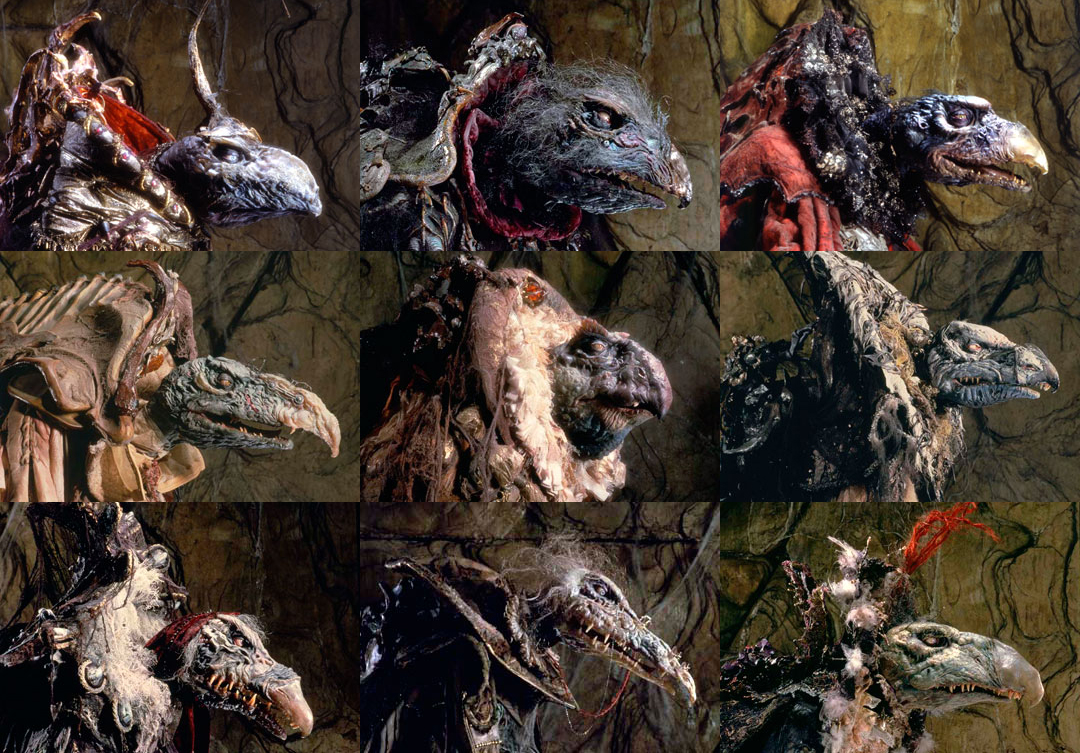
Bonus: The ones in the middle looked like skeksis (skeksii? skeksesses?).

There’s this carving near the door of a dragon.

Now, do you remember my sexy dead guys from Vienna? The skeletons propped up on their side? I saw that carved into the crypts in this church. I guess that’s an acceptable dead person pose in Eastern Europe. *The More You Know* ====?

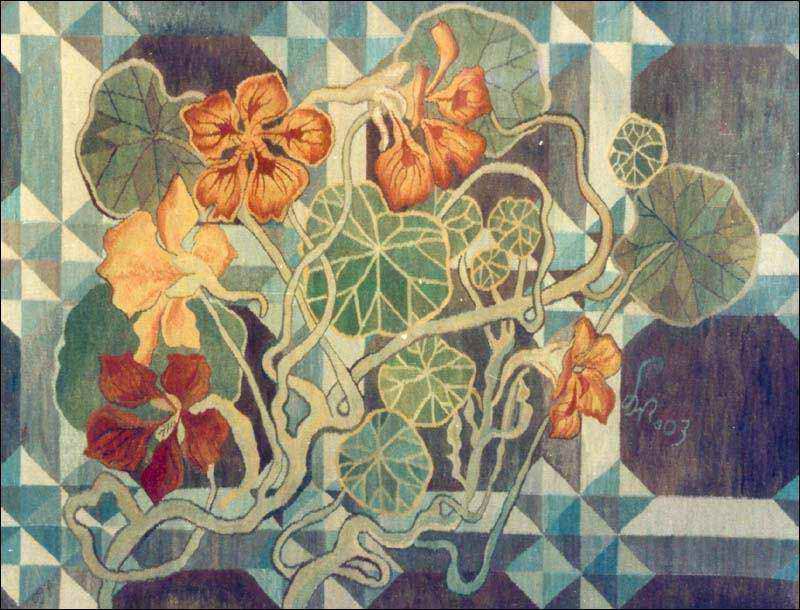
And unsurprisingly I was delighted by the art nouveau gates outside the church with the chestnut motif. Big fan.

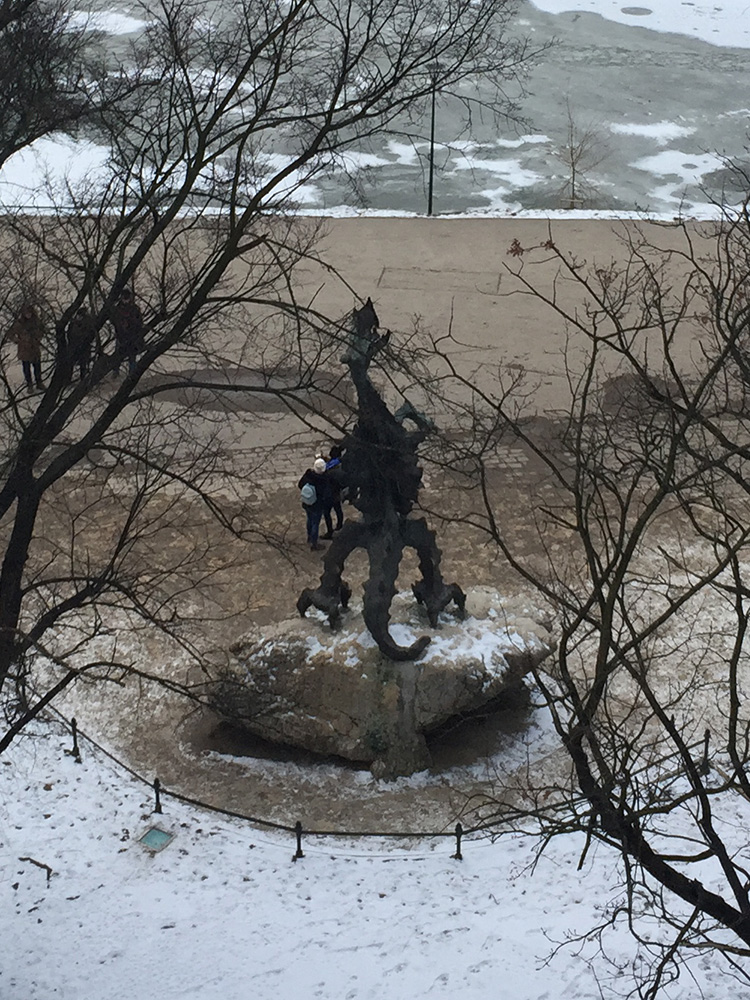
So, the actual dragon. Now, we all know he’s dead because he exploded but his cavern is still there and you can walk through it. At the end is a sculptural representation of Smok that supposedly shoots fire. I say supposedly because it was closed until spring. I couldn’t walk through the cavern and I only saw the sculpture from the top of the hill.

But I got to see a great view of the river and all the duckies and swannies swimming in the non-frozen part.

Unrelated to anything else: The ladies’ bathroom had a sign for breastfeeding but to me it looked like Dracula swishing his cape over his shoulder.

Here, I photoshopped it to make it clearer what I’m seeing.

Next entry: Schindler Factory.

Vienna and Krakow, Part 6.

Monday, April 2nd, 2018

Hey hey! Did everyone have a nice Judeo-Christian-Spring-awakening holiday weekend? I hosted Passover in my home for fourteen people so that was a thing I pulled off by the skin on my teeth.

So Krakow! A very very old city in Poland! But first, let’s look at some random stuff that does not neatly fit anywhere else.

Graffiti from both Vienna and Krakow that I liked.

A piece of ancient oldness chillin’ in the Vienna train station because they have so much art they can just put that stuff any old place:

The Rathaus in Vienna at night. The Rathaus (pronounced how you would think, Rat House) is the main government building of the town, where you would go to get a permit or pay your taxes, that kind of thing. It is from the late 1800s but it is faithfully designed in Gothic style. The Viennese Rathaus has a giant public park in front of it and during the Frozen Months it is a ice skating rink with colored lights in the trees and pop music. It was so lovely that The Moomins and I stood there in the epically cold weather and simply enjoyed the people skating to Katy Perry.

Now on to Krakow. Krakow is going to be a bit darker than Vienna because instead of museums The Moomins and I went to several places of Jewish interest and that means Auschwitz, Schindler’s factory, etc. Therefore, less upbeat. You have been warned.

Krakow is OLD. Here’s what Wikipedia has to say:

Kraków, also Cracow or Krakow is the second largest and one of the oldest cities in Poland. The city has grown from a Stone Age settlement to Poland’s second most important city. It began as a hamlet on Wawel Hill and was already being reported as a busy trading center of Slavonic Europe in 965. Kraków has traditionally been one of the leading centers of Polish academic, cultural, and artistic life and is one of Poland’s most important economic hubs. It was the capital of the Crown of the Kingdom of Poland from 1038 to 1569; the Polish–Lithuanian Commonwealth from 1569 to 1596, the Free City of Kraków from 1815 to 1846; the Grand Duchy of Cracow from 1846 to 1918; and Kraków Voivodeship from the 14th century to 1998. It has been the capital of Lesser Poland Voivodeship since 1999.

A Voivodeship is like a state with a Governor called a Voivode. They only exist in Central and Eastern Europe. My point is Krakow is super-old. When we arrived early in the morning we went to our hotel. While we were waiting for our room the front desk asked us if we wanted to have breakfast in their medieval wine cellar and we were like, “Hell yes, I want to eat eggs and toast in a medieval wine cellar, thank you.” I spoke to the front desk afterwards and they said don’t get too excited, every building in the city center has a vintage basement. There’s a whole city under the city, they ain’t special. Lotta old all over.

Another thing I learned from the front desk staff is that they don’t have myths and legends, they have truths and realities. I’ll explain. As we were checking in, the front desk girl pulled out the map of the city and started circling things. “Here is where the hotel is, and here is the city center, and over here is Wawel Castle, and if you’d like to meet our dragon he lives here, and here is…”

Notice she didn’t say, “If you’ve heard our story about the dragon, blah blah blah.” No. The dragon is real, he lives here and you can visit him. They also strongly believe in gnomes who we will meet when we go to the salt mines. My favorite conversation of this style is when we took a walking tour of Kazimierz. Our guide named Jack said, “Have you met our dragon?” and I said I had not yet but was planning to. Jack said matter-of-factly, “You should come back on the first of June. Our dragon sends out invitations to all the rest of the world’s dragons and they come here and there’s a parade of dragons.” I don’t know about you but you bet your sweet butt I’m going to the dragon parade at some point, are you kidding me? That sounds amazing.

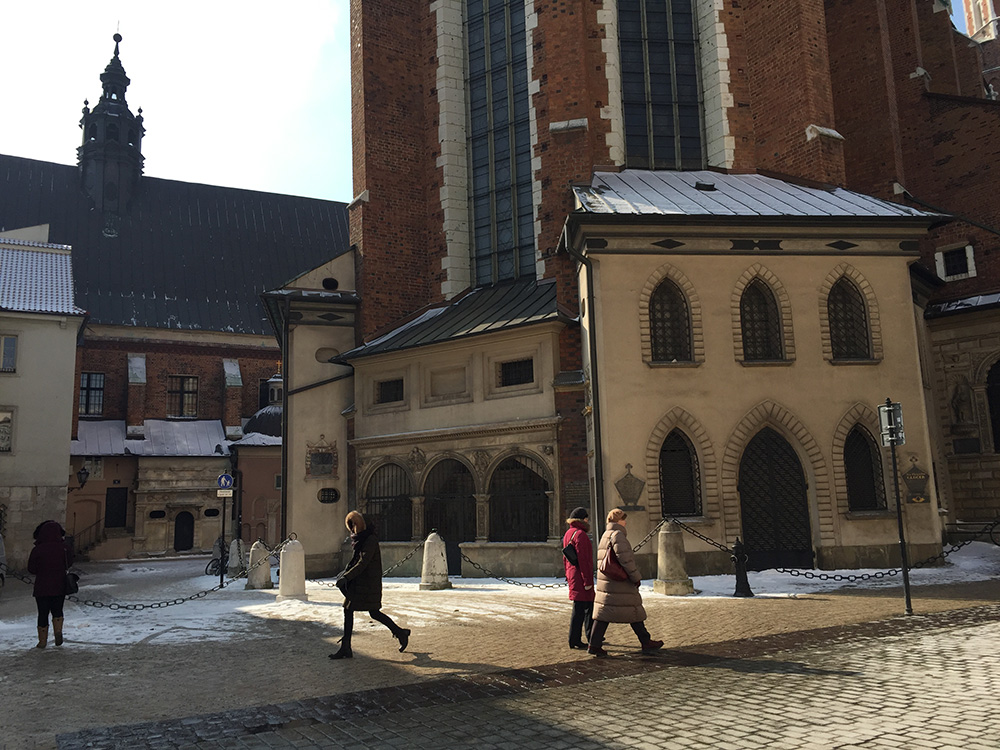
Due to being around for millennia, Krakow has awesome architecture.

I took way too many pictures of that church at the end. I loved the step style that is reminiscent of Dutch step buildings, but it doesn’t only go across and down, it dips back down before it goes up which makes it spikier. I attached a picture of a Dutch-style building in New York so you can understand what I’m saying.

The city, even though it is ancient, is very much alive and adapting. I took this photo to show Krakow keeping it modern. The building to the right was torn down, and the wurst over the door on the right has been removed and now it’s a ramen place. In the place of the torn down building is a tex-mex food truck. Very current with the times.

Next entry: more Krakow including its ancient fossils.

Addendum: Look at these pictures of the Dragon Parade! That looks super-fun. I am on board with that.