Archive for the ‘Travels – I Has Them’ Category

South America 2015, Part 10.

Tuesday, November 17th, 2015


More Galapagos! First, a cartoon I found that seemed pertinent:

16FOK

Now, before we delve into the Galapagos pics let me tell you a tale about the roughness of the ocean. I mentioned before that it wasn’t just choppy, it was insane. And I was on epic amounts of seasickness meds so at no point did I get sick. I did, however, bruise myself repeatedly getting thrown around our room. I thought it was cute that there was handicapped railings on every single wall but I grew to depend on them. As soon as we boarded I went to the room and to drop off the luggage. I decided to check out the latrine and as I was crouching to sit down the boat lurched violently and I was hurled face-first into the fiberglass shower wall like a cartoon character. So my fellow travelers and I learned quickly to plan movements when crossing the open plains of the main deck, for example. You would see people standing there holding on to the railing with that expression that Olympic athletes have before they push off on their bobsleds. They would breathe deeply and, when the moment was right, sprint quickly to their destination and grab on to something and hold on. It was living in an obstacle course. We were nowhere near lights so after dinner this elderly Norwegian gentleman named G and I liked to go up to the topmost deck and look at the sky in the hopes of seeing a falling star. (We did on the last night at sea. Very happy.) That means we would be up there when the anchor would get pulled up and we would start our nightly travels. The third night the captain miscalculated and we ended up getting caught in two currents battling it out. Not only was the boat swinging side to side but also front to back. G and I were just pleasantly sitting there when the boat tipped a bit too far and two legs of my lawn chair came off the ground. I grabbed G’s arm in time for the boat to go in the complete opposite direction and both of us to topple to the deck in a heap. I don’t know the last time you had a tall lumberjack of a man completely made of elbows and knees fall on top of you, but it is not the awesome sexy time you might think. My camera skittered away from me like a demon robot spider and G crawled over to grab it right before it fell overboard. You can imagine how often this top deck gets cleaned so we were both covered in grease and layers of seabird crap and who knows what else. I ended up crawling over to the stairwell where The Moomins magically appeared, wide-eyed and panicky, convinced I had been washed away. We struggled back to our room where I went into the bathroom, put the lid down on the toilet and sat down unmoving. The Moomins was like, “You’re covered in disgusting grime. Wash off all of that, get undressed and go to bed.” And I calmly said, “No.” The Moomins was confused. “Seriously, wash off the dirt all over you, take off those filthy clothes and go to bed. ” And responded with a peaceful, “No.” I realized later that I was freaking out but very peacefully if you can understand that. I figured I was going to die and I would like to sit quietly in this nice cool room and not move any part of myself ever again ever. That’s it. I sit in this bathroom now. This is my life. The Moomins gave up and went to bed and eventually I found the inner fortitude to wash my forearms (the part of me that bore the brunt of the deck-grot), get undressed and go to bed. The next morning we met at breakfast where Luis our guide told us he was very sorry for the previous night. I asked him to be honest with me and tell me how bad it really was. He said on a scale from 1 to 10, 1 being placid and 10 capsizing, we were at an 8. So if you think I’m exaggerating, I am not. People were thrown out of bed. It was real. The only benefit of this was at the end of the week when we flew on a small plane that needed to land in the Andes and there was excessive turbulence and we missed the runway and had to fly around and try again, normally I would be very unhappy and stressed out by this.  I was like, “Ehhh whatever. I almost joined the cast of Pirates of the Caribbean, this is nothing.”

Okay, pictures! Here we go.

Lava lizards. They’re everywhere. The males are avocado green. The females have a red face.

24-galapagos31 24-galapagos38 24-galapagos27

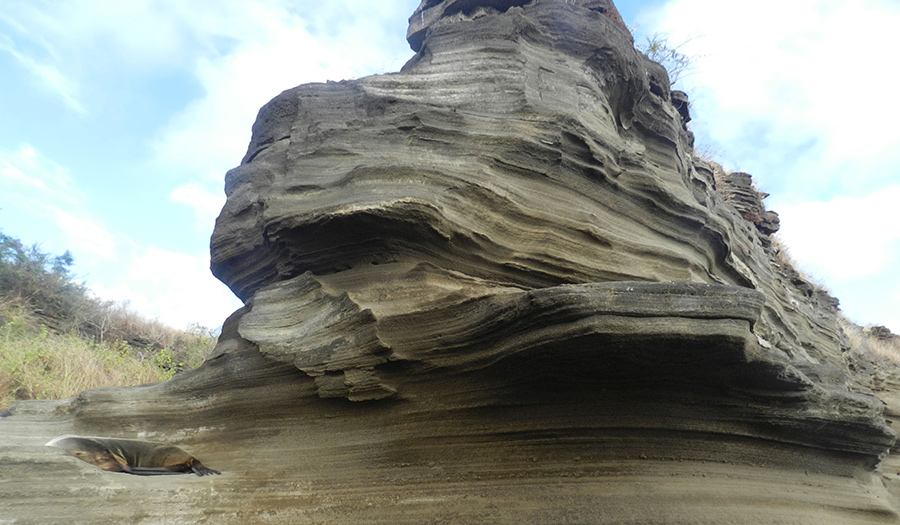
One of the things I did not realize was the variety of land in the Galapagos. The islands really differ. Some islands are brown sand that has been carved by the wind.

sand-dunes-and-sea-lion 29-galapagos131 24-galapagos274 24-galapagos263

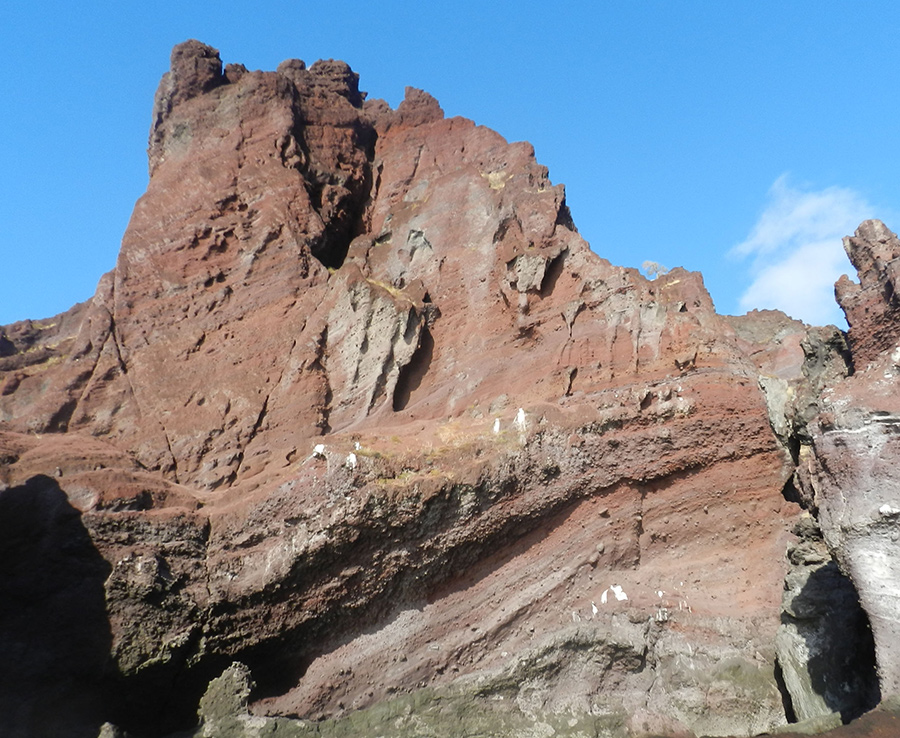
Some have red crumbly soil.

24-galapagos330 29-galapagos166

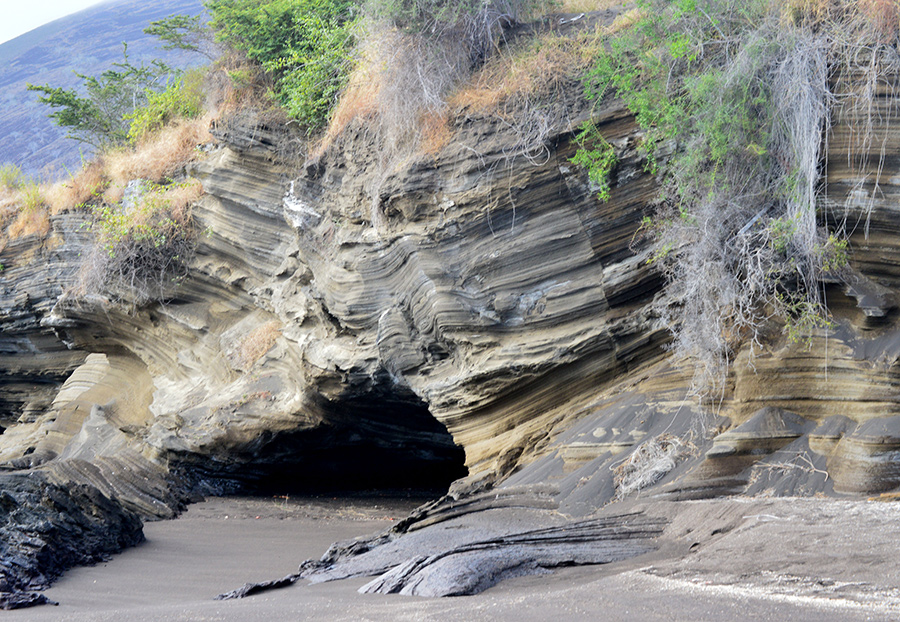
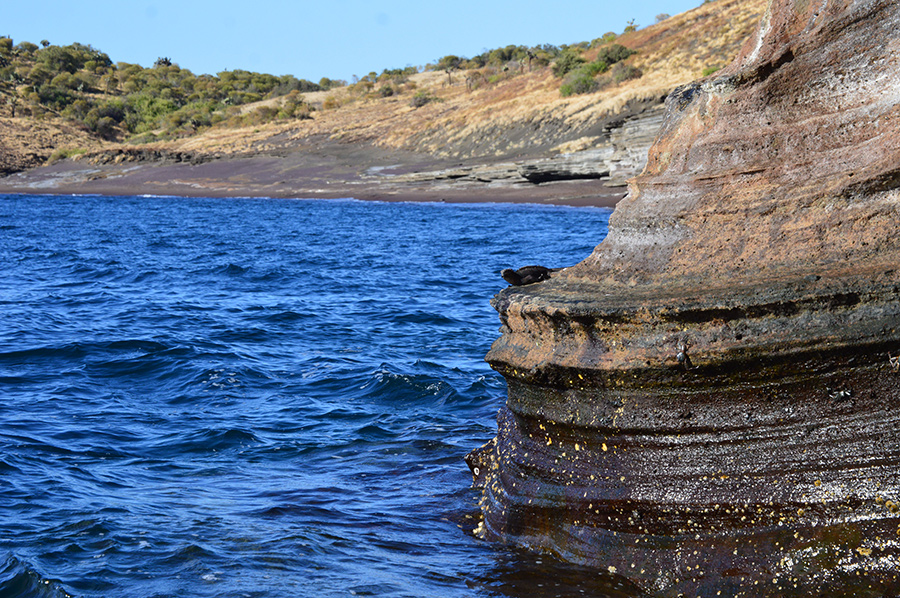
There were different rock islands.

24-galapagos339 24-galapagos349 24-galapagos305 24-galapagos306 24-galapagos307 24-galapagos308 24-galapagos364 29-galapagos137 29-galapagos148

It was fascinating. The islands I was most excited to see were the ones with lava. I was so psyched to walk on fields of lumpy rippled stone.

24-galapagos292 29-galapagos107 29-galapagos154

That’s not the only type of lava though. There are the islands where the lava hit the ocean water and the ocean water bubbled and boiled and lava hardened and what you’re left with is razor-sharp lava blades. We went there too. I have never been so cautious while walking around in my life. I looked like the Pink Panther. It was scary. The white stuff you’re seeing is not bird poop. It’s a special kind of lichen that only grows on this evil scary lava.

29-galapagos59 29-galapagos63

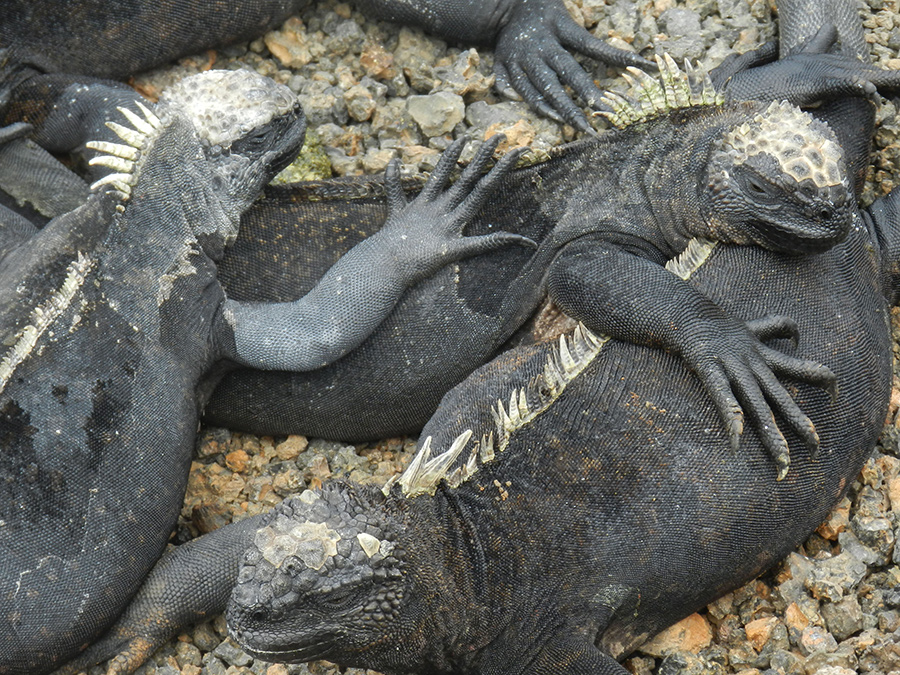
Peppered between the lava blades were groups of marine iguanas. They look EXACTLY like tiny Godzillas. They swim extremely well. On land it’s hard to tell if they’re dead or alive. They don’t really do anything. Their day seems to consist of predominantly laying around, unmoving and expressionless.

29-galapagos64 29-galapagos67 29-galapagos62 29-galapagos69

The lava lizards are so common, they are like the mosquitoes of the islands. No one seems to notice them.

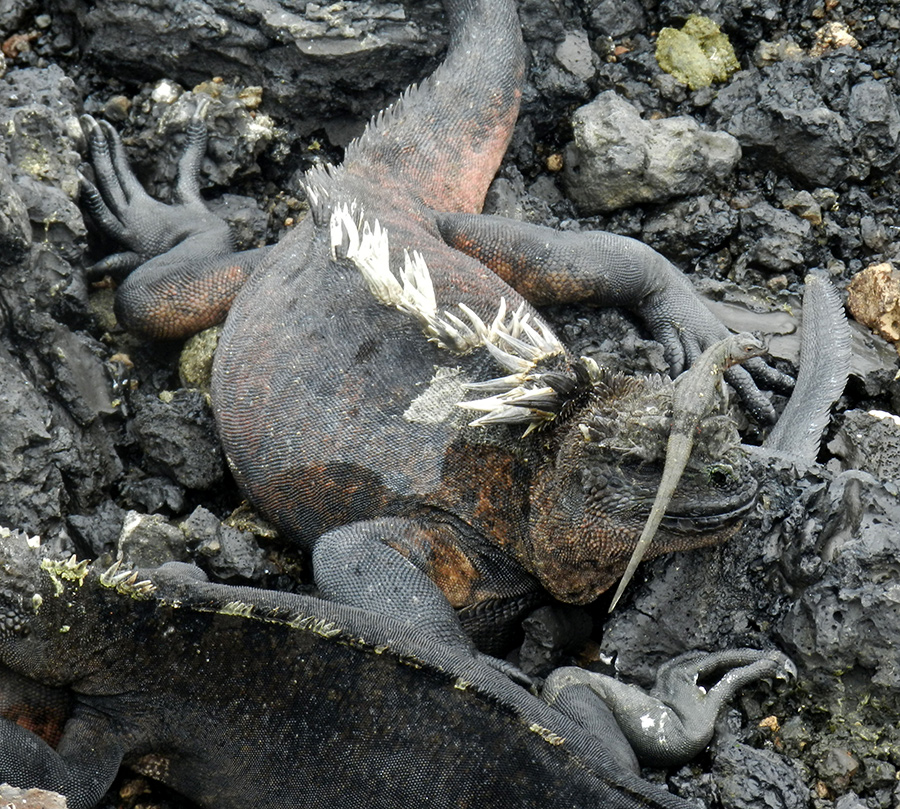
29-galapagos68 29-galapagos71

Here is a fur sea lion sleeping nearby.

29-galapagos72

With a lava lizard on it.

29-galapagos73

Picture of above fur sea lion, a marine iguana and the terrifying lava blades. It’s a complete picture.

29-galapagos75

I loved this picture. It makes me think of a gang from West Side Story.

29-galapagos77

And this is Luis explaining to us about the marine iguanas who are laying in a big lump on in front of him.

29-galapagos76

Here’s a field where, based on that sign, they come to lay their eggs.

29-galapagos79

Here are a bunch of marine lizards eating algae off of a boat dock.

24-galapagos30

And here they are lying in the middle of a walkway. I have been assured these guys are alive. I am still undecided.

29-galapagos17

Coming up next: more beasties.

South America 2015, Part 9.

Saturday, November 7th, 2015

Before we get to the Galapagos, a few Quito photos to whet the appetite.

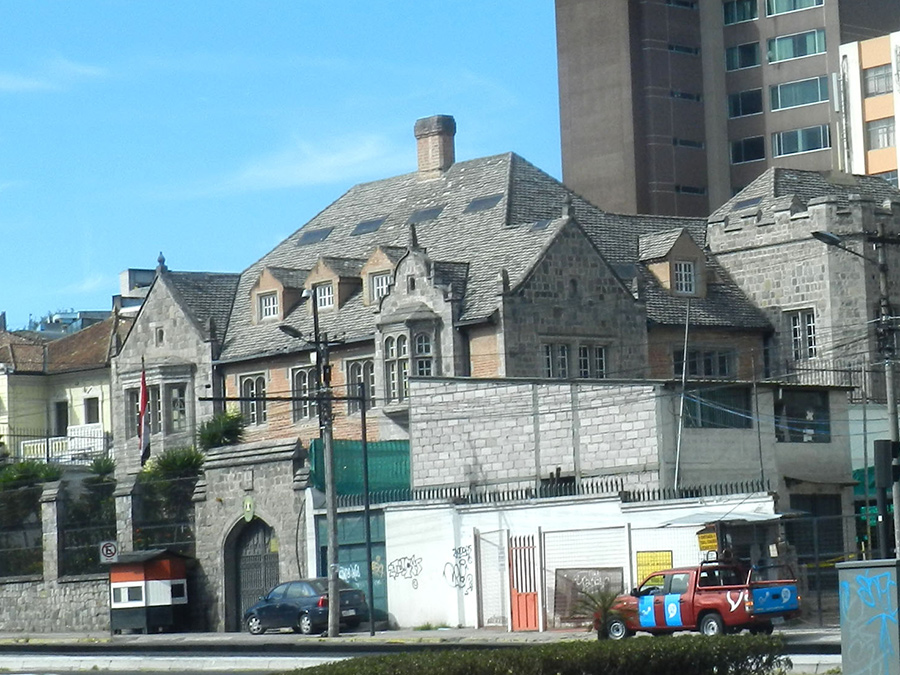
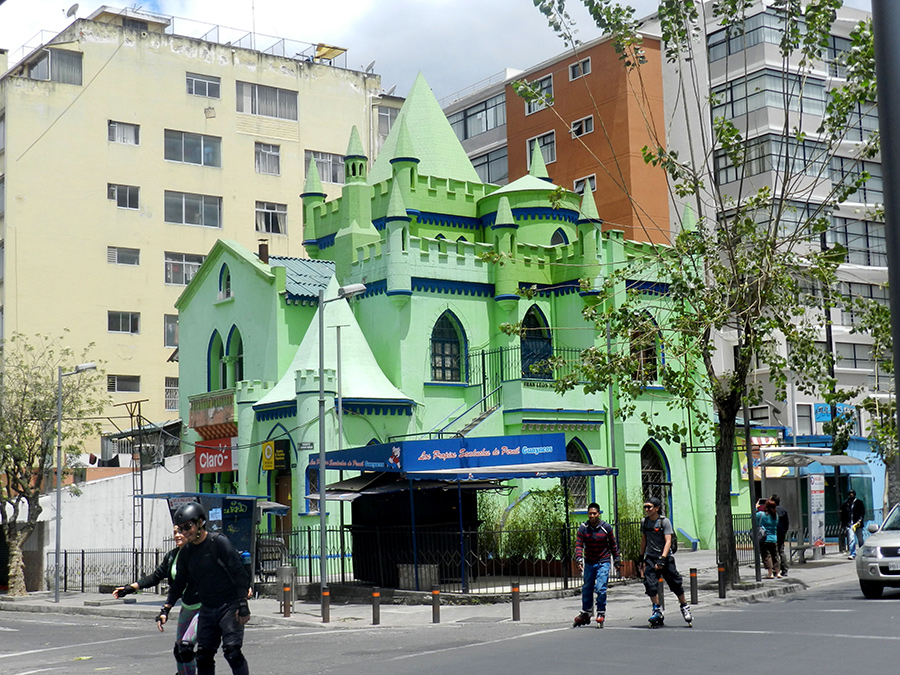
When people first arrived in Quito there was lots of room for you to build your dream castle so people did. And when the city sprung up the castles were nice, so modern buildings were simply built around them. There are castles all over the place.

26-quito1

Some of them were particularly eye-catching (code for “hideous”).

30-quito36

We went to an artsy street with galleries and cafes. Since everything is on a hill, within one cafe you can see many different levels. I thought this picture of an elderly couple have tea was sweet.

26-quito27

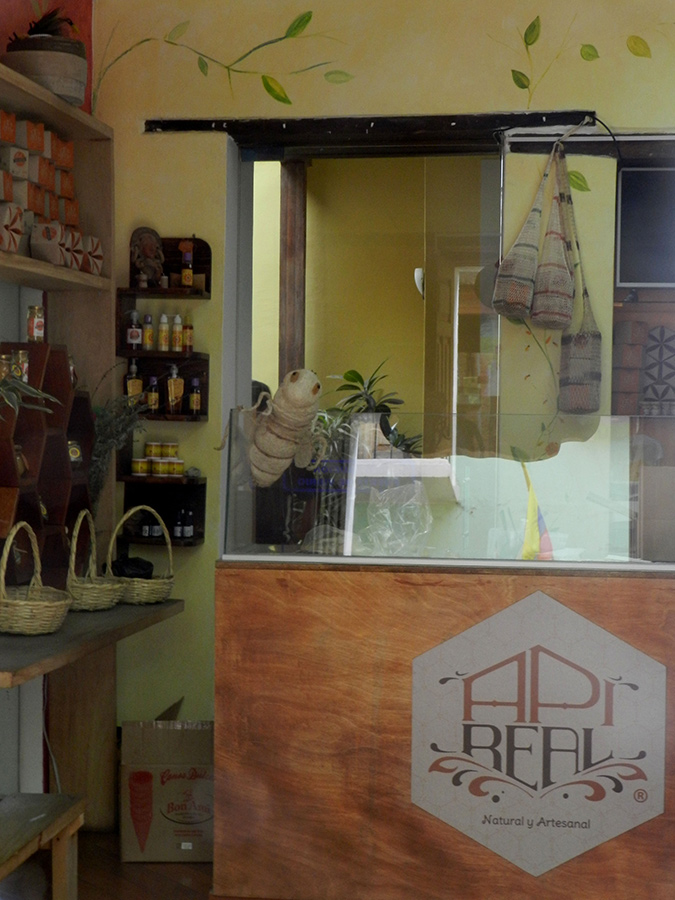
Heck, speaking of sweet, we passed an apiary which displayed a paper model of a bee. Hi Miss Bee!

26-quito28

The coolest establishment we visited on this street was a master chocolatier. Most of our chocolate comes from Africa and goes into Hersheys and Mars but the finest chocolate is grown in Ecuador.

23-cocoa-factory1 28-cocoa-factory2

We learned about the whole process in a presentation that contained some of the best Engrish I’ve encountered outside of Japan.

28-cocoa-factory1 28-cocoa-factory5 28-cocoa-factory4

Okay, GALAPAGOS! I went to where Darwin looked at some finches and figured out… something science-y! (I used to think it was evolution but I recently learned it was actually natural selection.) The Galapagos Islands were formed about five million years ago from volcanoes. Considering the earth is about four billion years old, the islands are pretty fresh. Here, a helpful diagram:

4billion-vs-5million

So in the history of the planet we live on, not very long. And it shows. Every time I walked on an island I thought, “Should I come back later? You know, when it’s done developing? I can come back later.” If you squinted the pelicans looked like pterodactyls. It was raw. I would find myself singing the theme song from Jurassic Park from time to time.

24-galapagos210

Here’s an important thing for you to know: at no point on this trip did I touch any animals. Not one. Not a single beastie. I could have touched the crap out of fur sea lions and tortoises and possibly some fish but I didn’t. I would like to be commended for my self-control.

We took two flights to get from Quito to the islands. 97% of the Galapagos are natural reserves but there is an airport and people do live there, about 30,000 people. Because protecting the ecosystem is extremely important the amount of paperwork we had to fill out before we got there was redonk.

29-galapagos1

Shortly after we landed I walked to baggage claim only to see an airport employee with a disinterested expression on his face carrying two very large land iguanas out of the building so he could release them into the wild. Our Galapagos guide Luis said, “The iguanas probably come into the airport all the time.” As you can imagine I have a new career goal and that is to be an iguana herder at the Galapagos Airport. Luis told us he was going to take us to a cool experience on the same island as the airport and then we would head to the boat that would be our home for the next five days. We drove for a while in a bus which had the second-best Engrish of the journey.

29-galapagos5

Eventually we got to a farm where we put on knee-high galoshes and walked into a grassy area. And that’s when we saw these guys.

24-galapagos22 24-galapagos5 24-galapagos7 24-galapagos11

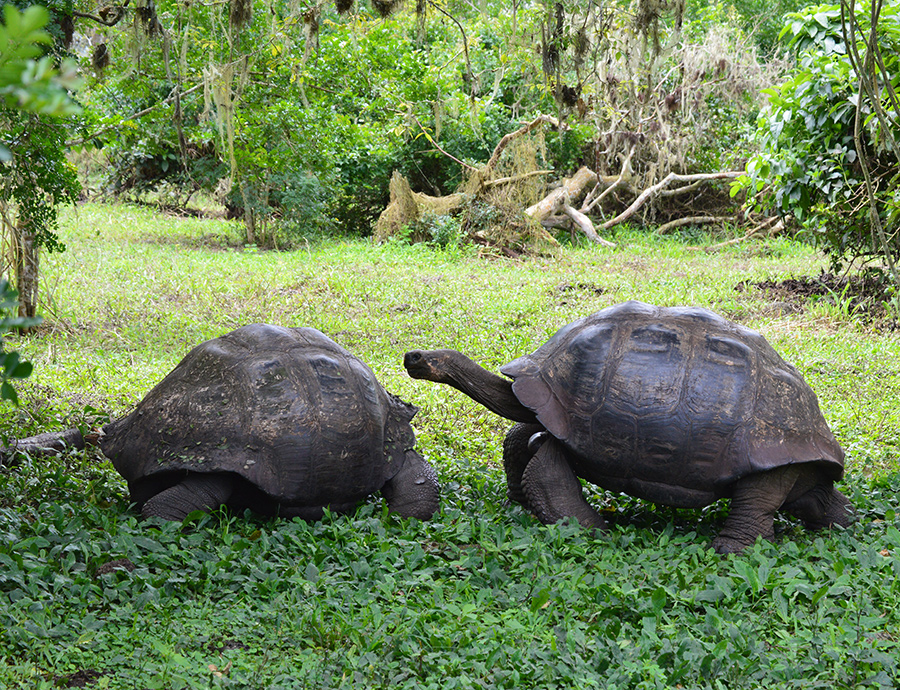
If you’d like you can imagine these are videos. Because these guys, not so much with the moving. It’s almost as if they know their long long lives will be all about eating bland bland grass for 150 years. It’s impressive how large they get. All these fellers were varying ages but one of them was quite old and about 750 pounds. We got two watch two males get in a fight. Let me clarify, a tortoise fight is not like a normal fight. Here’s the way it goes down: a gigantic male tortoise ever so slowly lumbers into the space of another gigantic male tortoise. There is now tension between the two of them so they open their mouths and extend their necks as far as they can. The one with the longest neck wins and the lose saunters away. Very intense fight. My niece Drea got some great pics.

24-galapagos15 24-galapagos16 24-galapagos17

This guy was so cute. He was scared of all these people so close to him so he pulled his head into his shell. He was hiding. Awwww.

24-galapagos8

I got really excited about this picture – a Darwin Finch perched on a Galapagos Tortoise.

24-galapagos13

The tortoise did not share my excitement.

24-galapagos18

Something I had no idea about when I got to the Galapagos: each island has its own type of tortoise and they cannot interbreed. So when an island’s specific tortoise is wiped out, that’s the end of that sub-breed, they’re extinct now. That’s what happened to Lonesome George. More about him later.

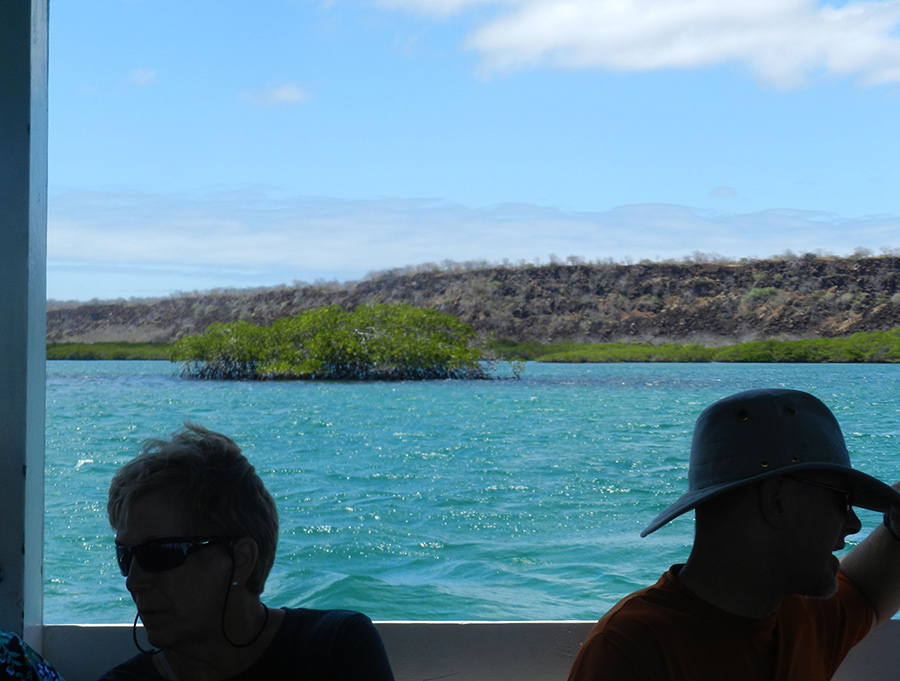
A bit more information about the Galapagos themselves. The Galapagos is an archipelago of islands, about 13 big islands and then some small ones and finally ones I called “Yorkshire Puddings” (because they looked like Yorkshire puddings) which were a small outcrop of lava with a bird and a tree and that’s it. It covers about 600 square miles so the schedule was visit land during the day using an inflatable raft called a panga, return to big yacht thing at night and then spend the night traveling to the next island. We would travel six or seven hours because the islands are very spread out. If I had to say one thing about the area is I could not believe the color of the water. These are untouched photos. It really looks like this.

24-galapagos24 29-galapagos4 29-galapagos26

Doesn’t it look lovely and smooth sailing? LIES. ALL LIES. At the time of year that I went down there the Humboldt Current is slamming through the area and to say the water is choppy is the understatement of the century. I took some video of the panga when we dropped anchor in a harbor. Again, this is in a harbor. Imagine what it was like in the open sea.

calm-waters2

I get motion sickness pretty easily so armed with that knowledge I brought every possible drug and pill and potion to alleviate the symptoms on this trip. I ended up using them all at the same time. I had the patch on my neck, I was swallowing six Dramamine a day, I wore Sea-Bands and to top it off I would occasionally pop a Klonopin to dull the anxiety. If you’re wondering about side effects, I had two. I appeared completely hammered drunk for the whole five days (“Yaaaaaayyyy! Pelicans! Zzzzzzzzzz.”) and I swelled up like a water balloon to the point where I could not make a fist. Totally worth it. Didn’t barf once. Went on every excursion. Total team player. Thank you, Modern Medicine!

Next entry: Some of the islands themselves.

South America 2015, Part 8.

Monday, October 26th, 2015

Sorry about the extreme time between posts. I am attempting to get my kitchen done by Thanksgiving (probably not going to happen but a girl can dream) and it’s the busiest season of the year in advertising so I’ve done about three weeks of work in two weeks. I’m so exhausted I did the creepiest thing ever this past Saturday night. I asked Cricket if when I came over to his house we could have a fire in his fireplace. He obliged, put some logs in there and got a fire going. I proceeded to get two grocery bags filled to the brim with his recyclable mail, sit directly in front of the fireplace on the floor and burn each piece of mail individually over the next THREE HOURS while saying nothing. I was simply decompressing but I imagine it looked like I was hiding the evidence of the murder I had recently committed. Cricket fell asleep on the couch watching me do this stellar performance art and when he woke up he said, “Okay, well, I’m going hiking tomorrow so I’m going to bed. When you’re done doing whatever it is you’re doing let yourself out through the back door. Night night.” About twenty minutes later (that would be 1:30 in the morning) after I had reduced all Cricket’s recyclables to ash I quietly left. My point is that I’m very busy and very stressed and with the first opportunity I got in the last few weeks to relax I decided not to go to a movie or catch up with a friend but to become a character in a Korean horror film. So please cut me some slack. Okay. Back to South America.

Quito! It’s pronounced Kee-toe, not Kwee-toe. It’s a big city, I think about 34 miles long, nestled in a long valley between a whole bunch of mountains.

21-quito2

And it’s got a massive basilica. More on that in a bit. But as you can see it makes an excellent landmark.

21-quito1

Another great landmark is the angel made of aluminum perched on one of the mountains. It was a gift from the French. One thing you can say about the French – they love to give massive metal statues to other nations.

21-quito12

Quito has a few major town squares which are wonderful. Often bands are playing and there are all kinds of food vendors. One food I saw being peddled by quite a few women looked like a pile of frosting in a Tupperware. I found out later that it was called espumilla (which means “foam”) and it’s a meringue of sorts made with guava and egg whites. I did not feel comfortable buying a bunch of uncooked egg from a street vendor who had been carrying it around all day in the bright sunlight but I won’t say I wasn’t tempted.

30-quito28

And there’s a ton of other snacks one could enjoy. And toilet paper (in case you ate the raw egg whites).

26-quito25

Back to the town squares.

26-quito31 21-quito18

Almost all of them have a church in them and we visited two. The first one, the Church of San Francisco, had a pretty nice exterior and even though we weren’t supposed to take pictures inside I surreptitiously snapped a few pics because the ceiling had just been redone due to a fire and the amount of gold was crazy. These are not great pics. It was so shiny and reflective my poor lil camera didn’t have a clue how to calibrate itself but at least you get a vague idea.

30-quito31 30-quito32 30-quito34

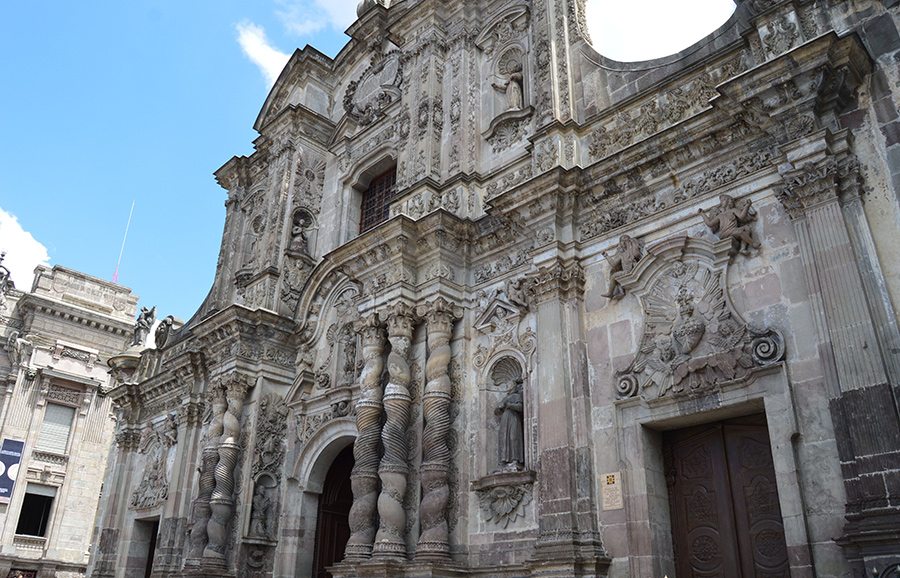
I thought that was as fancy as it got, church-wise. I was incorrect. This is the Church of the Jesuits. It’s down the street.

21-quito13 21-quito14

Look at the level of detail. And the awesome fish that flank the doorway.

26-quito20 26-quito22 26-quito24

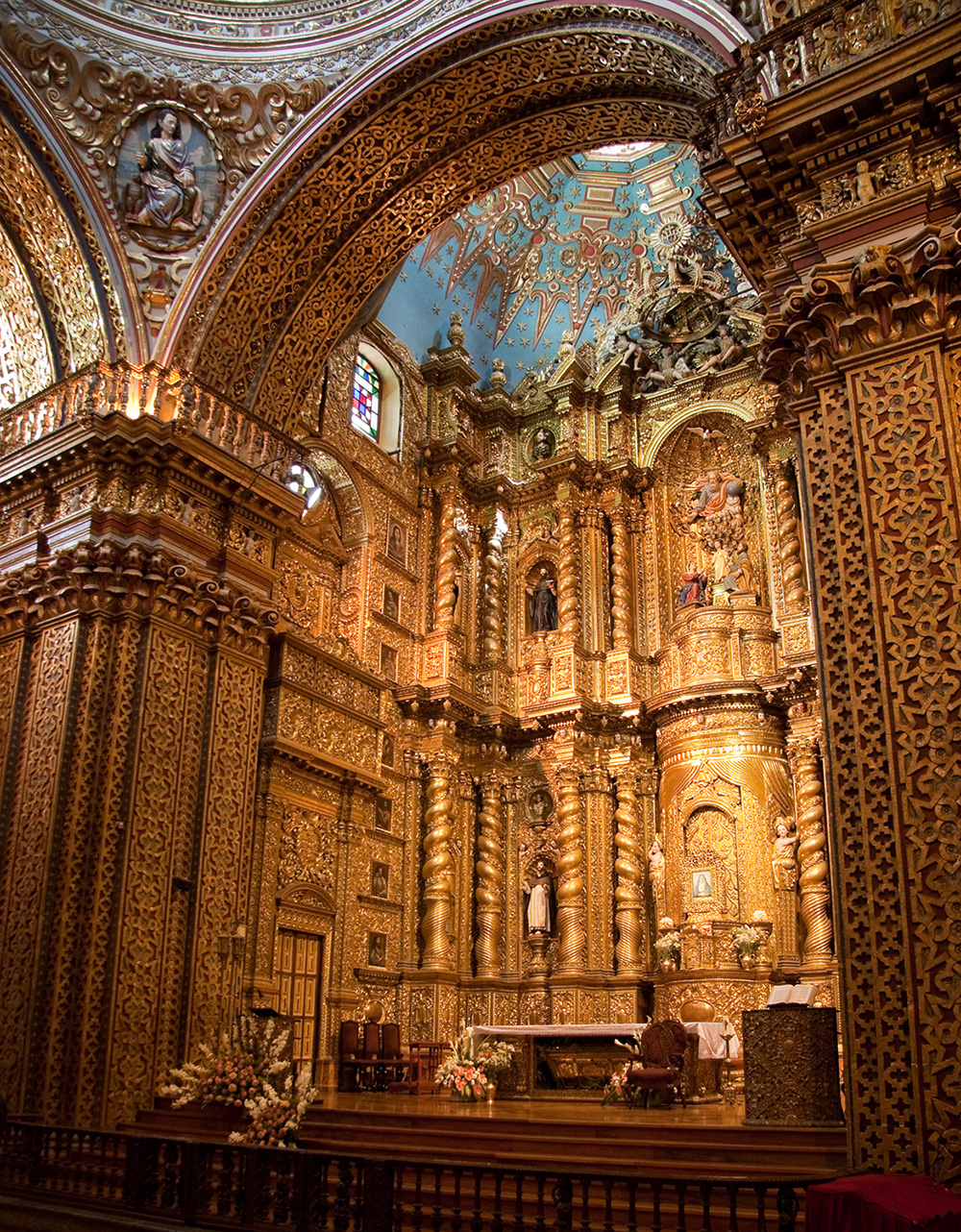
I didn’t take any pictures inside because I had to scrape my mouth off the floor, but I found some other people’s pictures. And none of them do it justice. It was overwhelmingly amazing. Like being inside a jewel box.

La_Compania p179541302-5 quito-la-compania-jesuit-church-ecuador-20882688

22278621

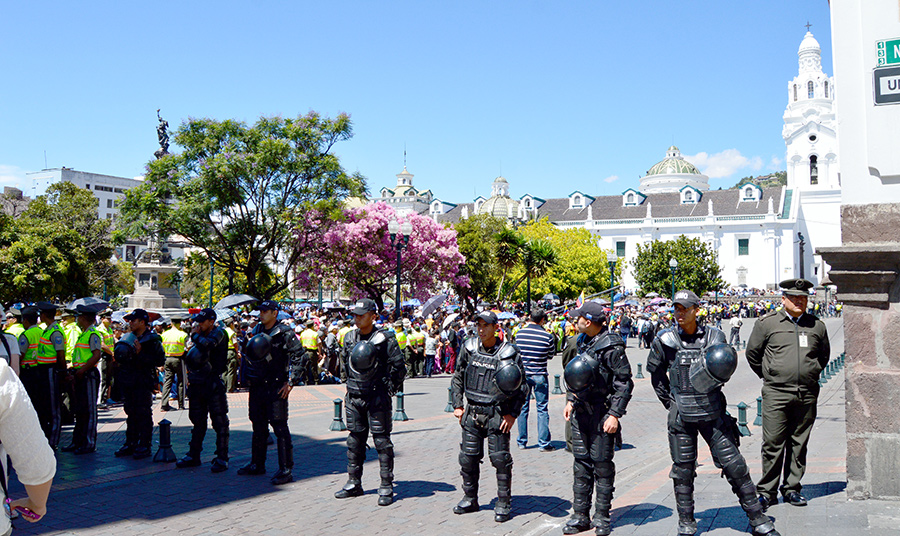
Interestingly, we were there on a Saturday and every Saturday the President of Ecuador comes out on his balcony and makes a speech and we ended up outside his house about a half-an-hour before speech time. Our guide for the day asked us if we’d like to watch the speech and we were like, sure, we’re here, let’s see this all go down. The speech itself was whatevs but the fancy military men on equally fancy horses were delightful. One horse had a checkerboard shaved into its rump. I liked that a lot.

22-presidente1 27-presidente4 22-presidente4 22-presidente5 22-presidente8

We ended up going to a very posh hotel for lunch were we drank a local drink, basically a tisane of sorts made up of a variety of flavorful herbs and reb quinoa. The red quinoa both imparts a pretty color and makes the drink have protein. Protein water!

drink-herbs1 drink-herbs2

Now the Basilica. The Basilica, compared to the gold churches, was pretty low-key. It’s a big ole cathedral-type building and the inside is very high and lofty and gray stone except for the small chapel off to the side which is polychrome, meaning the stone was painted.

quito-church 26-quito9

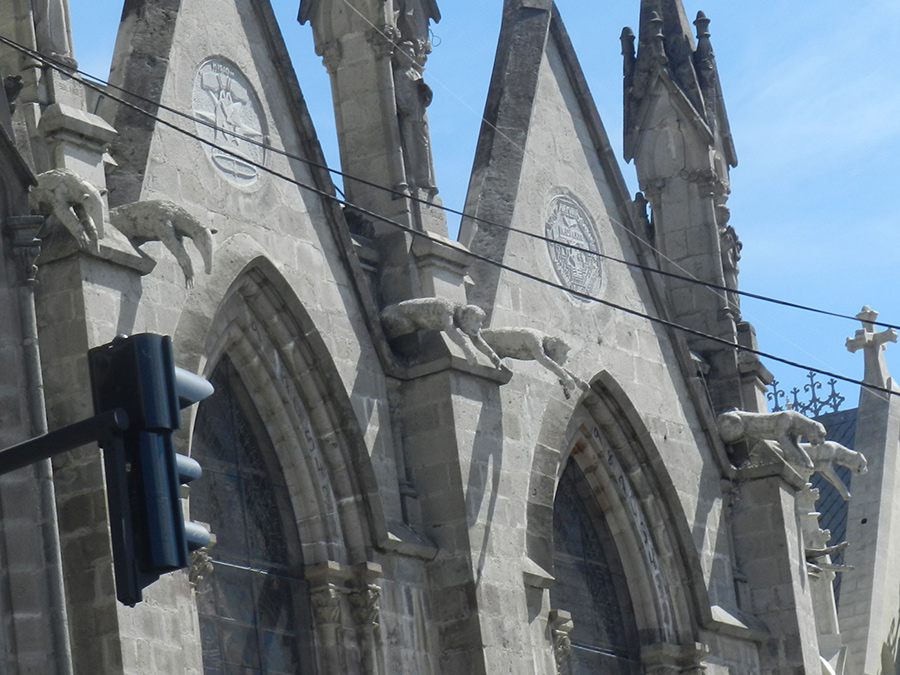
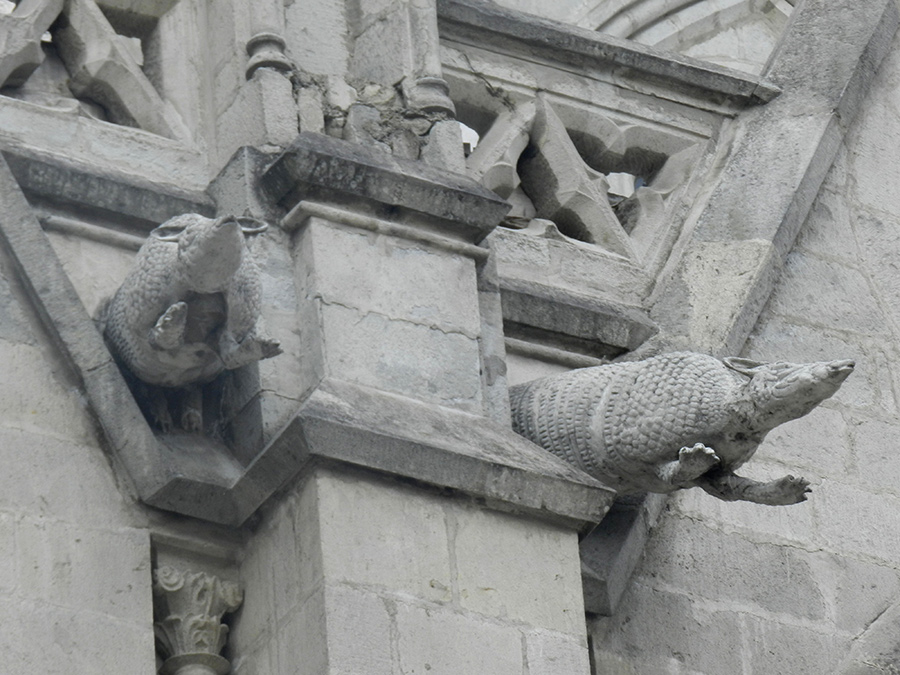
The part of the Basilica that makes it awesome is that all the gargoyles are indigenous animals from Ecuador! How many pictures did I take of them? All the pictures. There were iguanas and turtles:

21-quito6 21-quito7 30-quito1

And monkeys and pumas and what I thought were giant crab claws from a distance but when I got closer I realized were anteaters:

26-quito5 30-quito8

Armadillos and crocodiles.

30-quito20 30-quito3

On the exterior of the painted chapel (which I imagine was built later because it’s made out of a different type of stone) there are regular gargoyles.

30-quito4

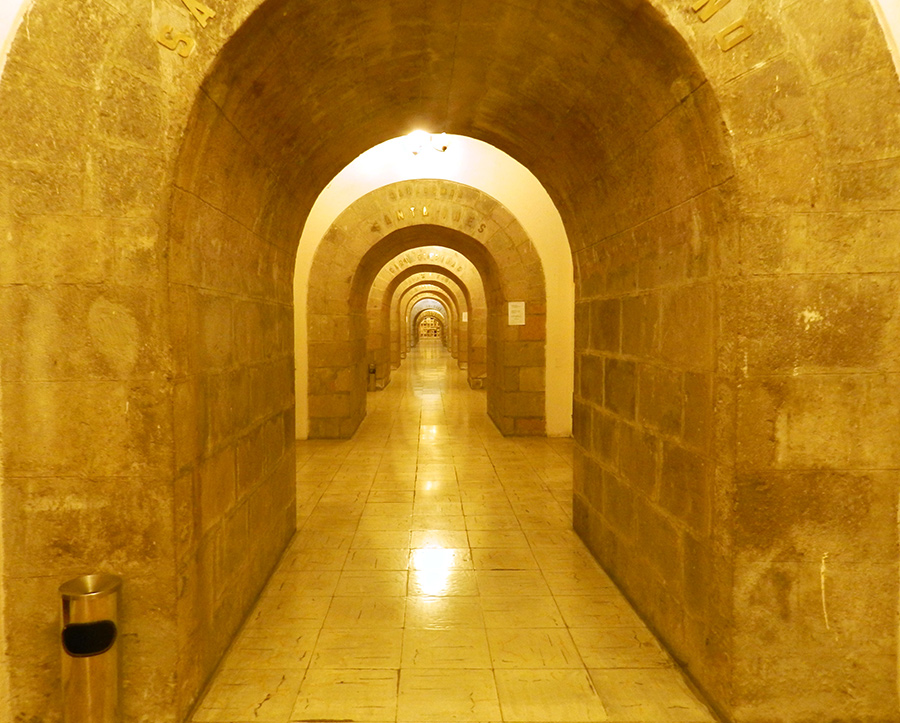
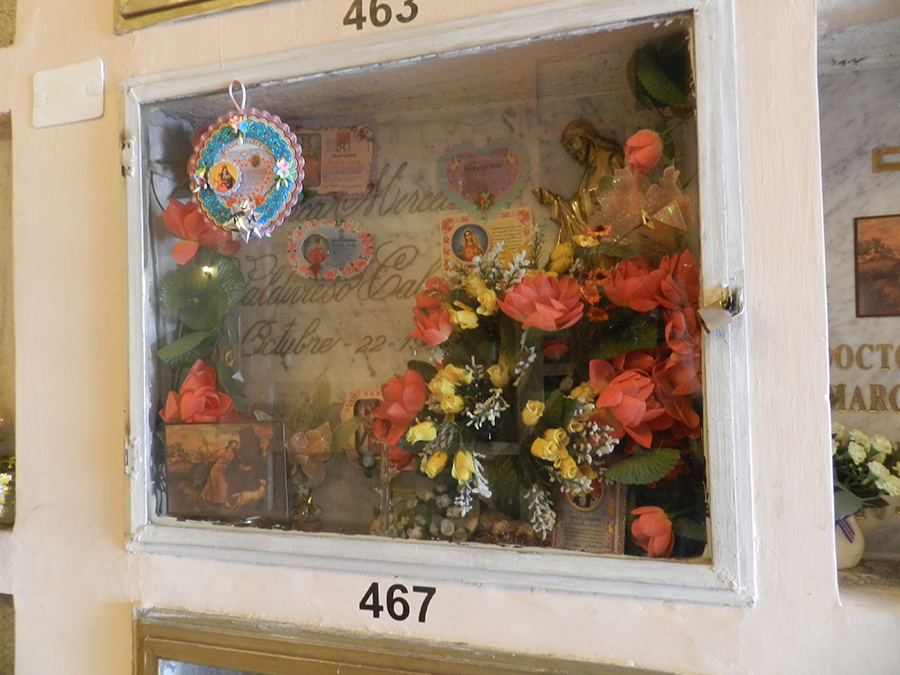
After walking around the Basilica several times, I noticed that you could go beneath into the catacombs. Hooray, catacombs! Those were amazing. It seems like it was  filled predominantly in the 1950s, 60s and 70s and the design elements on the fronts of the tombs reflect the aesthetic of the time.

30-quito12 30-quito9 30-quito11 30-quito17

Coming up next: The Galapagos. Get pumped because lava and beasties a-comin.’

South America 2015, Part 7.

Saturday, October 10th, 2015

More Peru! But first, a few lone pics.

Llamas don’t poop all over the everything. They pick an area and go there every time. It’s kind of awesome, they toilet-train themselves. In fact, if you put them in a new enclosure and you want them to go in the far right corner, you put llama excrement and tinkle in that corner and they will think a previous llama deemed that the lavatory and make that their permanent spot.

23-llama-bathrooms1

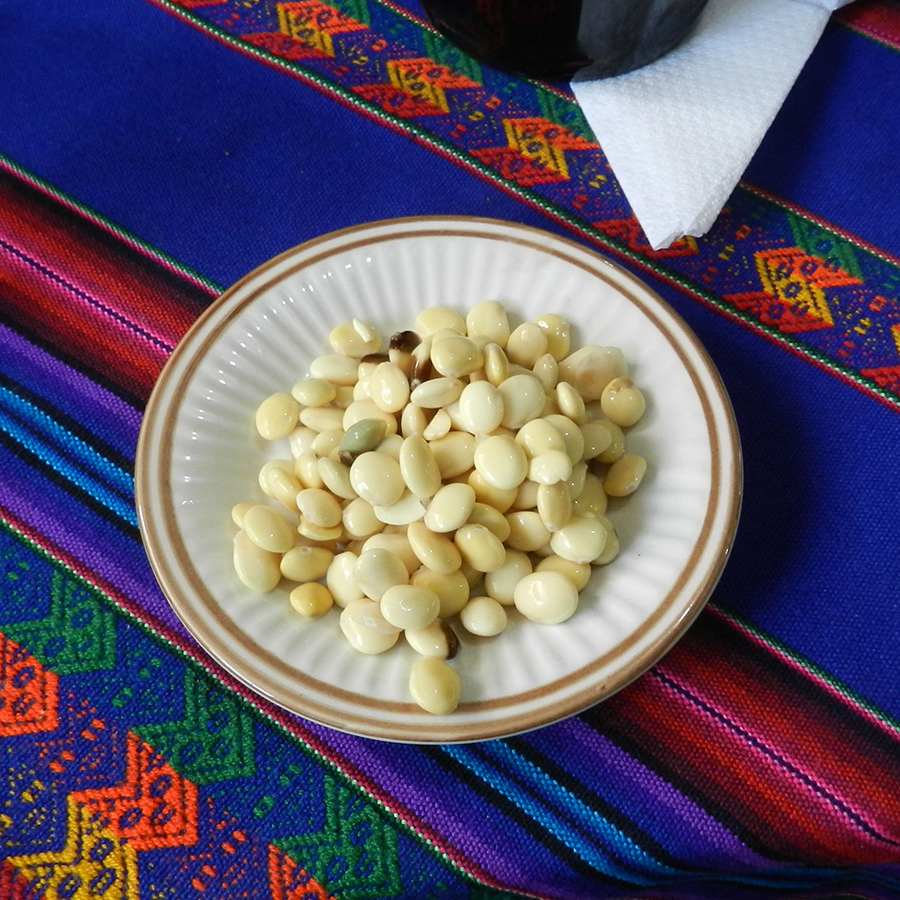
In this photo there is pumpkin ice cream and in the background there is fava beans. Most meals had a small plate of beans as an appetizer. Lotta beans in Peru. Beans and potatoes and corn, oh my.

25-pumpkin-icecream-beans-corn1

Okay, silver! It’s a chemical element we wear as shiny awesome decoration. And it is common in Peru. The pre-Inca and the Inca loved anything reflective because the sun god was extremely important to them, so gold and silver were big. Interestingly, when the Spaniards got there they had mirrors and the Incas traded gold and silver for the mirrors because they were far more reflective. We might think the Incas were duped but to them it was an excellent trade. Mirrors were more valuable to the Inca and the Spaniards coveted gold, so everyone won in that exchange. We went to a silver processing and jewelry making place so we could see the whole process.

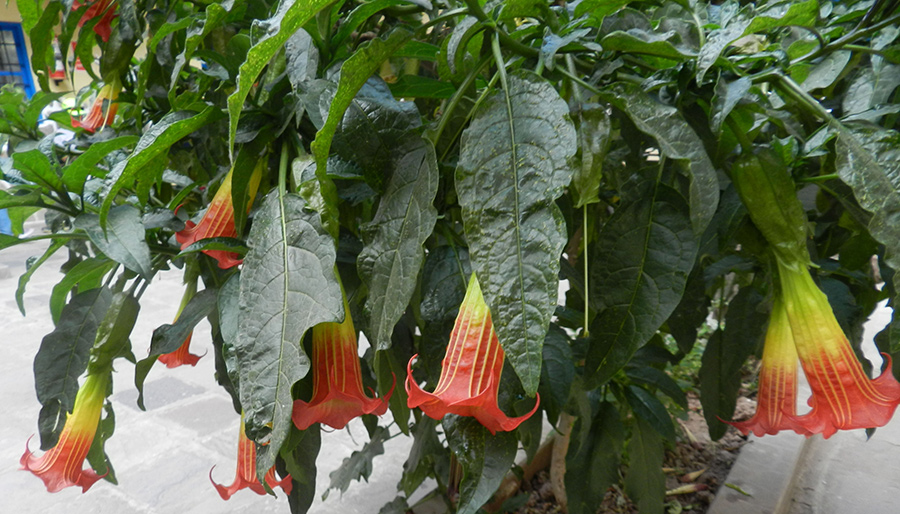
The first thing I noticed when I got there was the insane-looking flower in the courtyard. I know it looks fake. It is not, I checked.

19-silver-factory1

First Henry showed us what the rock that contains the silver looks like. Hint: pretty much like a rock.

19-silver-factory3

What they used to do before they had fancy machinery was grind the rock into a powder in a bowl.

19-silver-factory4

And then they would put it in a jar with water and shake the jar. The silver was heavier than the matrix so the silver would sink to the bottom and the other stuff would stay at the top. That’s how they would separate the silver from the unwanted dirt.

To make wire a slender bar of silver is put through a press with progressively smaller openings.

19-silver-factory5

At this studio they do a great deal of inlay as well, so we were shown the different kinds of stone found in Peru. I also learned that the mother of pearl pieces you see don’t use the inside portion. They grind away the brown exterior and use that side. I don’t know why, maybe it’s more even-toned but I was fascinating to see.

19-silver-factory6

We had the opportunity to meet a priest and watch him do a typical ceremony. Not a Christian priest. I imagine in Africa he would be called a witch doctor. Henry said that the old religion worked in harmony with the new religion and most people incorporated both in their lives. I had no idea what to expect but it was great to see a ceremony that had been performed for thousands of years.

First, the priest laid out a piece of fabric with a piece of wax paper like you would find at the butcher on top of it. He then sprinkled about twenty different things on this wax paper representing different aspects of life. I loved how he used modern items along with ancient ones. For example, he put in alphabet soup noodles to represent all our names and sequins to be the moon and the stars. Candy for sweetness, llama fat for energy and connection to the gods, seashells for the ocean. There were garbanzo beans and red kidney beans in there as well.

22-priest-healer3

We were each given three coca leaves and told to wish on them and they were also added. The priest then wrapped up the whole package with string and each one of us stood in front of him while he briskly rubbed the package on us and chanted incantations. We then were told to puff three quick breaths on the package to lock in our identity and our wishes. When everyone had done it the priest took the package outside, removed his piece of cloth and burned the package, sending our messages up to the gods in the sky. It felt quite cathartic.

22-priest-healer6 22-priest-healer9 22-priest-healer10

The llama hanging out nearby was underwhelmed.

22-priest-healer1

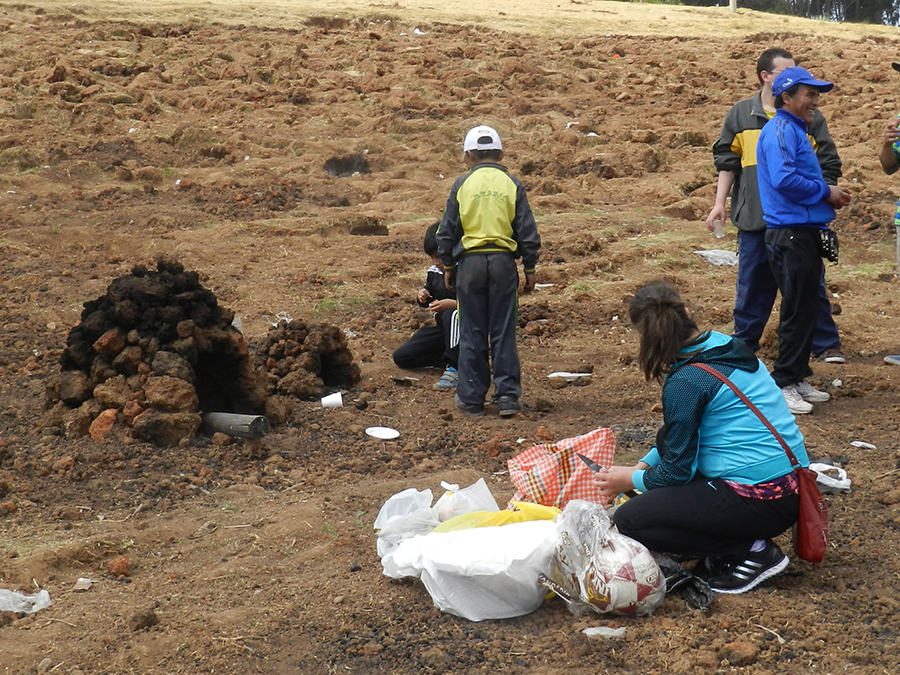
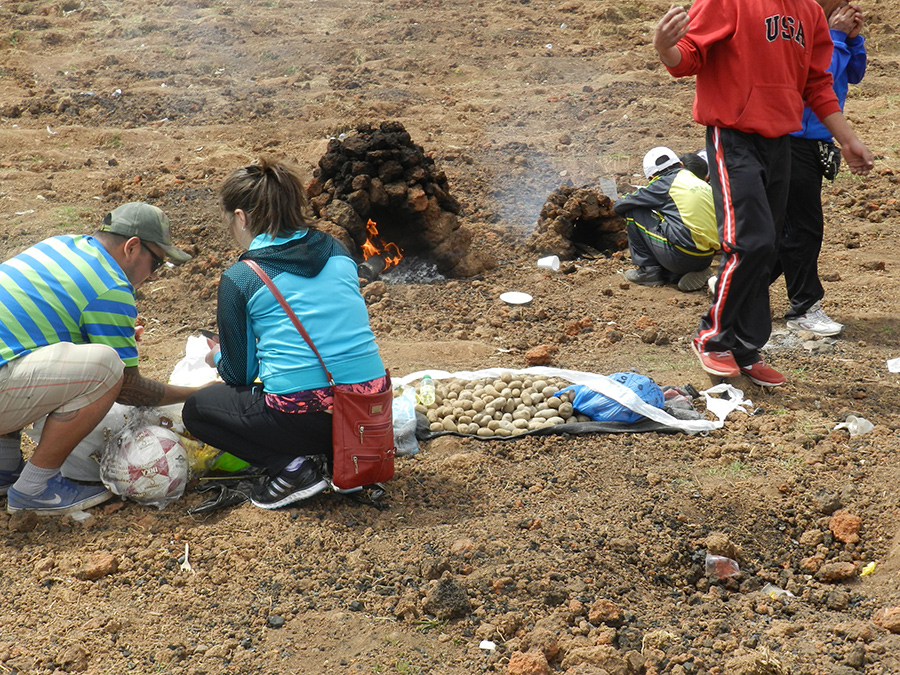
Post-priest-experience we were driving and Henry told us we were going to pull over. There were groups of people hanging out in what appeared to be abandoned fields. Henry told us something most interesting – at the end of the planting season, the farmers till the soil and big clumps of natural brick are revealed. The city-dwellers come out and use this chunks to build ovens that they have cookouts in. The farmers encourage the people to do that, to hang out in their fields all day because they don’t hurt anything and often they leave ash from their bbqs which acts as a fertilizer. I couldn’t believe it, this mutual respect. I don’t see this flying in the U.S. There would be all kinds of trespassing drama. It was great to see all these families hanging out, playing soccer and talking. I know it’s hokey-sounding, but it seems like a simpler way of life in Peru.

20-farmer-field-bbq1 24-farmer-field-bbq1 24-farmer-field-bbq2 24-farmer-field-bbq3 24-farmer-field-bbq4

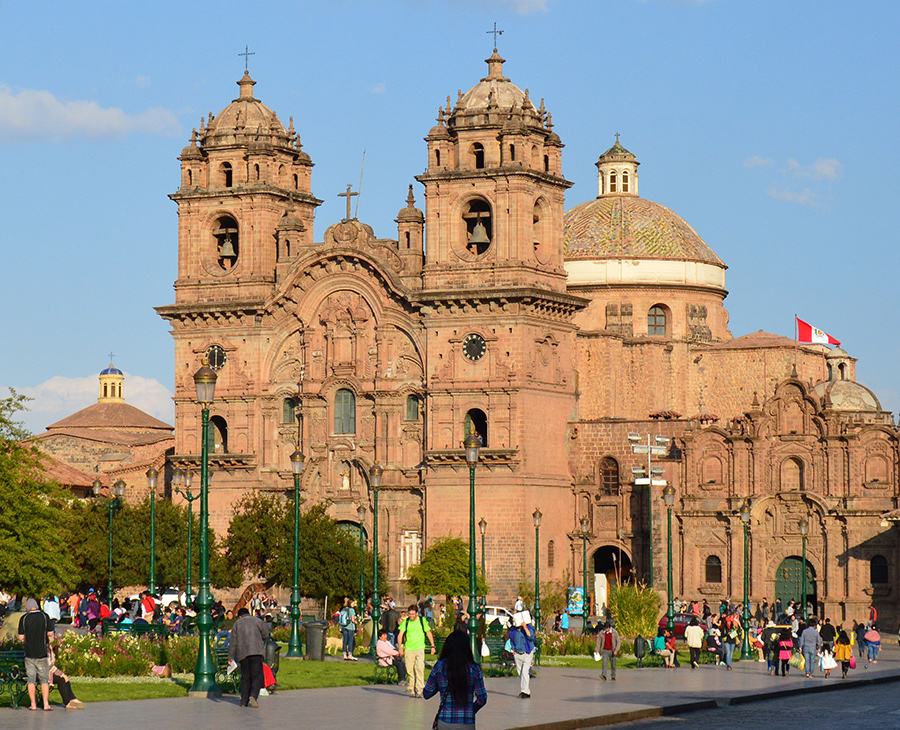
On our last day in Peru we got to finally explore the cathedrals and churches of Cusco. I love me some CHARCH. And there were so many churches. Quick recap on the town square. On left: Cathedral. On right: another church. Little building on the far right: older church. Down the street: three more churches. I was thrilled.

18-cuzco1 18-cuzco7 18-cuzco3 3-cuzco30

I wasn’t allowed to take pictures in any of the places of worship and I decided to be tactful and respect their laws so no inside pics. But I can describe them. They is the main altar in the front, but along both sides there are private chapels devoted to one saint or another. They are, to be honest, garish. So much shiny gold and silver. Lots and lots of statues. Complex woven fabrics. Everything clashes. Some people might be overwhelmed but I liked it. The churches wanted all different looks so they went for it. Good for them.

Outside the cathedral were a group of boys performing a dance that represented their heritage as hunters. One kid’s dog didn’t want to leave so he stood by his little man throughout the performance.

3-cuzco10

Henry wanted us to visit a church with a cool history, the Church of St. Domingo right next to where he grew up. The Spaniards, when they arrived, asked where all the holy sites of the Incas were and promptly build Catholic buildings on top of them. It’s ruthless but an excellent way to eliminate any other religions from being practiced. You can see the ruins at the base in this exterior shot.

18-cuzco11

Until the 1950s if you went inside there was no inkling of what had been there. Everything was coated in plaster and painted with Baroque murals. But sometime in the 1950s there was an earthquake and much of the plaster cracked off. Lo and behold, a whole Inca structure was revealed. Cracked plaster can be repaired with lime plastering Cambridge.

3-cuzco17

(BTW, I wasn’t breaking any rules and being disrespectful by taking photos. This is all outside in the courtyard.)

It turns out this was a massive complex where the stars were studied. The archaeologists found stones with strange carvings, tubes and divots, and then they found one intact window. They deduced that at certain times of the year certain stars could be seen through the holes and lined up with the divots and that was how the Incas knew when the different seasons started and ended. Very cool. Here are the stones neatly lined up in a row.

18-cuzco14

Remember they didn’t have any metal tools, only other pieces of granite and hematite to rub against the stone and wear it down. It’s really impressive what they accomplished.

Here is the semi-intact window.

3-cuzco22

And here is the courtyard that surrounds all of this, clearly built by the Spanish.

18-cuzco18

At the same time as the earthquake hit, the massive backyard behind the church was revealed in full as well. There are all kinds of star-mapping paths on it as well. I got a few decent photos even though the sun was setting and it was getting dark.

3-cuzco26 3-cuzco27

Three things from Cusco before we head out to the Galapagos: I liked how the streetlights had little ornamental Inca designs on them.

3-cuzco29

And instead of pay phones, you look for women wearing green vests. They have cell phones and you can make calls on them and pay by the minute.

3-cuzco13

Here’s a great shot of Cusco from the place where I ate the pumpkin ice cream.

3-cuzco34

The next day we left for Equador to begin the next chapter of this neato journey. The part I was most excited about was coming up – the Galapagos. Anyone who knows me knows how I feel about nature and beasties, so I was super-psyched.

South America 2015, Part 6.

Sunday, September 27th, 2015

More Machu Picchu pics! Not taken by me whatsoever. I’ll explain. After Day 1 at the site, we were given the option of getting up the next morning at 4:30, lining up for an hour or two at the entrance to the village, and going on one of two long hikes around the area. I opted to stay in the room and meet everyone at lunch. My niece Drea, however, due to her ability to walk very quickly, managed to do both hikes and took pictures. These are her pictures. My pictures would have been of my pillow. Because I was sleeping.

Drea hiked this far away from the place we had been the day before on the first hike. After looking at this picture I feel I made the right decision.

15-machu-picchu54

The other hike was to go see the Incan Bridge. I don’t know what your preconceived notion of a bridge is, but this is so creepy-scary.

15-machu-picchu56 15-machu-picchu57

Then they returned to the town we were staying in for lunch and we got ready to head out.

16-machu-picchu34

But not before seeing another hairless dog:

16-machu-picchu32

And visiting the local flea market.

16-machu-picchu35 16-machu-picchu36

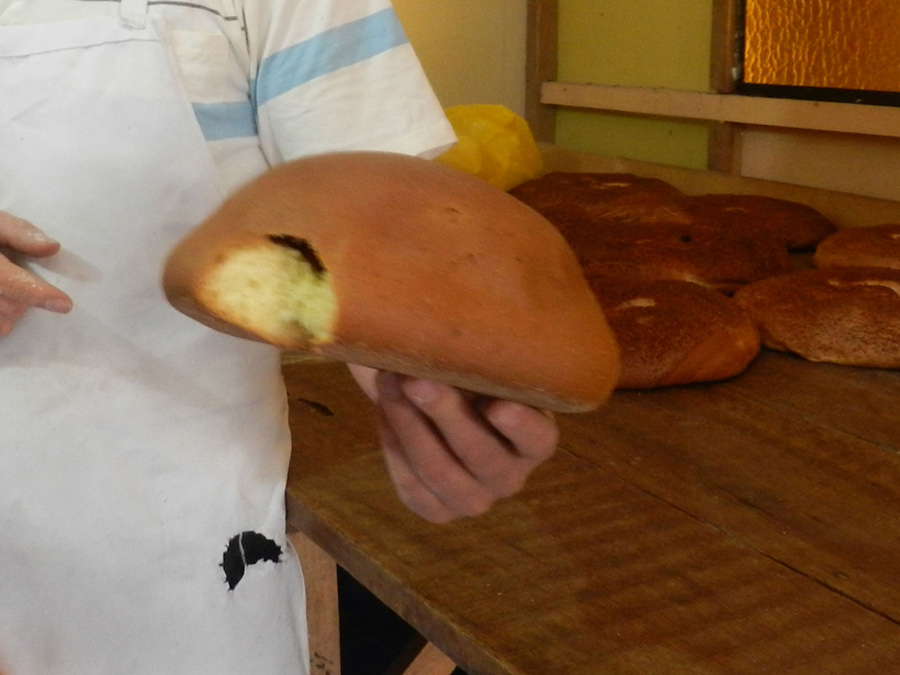
We headed out in the bus and got to visit a local breadmaker.

17-bread-factory1

He is the fourth generation in his family to be a breadmaker and work at this bakery (which his grandfather built). There is a fifteen-foot-in-diameter domed oven fueled by eucalyptus wood and this man slides the loaves into the oven using a super-long pizza paddle, also made from eucalyptus wood. People are encouraged to use eucalyptus wood for anything and everything because it’s an invasive species from Australia and it uses up a lot of the ground water, preventing indigenous species from thriving.

17-bread-factory3

The loaves he is holding? They have ducks on them because that’s his family’s crest. They were soooooo yummers. He pulled them fresh out of the oven and they were warm and fluffy and had a thin crust on top of crystallized suger and anise. Normally I’m not on Team Black Licorice but for some reason I could not stop stuffing what amounted to probably half a loaf of this bread into my mouth. So. Good.

The most interesting thing I saw at the bakery was how he gauged the heat of the oven. On top of the oven is a water tank. Off to the side is a rudimentary faucet that the water tank flows into. This breadmaker turns the faucet on and the quantity of steam that comes out tells him how hot the oven is. Amazing.

17-bread-factory7

He also let us try another bread that had a large air pocket at the top. I think that bread is more about how cool that looks versus how good it tastes. I mean, it was fine but after the magic of Duck Anise Bread all others pale in comparison.

17-bread-factory6 17-bread-factory8

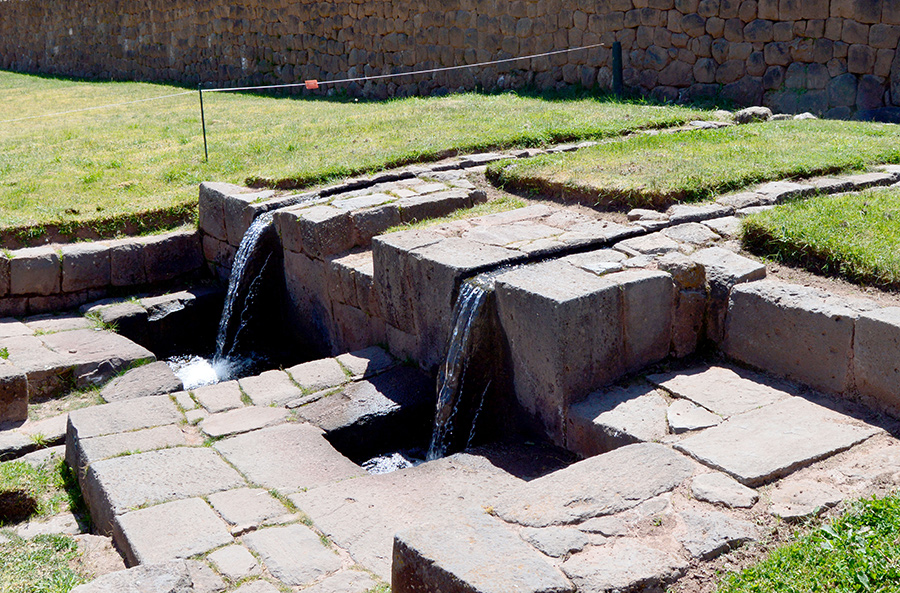
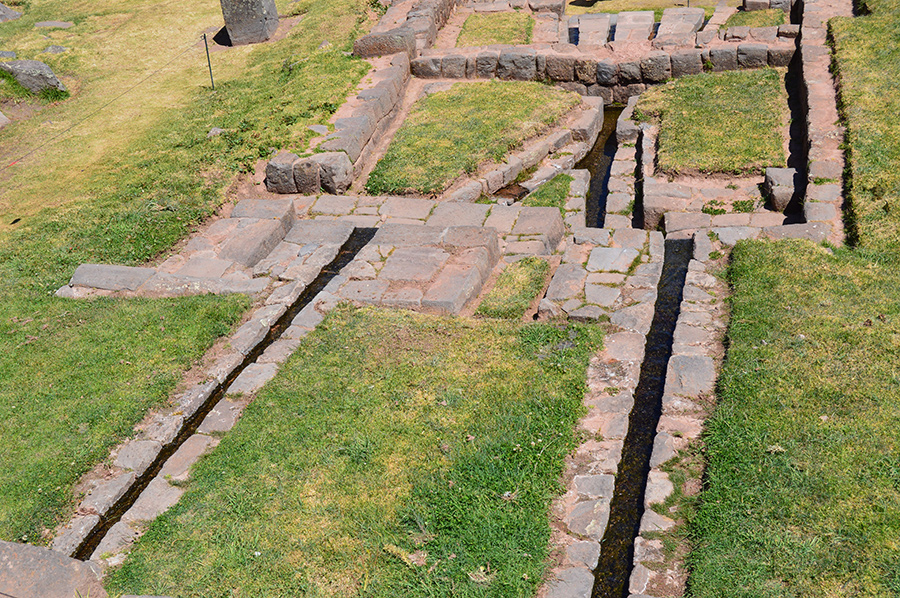
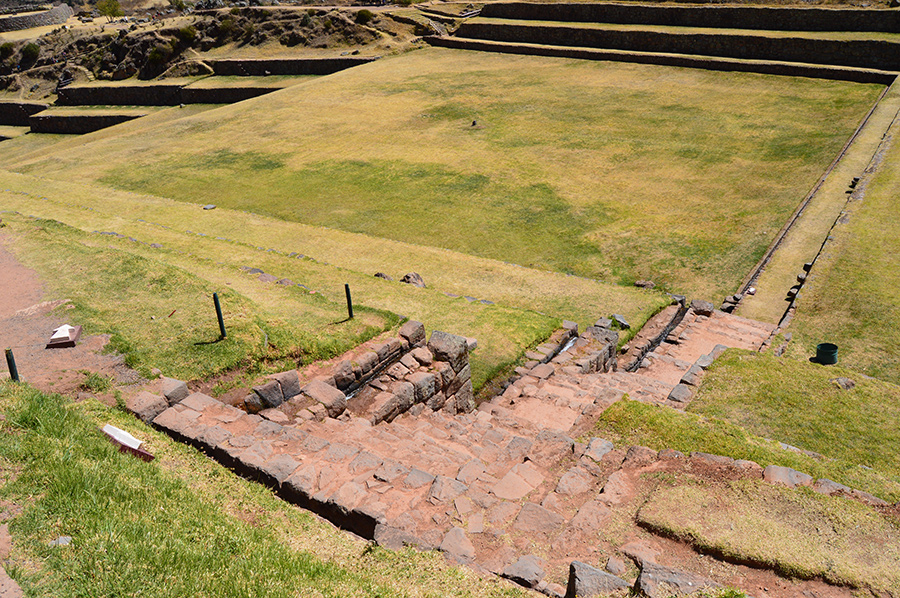
After snorfing ourselves into a bread coma we visited Tipon. Tipon is another terraced ruin but this one is different because this is where they did experiments on their crops, grafting and the like. There are 3,800 types of potatoes in Peru, as well as quinoa and corn and tons of other foods, and this is where they made them less bitter or hardier. The part of Tipon that is most impressive is the canals built to channel the water all around the three-sided amphitheater space.

17-tipon3 17-tipon6 17-tipon7 17-tipon11 17-tipon14 18-tipon1 18-tipon4

Look at how convoluted that is. These are people who did not have a written language, but they figured out the complex engineering needed to pull this off. That is so impressive. The Inca even figured out that if they made the vertical canals thinner on the outer edge it would reduce splashing at the bottom which would reduce waste. That’s pretty ingenious.

18-tipon5

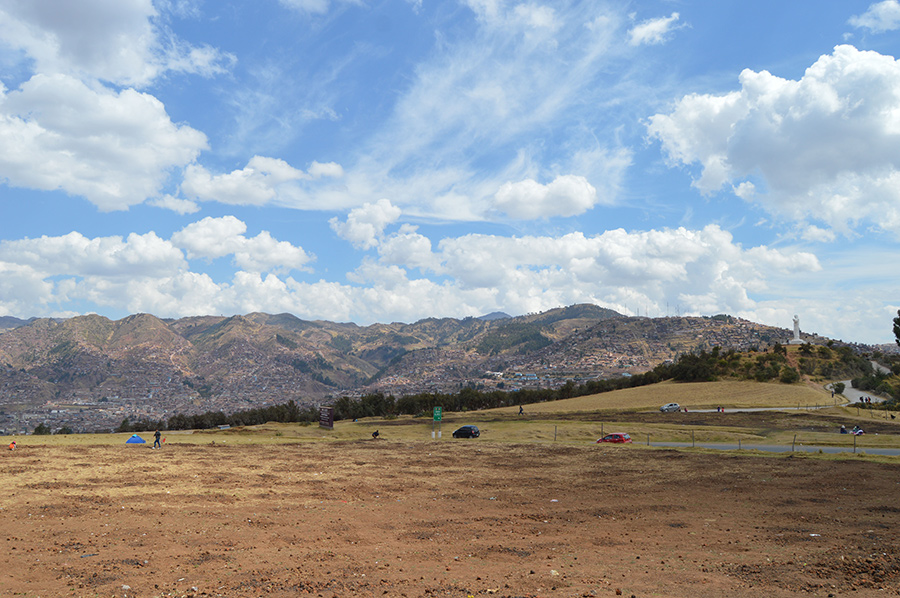
We also visited another site called Sacsayhuaman (pronounced “Sexy Woman,” really). We walked through a grove of a typical Peruvian tree. I avoids growing lichen by have bark that resembles filo dough pastry.

20-sacsayhuaman1 20-sacsayhuaman3 19-sacsayhuaman1 19-sacsayhuaman10

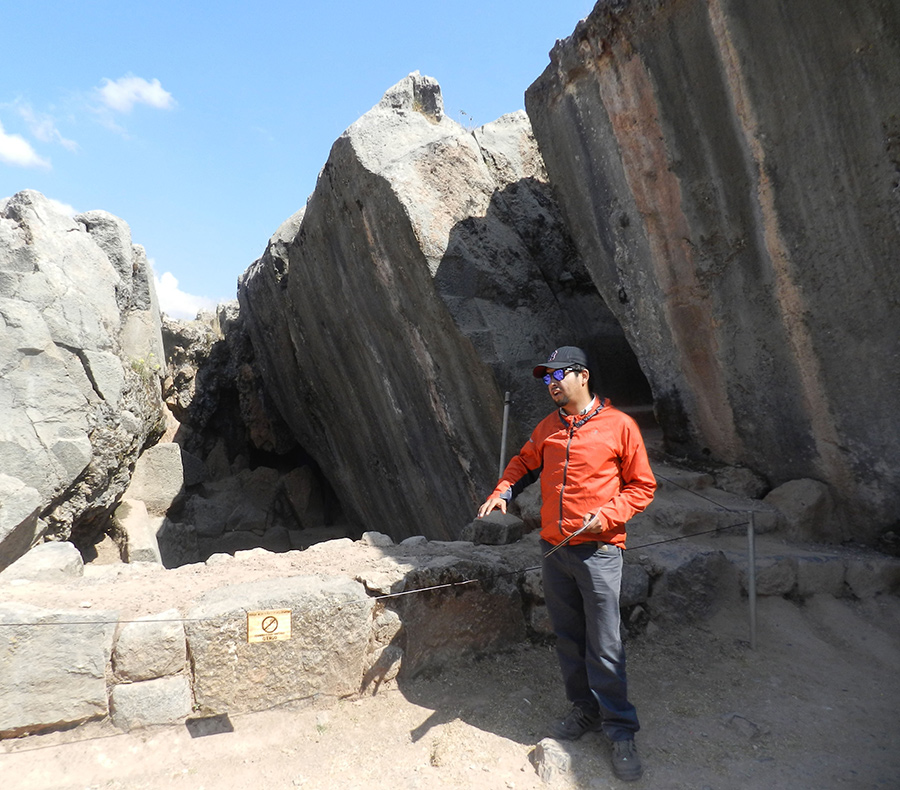
The reason we were visiting this particular site was the size of the stones the Inca had dragged to this place. They’re the biggest at any site. No one knows how they got them here. This is Drea modelling to show scale.

20-sacsayhuaman9

It’s laid out in a zigzag formation to resemble lightning, something the Incas considered sacred.

20-sacsayhuaman8 20-sacsayhuaman12

And the wind at the top of this hill never stops blowing ever. Therefore there’s some serious erosion on some of these stones.

20-sacsayhuaman11

There were two things I really liked seeing at Sacsayhuaman: one was the rock that looked like it had been pushed through a Play-Doh press (because it was once lava that was squoozed out onto this hilltop):

19-sacsayhuaman7

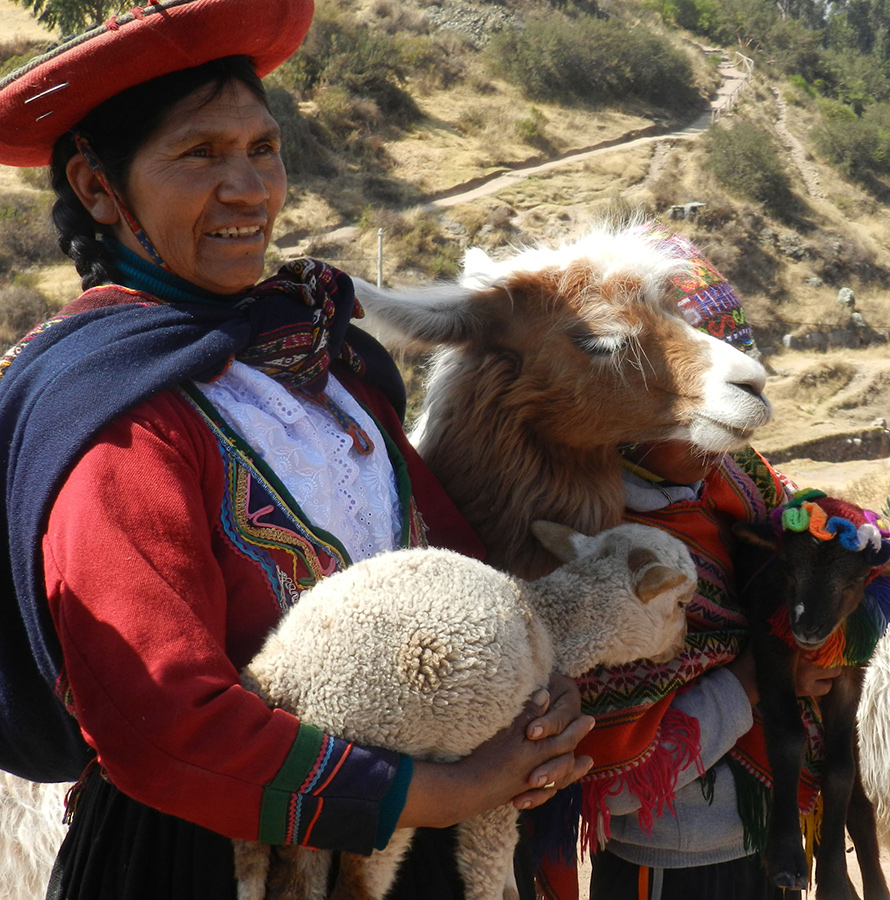
And the other was the llama waiting outside the gates. Peruvian people will dress up in local costume and pose for pictures outside various sites and I never felt compelled to take pictures with them. Until this llama came into my life. It was the most glamorous llama I had ever seen. Look at those lashes. It is the Marilyn Monroe of llamas.

20-sacsayhuaman13 20-sacsayhuaman14 20-sacsayhuaman15 20-sacsayhuaman16

If I could have bought that llama and brought it home, I would have. My goodness. Apparently The Moomins is holding a lamb in some of these pictures but I can’t see them because my vision is consumed by the majestic llama. I heart this llama. I heart it bad.

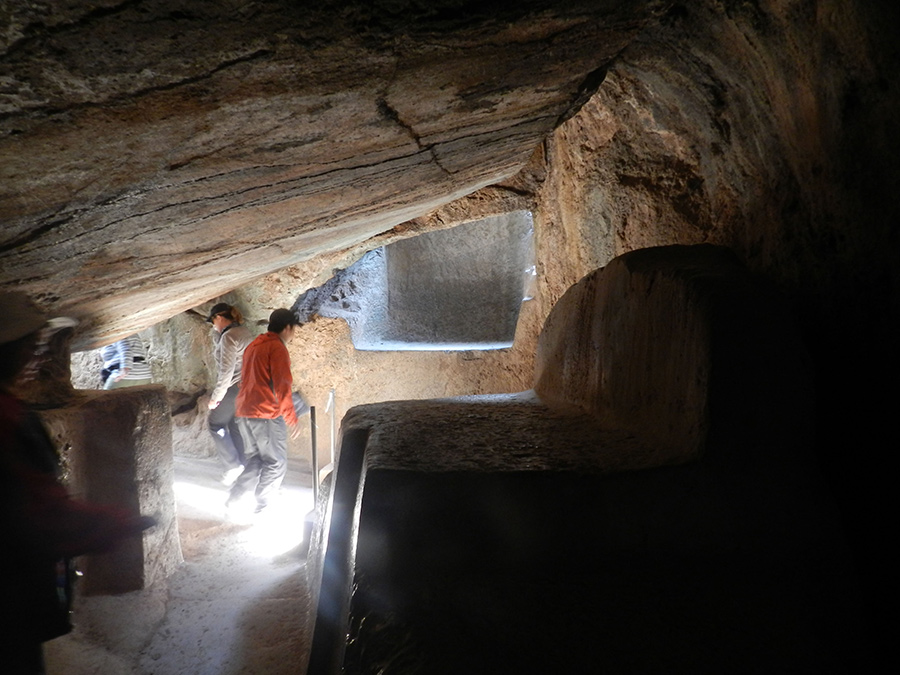
We ended the day walking through a natural labyrinth where sacrifices were made.

21-labyrinth3 21-labyrinth4 21-labyrinth5

We know that the Incas did not carve out the altar area because the rivulets of dried sediment on the walls (they would be stalactites if they were drippier) are over 10,000 years old which is older than the Incas.

21-labyrinth8

They did carve out the altar (in the shape of the Inca cross) and that big square space you see in the back, that was lined with silver or gold to reflect the light onto the altar itself because it was kind of dark down there.

21-labyrinth7

Coming up: A last day in Cusco and then off to Ecuador.

South America 2015, Part 5.

Tuesday, September 22nd, 2015

Get ready y’all cuz we goin’ to MACHU PICCHU today!

But first, other stuff! Sorry about that.

We went to a family home for lunch one day. To get there we got to ride in a modified motorcycle. I thought it would be bumpy or scary but it was quite pleasant. I want one now to tool around in.

13-family-lunch2 13-family-lunch3

The homeowners cook local cuisine using things grown in their garden. Like herbs (look at all that dill):

13-family-lunch5

And tree tomatoes which I did not know existed. They are very sweet so they are treated like a typical fruit – juices, jams, dessert, etc.

13-family-lunch4

You know what else is grown in the garden? Guinea pigs. Edible guinea pigs. Yep.

12-family-lunch1

I ate some guinea pig.

13-family-lunch6

Good news – it does not taste like chicken as apparently everything else in the world does. Bad news – it does not taste delicious in any way. It is very bony so one has to dig all around or end up with displeasing crunchiness. And the flavor is most like a boiled turkey leg. I don’t regret eating it but it was bleh. Meat isn’t consumed as much as it is here. You know the lupin flower? It’s a really pretty decorative plant, go look it up. Well, they have little beans that the Peruvians gather and then boil. But these are no ordinary beans, no no. They are chock-full of protein so, along with the protein-packed grass seed quinoa, one could have a meat-free existence and get all the protein required.

13-family-lunch9

For dessert we had tree tomatoes cooked in syrup.

13-family-lunch7

Then… the next day… Machu Picchu.

We got to ride on a fancy oldy-timey train with skylights (instantly awesome b/c skylights). It took us to the base of the apu (mountain) that Machu Picchu is perched on. You could get hot tea with spices in them or eclectic fruit juices.

15-train-to-mp1 15-train-to-mp3 15-train-to-mp5

We passed some Inca ruins on the way up but I was becoming immune to them by then. Seriously, they are all over the countryside.

14-train-to-mp2

After we pulled into the train station, the bus trip began. Whatever they are paying those bus drivers, it is not enough. They are amazing. The road is EXACTLY two buses wide, it’s windy and there’s no barrier on the edge. When we arrived outside the gate of Machu Picchu you could see how high we had come in the bus. That aqua-colored roof way down there is the train station.

15-machu-picchu2

We were greeted by a series of signs. Machu Picchu, bein’ out of the way and all that, was “Columbused” in 1911 by American explorer and Indiana Jones inspiration Hiram Bingham. To Columbus something is to come across a place that local people have known about for forever, but because you’re white you’ve discovered it and now it matters. Anyway, one of those plaques honors Hiram for finding this place all by himself except for all the help he got from local farmers. And then Hiram unearthed and exported somewhere between 4,000 and 40,000 artifacts but by all means let’s honor him and give him all this credit. Good stuff. Great guy.

15-machu-picchu58

And then, the stairs. STAIRS. Staaaaaaiiiiiirrrrrrrs.

15-machu-picchu3 16-machu-picchu8

But it was totally worth it. Absolutely breathtaking. Oh my goodness.

15-machu-picchu6

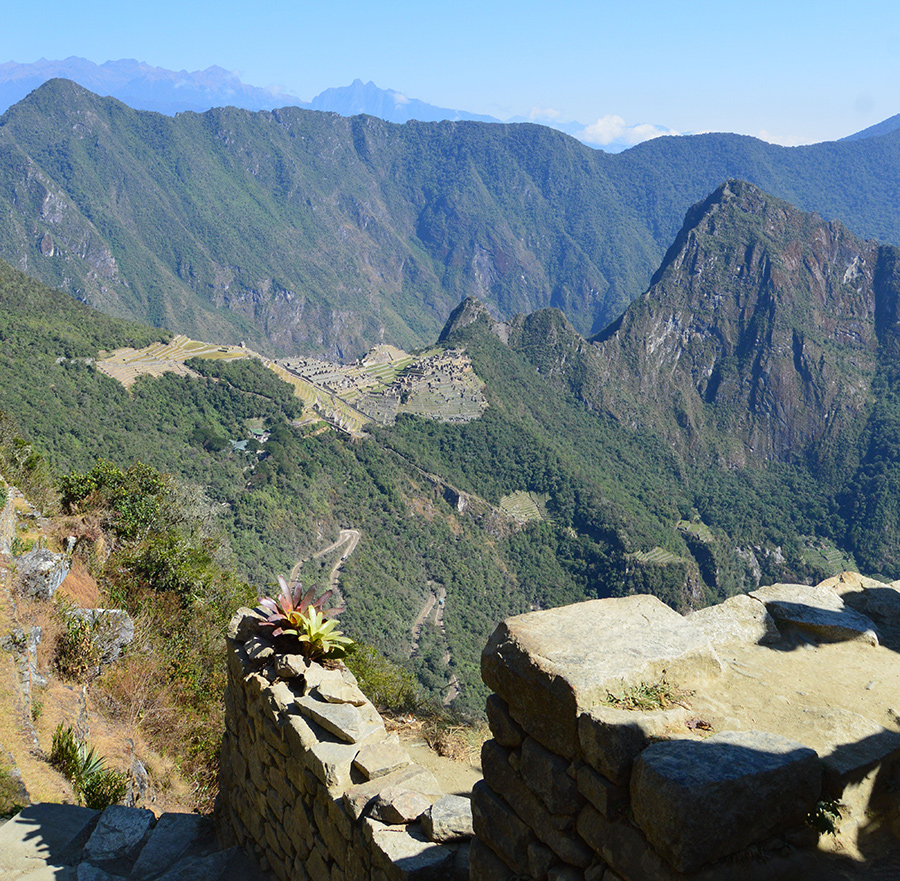
Here’s a fun fact: Machu Picchu (meaning “Old Peak”) isn’t the name of the town we’re looking at there. It’s the name of one of the two mountains the village is nestled betwixt. In all the famous pictures, the mountain on the right side is the other mountain, Wayna Picchu (“young peak”). There’s some storehouses on the tippy-top of Wayna Picchu. When Cricket went to Peru a few years back he climbed Wayna Picchu. I do not know how. I get tired looking at it.

15-machu-picchu5

Pictures of the actual Machu Picchu. The Cusco flag is on top.

16-machu-picchu5 16-machu-picchu6

If you look out from the village, you are surrounded by many beautiful steep green mountains. It fills your eye.

15-machu-picchu7

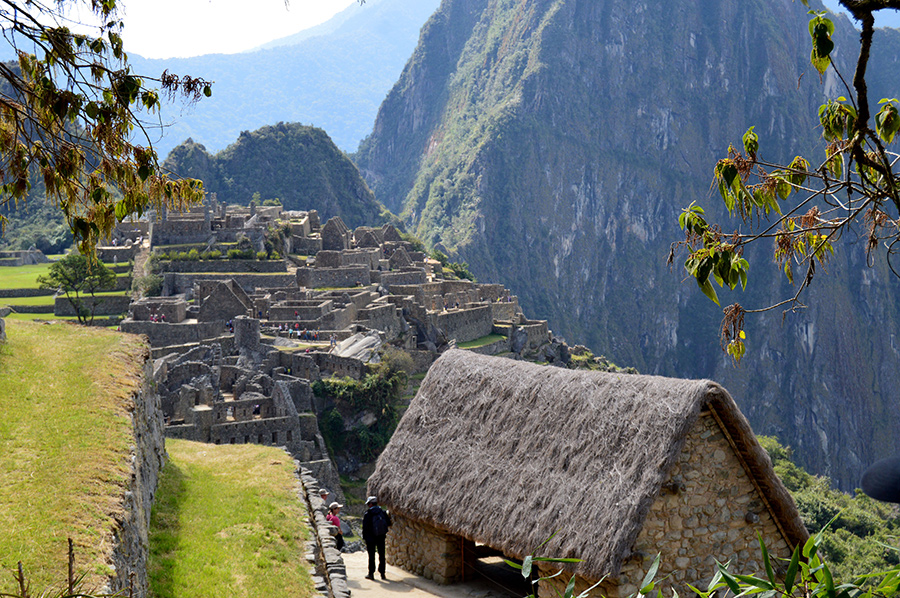
The archaeologists decided to put thatch on the roof of one of the houses to show what it might have looked like but left the rest bare.

15-machu-picchu9 16-machu-picchu13

Something I may not have mentioned is that the Inca and pre-Inca cultures did not have a written language so archaeologists have to do a lot of guessing. “We think they may have used this for…”  But the Incan people tended to follow the same kind of structure, so at least the people studying this site know which are the important and unimportant buildings based on the quality of stone, same as Ollantaytambo.

15-machu-picchu29

Another interesting fact: The Inca didn’t use slaves to build pretty much anything. Instead of collecting taxes, people would go to one of these sites for three months and work on them, being that these storehouses, temples and terraces were considered part of the greater good. The remaining nine months the citizens were left to their own devices.

16-machu-picchu11 16-machu-picchu18 16-machu-picchu27

There is one rounded building. No one knows why. It is considered to be a temple devoted to the sun. But once again, that’s just a guess.

16-machu-picchu14

There’s a kite-shaped stone in another religious site. This one is easier to figure out. It mimics the exact shape of the Southern Cross, a common constellation. And it points in the exact same direction that the Southern Cross does. In the photo Henry is using the compass in Drea’s phone to show us how spot-on the placement of the stone is.

16-machu-picchu19

There are religious sites all over the village. This one was for stargazing. The building had no roof and those two circular pools are for looking at the stars reflected off the water so one would not get a crick in one’s neck.

16-machu-picchu23

This is an altar with the Incan cross theme.

16-machu-picchu16 16-machu-picchu17

And the people saw a rock split in the middle and decided it looked like a condor’s wings so they made an altar directly below it mimicking the shape of a condor’s head. One could perform sacrifices and the blood would flow down and pool next to the condor’s beak in that bowl area so it was as if you were feeding the gods.

16-machu-picchu26

This altar has a amusing story. In the 1970s a film crew came to make a documentary and someone dropped a heavy camera on the altar and that’s why that corner is chipped. So no more film crews are allowed on the mountaintop.

15-machu-picchu33

And it is true Machu Picchu is falling down. Part of that is because of all the visitors but a portion of it is the mountain shifting. So the stones are coming apart. The archaeologists intend to prop the buildings up with scaffolding but not rebuild them.

15-machu-picchu25 15-machu-picchu27

It was so amazing, both the village and the surrounding landscape. We wandered around for over two hours and I loved it.

Next entry: more Incan ruins. And bread. Really delicious bread.

South America 2015, Part 3.

Saturday, September 12th, 2015

Ollantaytambo! A place! With terraces. And stairs. Omigod, stairs. Pre-Columbian stairs can SUCK IT. I, for one, am thrilled the Spanish came and conquered and destroyed an ancient culture because you know what they brought with them? Stairs with uniform height and depth. And railings. Magical magical railings. Hooray for European oppressors! (I seriously hated the stairs.)

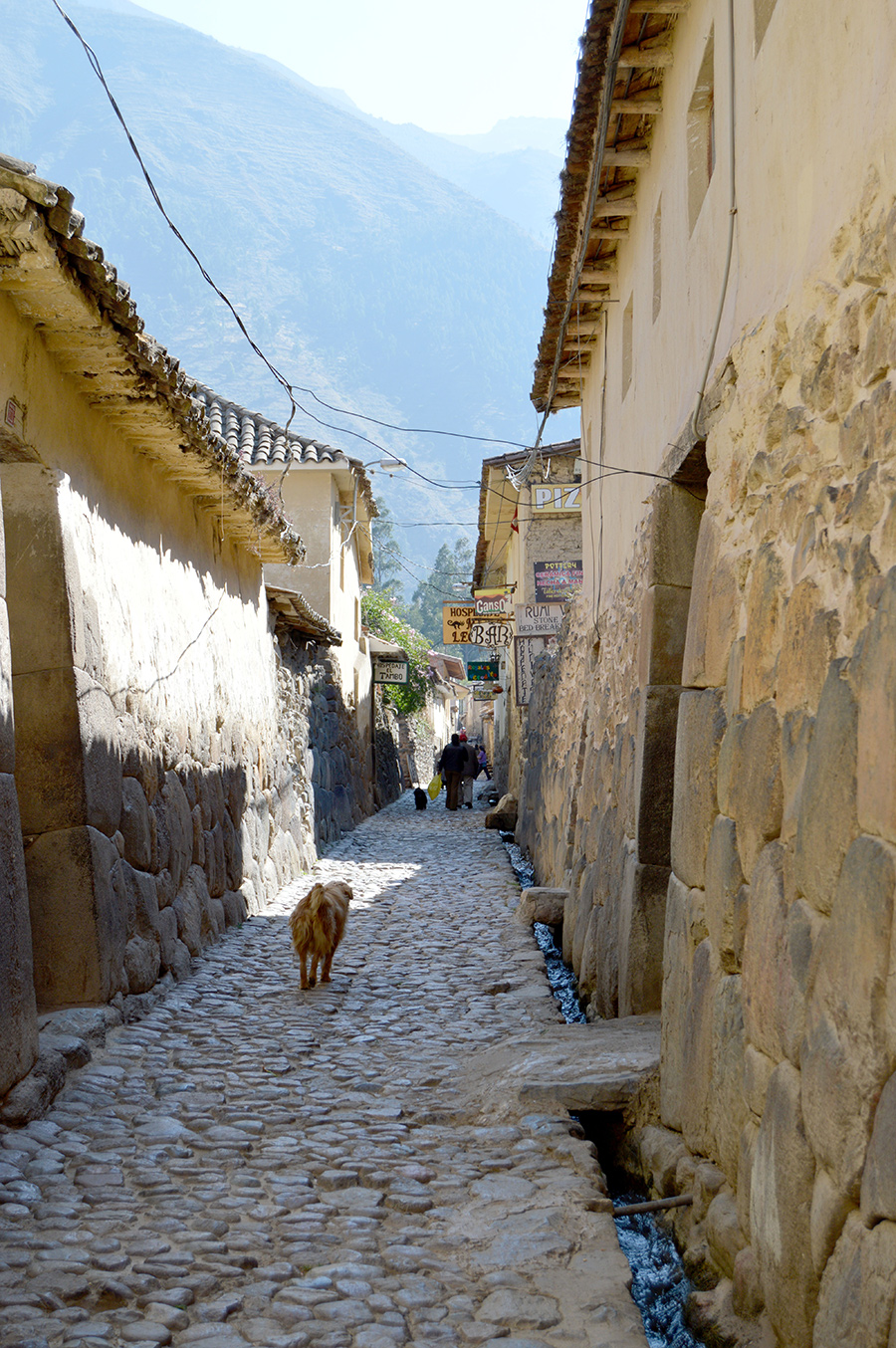
But before the nightmare stairs we shall visit a local village. Unlike most cities, the major cities we visited were nowhere near a major water source. What they did have was very fertile land and melting icecaps on mountains that made rivers. A neat thing is sometimes they would build the town so the water could flow through the town in channels on the sides of the streets.

6-andes-village2

That’s not for trash or waste, that’s fresh water that one could dip one’s pot into and use for cooking or cleaning. And remember I said there was old ruins all over place and I was not kidding, they are seriously everywhere. And wisely everyone decided ” Waste not want not” and built new village components on top of the old ruins. That’s why the bottom part is stone and the top part is stucco.

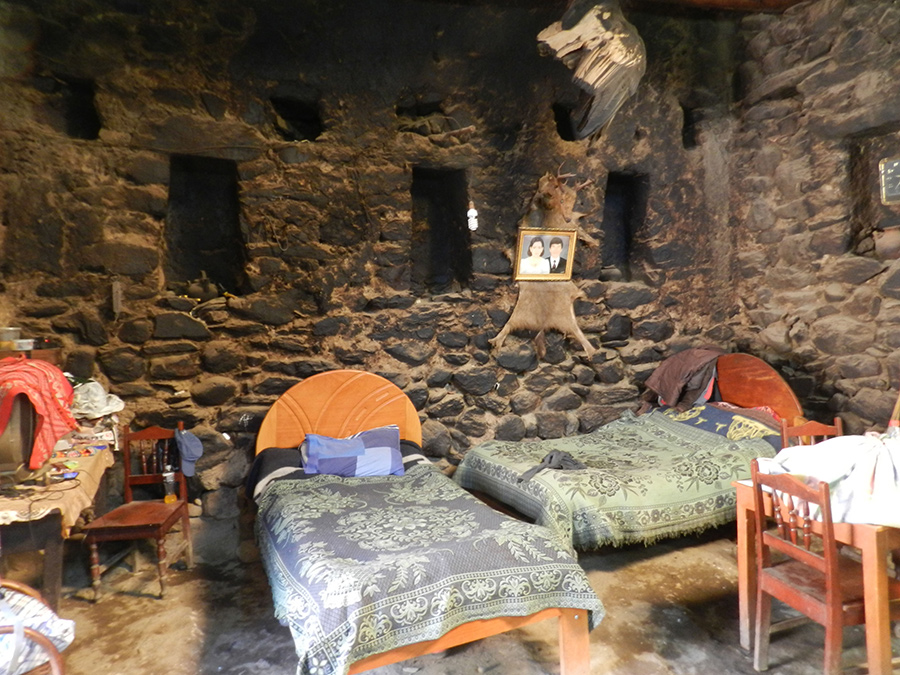
We went into a typical home interior. It was amazing. I loved it. I was the only one. We’ll get into why in a moment. It had a cement floor and the walls were leftover Inca ruins. The roof was corrugated iron sheets with panels cut out for skylights. If I had to sum up my trip to Peru it would be: A new appreciation for skylights. They are in 80% of the buildings and it immediately improves everything. Places that would be glum and dark are bright and spacious. I am now firmly on the skylight camp. Anyway, back to this house. It was just one big room with no windows, only stone niches for storage, about 50 feet by 50 feet and about 12 feet high. And everything a family could ever need was inside. One one side of the room was two beds:

8-andean-home1

On the other side was an oven-stove thing built into the wall (so far, fine, totally normal):

8-andean-home4

Hanging from the ceiling is dried fish, dried alpaca meat and corn (it didn’t smell therefore still okay):

7-andes-home2

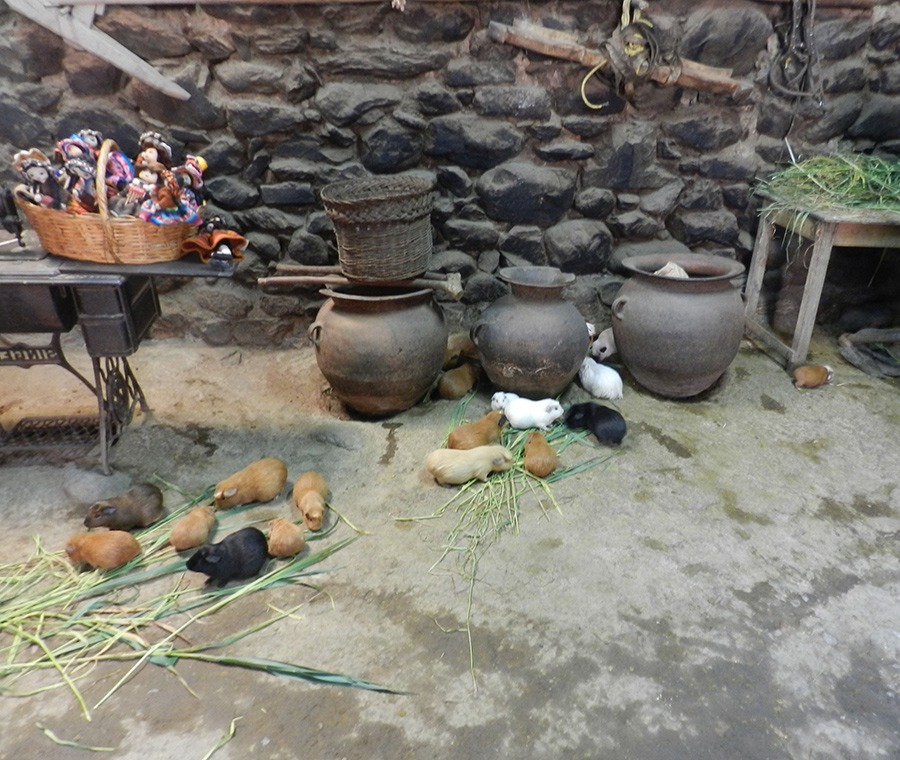
Here’s where it takes the turn and only Jessica is happy about it: Under the antique sewing machine is where the guinea pigs hang out eating alfalfa, no cages or anything, free-range (remember, this is a one-room house):

8-andean-home2 7-andes-home1

Next to that is the family’s religious shrine with the skulls of Great-Grampa, Great-Great-Grampa and Great-Gramma sitting in the niche above the table of religious accoutrements. Yep. This is directly across from the beds so while you go to sleep you’re staring at your dead ancestors’ empty eye sockets. Sleep tight.

8-andean-home3 8-andean-home5

See those white-ish things off to the side? I thought they were giant radishes. Nope! Dried stillborn llama babies. Always a good choice in home decoration. Beautifully paired with Granny’s skull. I think this is in the Crate & Barrel collection this season.

You’ll notice that the religious elements on the table are not Christian. That’s an interesting thing. 85% of Peru’s population is Catholic, but most of them consider themselves really fluid in that regard. They will go to mass on Sunday, but they will also go to a faith healer and worship the ancient gods. Ergo the pre-Columbian religious elements. In the pumas and llamas there there are holes in the top that look like they should be for candles, but they are filled with llama fat. The belief is that if you put the fat of an animal in these figures, they come to life and can help you communicate with the gods.

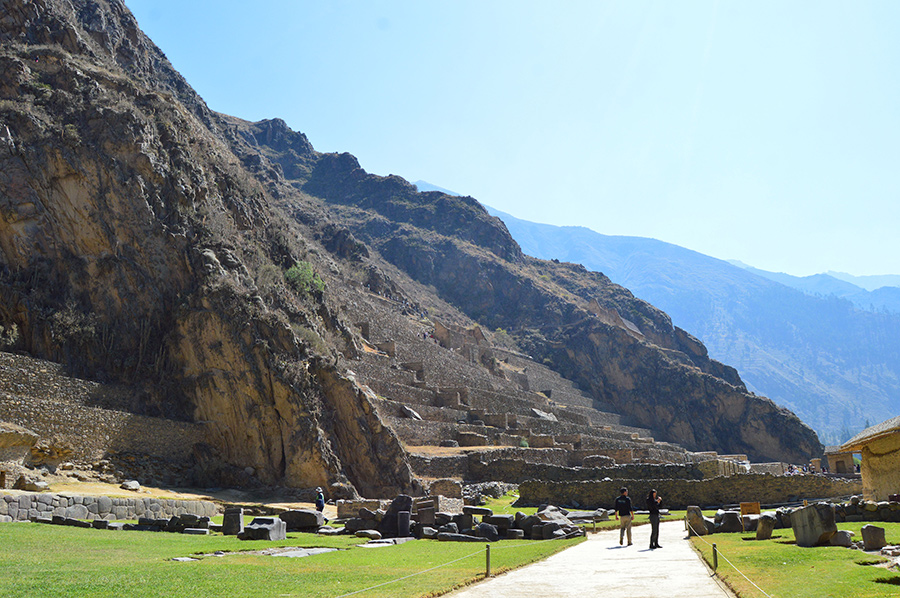
Okay, off to Ollantaytambo. Big ole terraced ruin. I don’t think people lived there, they farmed there and there was a sun temple but no homes.

8-ollantaytambo1

Beautiful, huh? LOOK AT THE SLOPE OF THE MOUNTAIN. Look at it. I climbed that. At 9,000 feet. If I could breathe I would have been non-stop moaning.

8-ollantaytambo5

Oh God whyyyyyyy stairrrrrrrrrrrs so many so uneven so lumpy ehhhhhhhhhh

8-ollantaytambo19 8-ollantaytambo18

This was my first foray into Inca architecture. I learned so much. Let me see if I can recall all the things I was taught.

9-ollantaytambo6

All the stones were brought from somewhere else. That means that people dragged these monsters from whatever valley they originated up this steep mountainside. And in the picture below you’ll notice that the quality of the stones show the importance of the building. The terraces have meh rocks, the higher levels have large hand-cut stones that have been fitted and the top level where the temple was has giant, beautifully hewn and fitted stones. THAT means that the big beautiful stones had to be dragged up even higher. Wow.
9-ollantaytambo5

Double doorways delineate building entrances. So when you see a doorway nestled in a doorway that means building entrance, not just room entrance. When you’re walking around ruins with no roof or any furniture it helps you figure out how the floor plan was laid out.

8-ollantaytambo13 9-ollantaytambo9

No mortar was used in the buildings because of earthquakes. It allowed the stones to shift a little bit. That’s the same reason the niches and windows are trapezoidal and smaller on top. Smart, those Inca people. You think, being so smart, they would BUILD A DECENT SET OF STAIRS okay I’m done.

8-ollantaytambo12

Those nubbles sticking out is how archaeologists think they stones were moved. The builders would wrap ropes around those and pull. Then, when the stones were in place the nubbles were buffed away using other pieces of granite.

9-ollantaytambo8

In order to match the stone shapes exactly they would lay out the entire bottom layer, then put clay on top of that. That made a mold they could follow exactly while carving. They also made tongue-and-groove joints inside the wall for added structural integrity.

9-ollantaytambo10

If stones fell off the walls (or were pushed off by the Spaniards, let’s be real here) the archaeologists didn’t try to put them back, they simply lined them up in neat rows on the terraces below. Cool bit of info about the terraces – there is no drainage on them. That’s because the bottom layer is rock chunks, then there’s ash and on top is soil brought up from the Sacred Valley. The water on the top terraces drain down to that rock-chunk layer and that feeds the terrace below and so on and so forth. That means no flooding or stagnant water pools.

8-ollantaytambo20

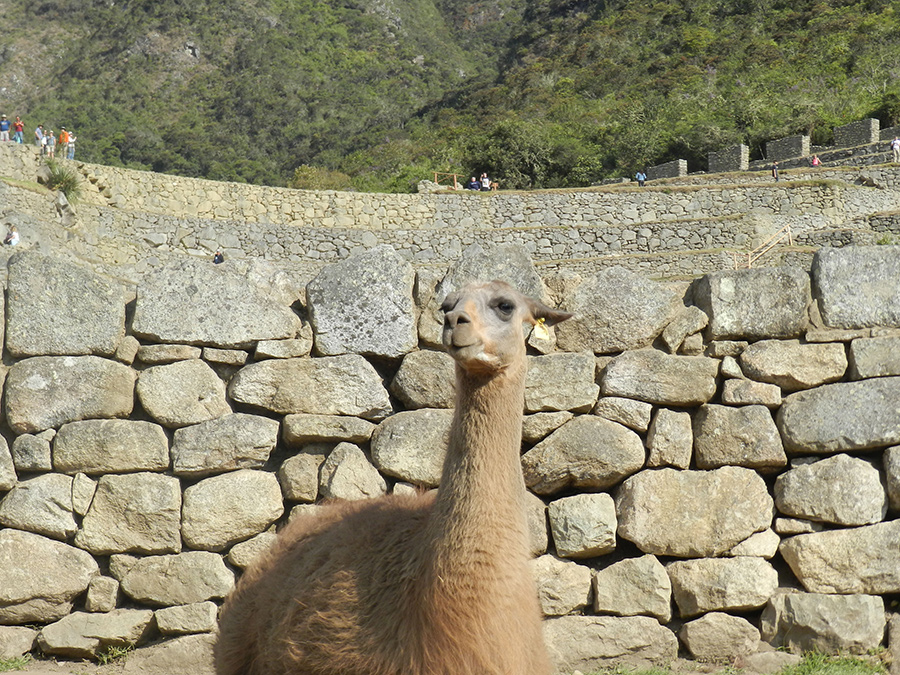
The wind up in the mountains is pretty intense. I think this picture really shows how non-stop it is, with the tree and the sitting area. And there are government-owned alpacas! Most of the ruins we went to had government-owned alpacas or llamas on them. The government thinks they enhance the places and Lord knows I ain’t complainin’.

9-ollantaytambo12 8-ollantaytambo22

These are examples of that Incan cross I spoke of earlier with the three steps. It references the three planes of existence. It’s a common theme and we saw it all the time.

8-ollantaytambo9 8-ollantaytambo11

This is the view from Ollantaytambo to the storehouses across the way.

9-ollantaytambo4

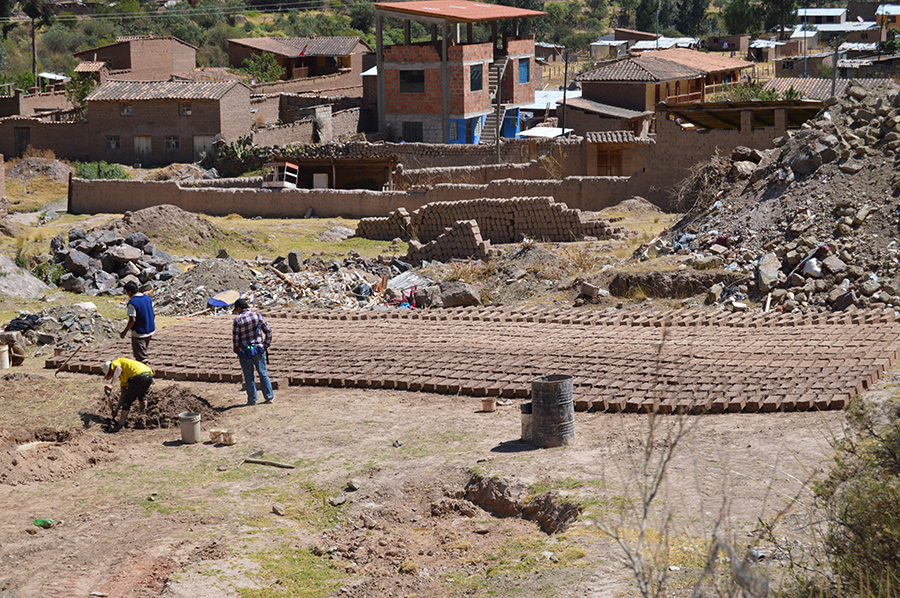
Since it rains so infrequently there buildings can be built out of mud. I would be concerned all the time about every cloud but another reason I found to not be on Team Adobe was when I saw all these holes and asked our guide Henry what they were. “Bee holes,” he said.

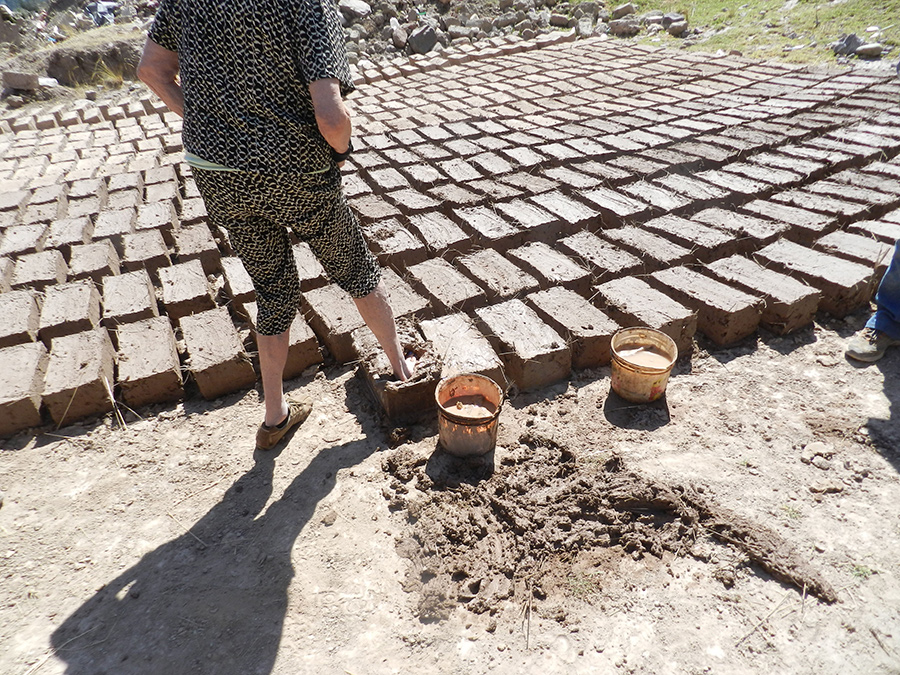
After Ollantaytambo we had an opportunity to actually see how the adobe bricks are made. A team of men were adding water to the dirt and incorporating straw into the mix, then smooshing it into a mold with their feet, gently removing the mold and letting it dry for about four days. The Moomins was delighted about the chance to assist with the smooshing. That shoe came off so fast and her foot was in there.

9-adobe-bricks1 9-adobe-bricks3 10-adobe-bricks2

I’m still not feeling the “building the house out of mud” thing, but if it works for them, more power to them.

Next entry: Pre-Machu Picchu. With maybe a sprinkling of Machu Picchu, we’ll see.

South America 2015, Part 2.

Sunday, September 6th, 2015

Cusco! It’s 11,000 above sea level! It was bizarre. I felt fine as long as I walked on flat ground. Then I would step up one step and I would be winded and have to lie down because the blackness would fill my eyes. It took me a long long time to acclimate, even a little. I suffer from sleep apnea here on ground level and the apnea was far worse at high elevations. I think my body thought I wasn’t breathing so I woke up violently every 30 minutes or so. I would be sleeping peacefully, then “NKAH!!!” and I would sit up straight in bed. But not everything is ever all bad. It was so dry and crisp at that height I didn’t have any allergies and my skin stayed really clear. Silver linings, y’all.

First, a few unrelated-to-Cusco pictures. This is the Chakana, the Inca Cross. It is going to be referenced over and over. You can see the condor, puma, snake thing I mentioned in the previous blog entry.

incan-religion

Something you need to be prepared for in South America – you can’t flush your toilet paper in the toilet. You put it in the wastepaper basket off to the side. It takes some getting used to.

bathroom-sign1 bathroom-sign2

Okay, so, Cusco. This was the photo I took from the bus as soon as I landed. I think it’s pretty evocative. Love the hat seller. Hats are big there being that you’re six inches from the sun.

3-cuzco1

Another fun thing was Drea’s bag of Doritos that she brought from the U.S. It did not care for the altitude, no it did not.

3-cuzco2

Cusco had my dream setup. Don’t like the church on the left? We conveniently have the church on the right. Right next to the super-old little church there all the way on the far right.

18-cuzco1 18-cuzco7 18-cuzco3 3-cuzco30

There was also those Spanish-style wooden balconies all along the main square.

18-cuzco4

But our guide Henry didn’t want us staying in Cusco our first night. We went down into the Sacred Valley which was only 9,000 feet up so we didn’t all die immediately. It also gave us a chance to appreciate the stark beauty of the Andes.

3-peru-countryside4 3-peru-countryside7

The Incas and pre-Incas built storehouses all over the countryside. Their society never experienced a famine because they had mountain facilities filled with corn and potatoes and seeds and cured meat and because it’s so dry and the winds blew through the windows nothing would rot. We drove past tons of these storehouses.

3-peru-countryside9

We stopped at a roadside truck stop to take a bathroom break where I saw a kid playing with a kite made of garbage. The mountains are very windy so kite-flying is a natural activity. With the mountains in the background, it was a stunning photo.

4-peru-countryside3

Since this is a common truck stop there were people there selling Peruvian goods. That’s where I ended up buying the hat that I insist on wearing much to my mother’s chagrin. Sorry Moomins, it’s an awesome hat and you must accept that. Our guide Henry informed us that the reason the woman is wearing that particular chapeau with the very tall head-space is to mimic the skull elongation we saw in the museum skulls. I thought that was a really cool fact.

4-peru-countryside4

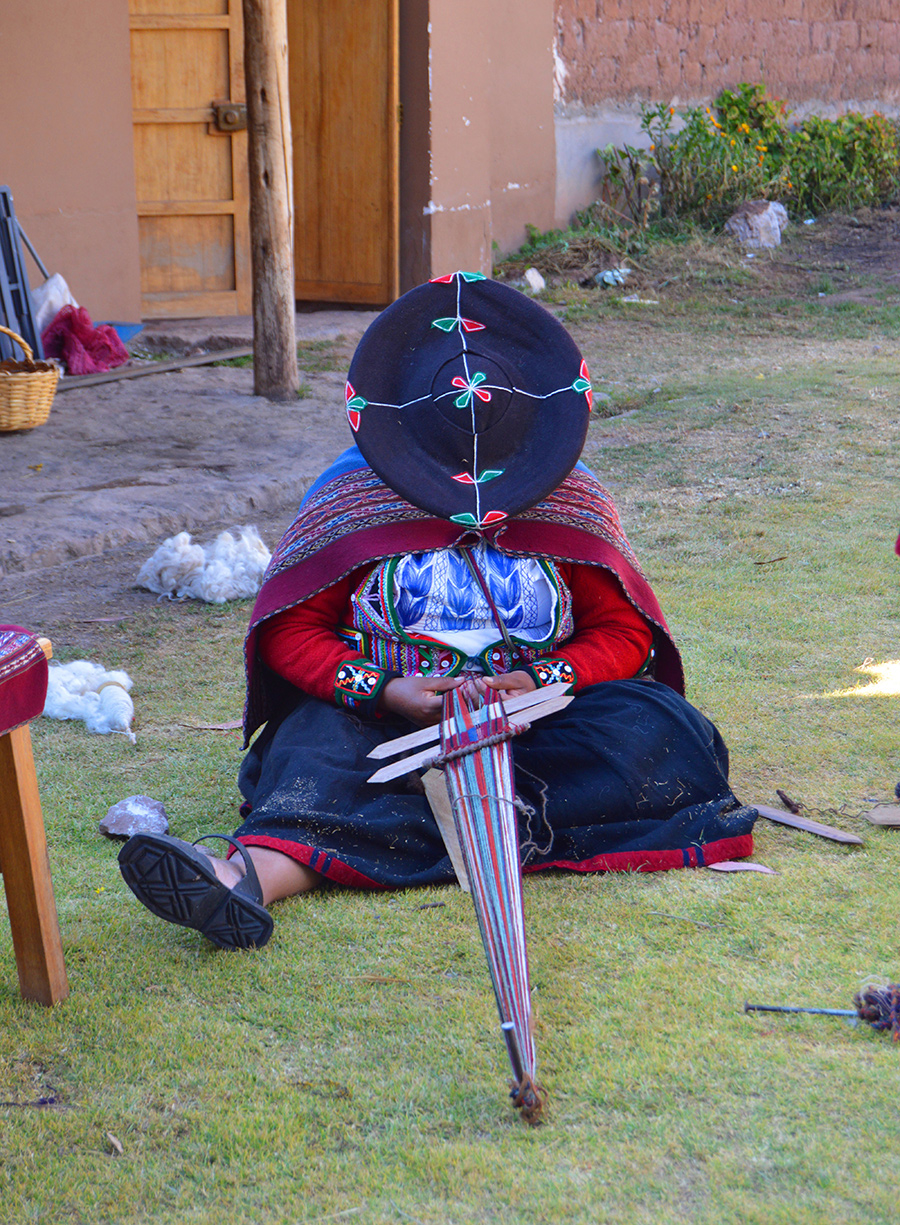
After this brief, extremely scenic tinkle-break we went to a women’s collective that uses the old ways of spinning, weaving and dying wool and camelid fiber. Clarification time – wool comes from goaties and sheepies and some really fluffy bunnies. The camelids (the two domestic breeds, the llama and the alpaca, and the two wild breeds, the vicuña and the guanaco) are considered to have hair, not fur or wool. Therefore their stuff is called fiber. People get real cranky-like if you call it wool; I learned that the hard way at the Rhinebeck Sheep and Wool Festival. FIBER. Get it right or get rebuked.

Anyway these women saw an opportunity to keep their original techniques alive while supporting themselves so they have this place where visitors can go and see the whole process. I found it fascinating. First they take the fiber and spin it using a spindle and gravity (a good system, it’s slow but it never breaks and if gravity fails and then we have bigger problems than wool-spinning).

5-weavers1

Then they dye the yarn if they want to be exciting jaunty colors. If they don’t dye the camelid fibers they have lots of grays and browns to work with. This is an undyed finished piece.

5-weavers4

If they do dye the yarn they use all kinds of natural stuff. Peru has all these herbs and plants and stones and metals which they grind up and mix with each other and then brew and then dunk this yarn in, sometimes for minutes, sometimes for hours, to get the colors they want.

5-weavers5 5-weavers8

My favorite color was the red, not because of the red itself but because of how it’s made. It’s made from powdered beetle. Yep. See that cactus? See that white stuff on it? Those are dried beetle corpses. They scrape those off and pulverize it and it makes a terrific red dye called cochineal. It’s really common for it to be in many of our red foods. You’ve eaten this beetle.

5-weavers11 fd12

The yarn on the right is plain cochineal dye. The yarn on the left is cochineal dye mixed with a scoop of copper sulfate. Someone figured out that if you do that the yarn turns more orange and less bordeaux. I thought that was cool as hell.

5-weavers9

The next steps is to dry the yarn in the sun and then roll it up in a ball. It needs to be in a ball because it needs to be thrown. Two posts are driven into the ground about 12 feet apart and a person sits at each end, wrapping the yarn around the pole and then throwing the yarn ball to the opposite pole. This is done until the pole is laden with yarn to the top.

4-weavers1 4-weavers2

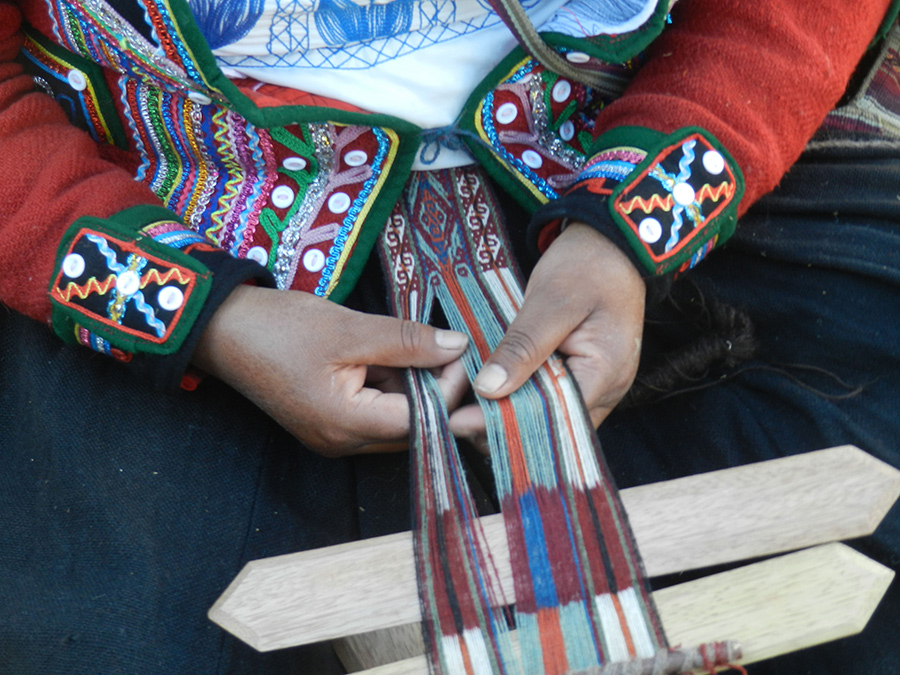
Honestly, I don’t know what happens next. I don’t know if they take it off the posts and clip it together somehow or transfer it to a loom with hooks on it, something happens now that this becomes the warp. The weft (the threads going in the opposite direction of the warp, thereby making it fabric) is woven in by hand using wooden sticks with pointy ends to drive the yarn apart and allow the warp threads to pass through. Back and forth and back and forth. That’s it. That’s how you make fabric. There are, of course, a million and one variations on that simple theme. For example this woman was making a belt. She had driven a small peg into the ground and was using her waist as resistance to keep the tension tight. You can clearly see the wooden pointy-ended sticks she uses to separate the warp and allow the weft to pass through.

4-weavers4 5-weavers7

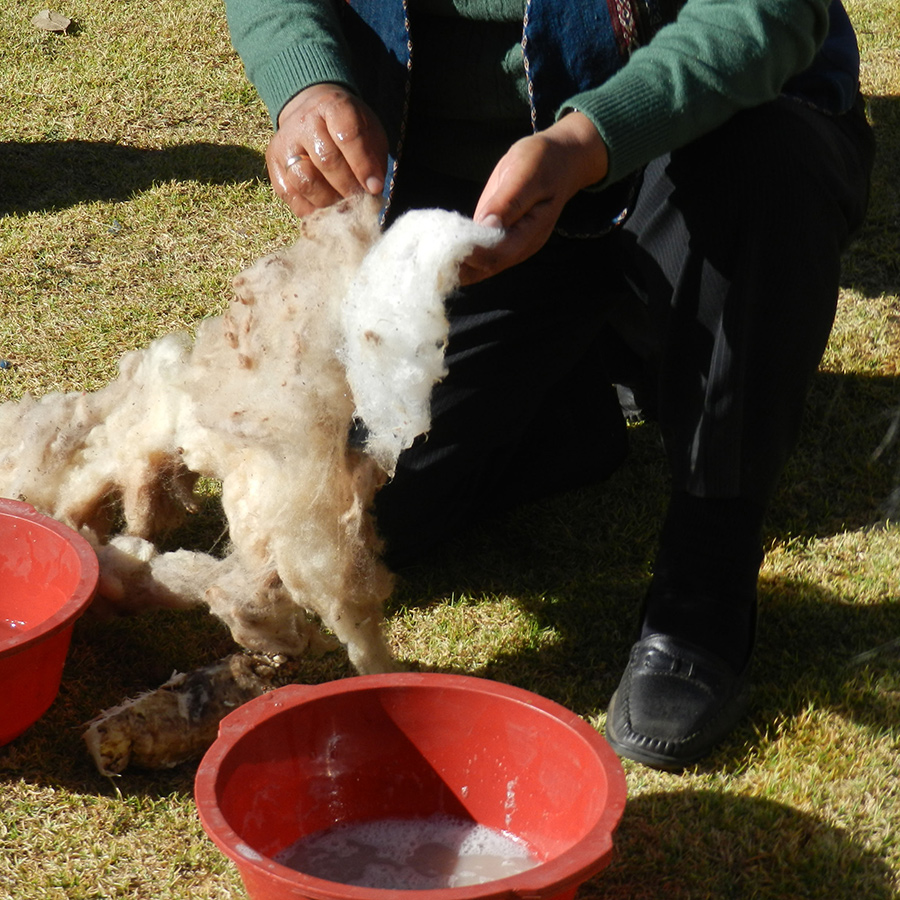
The other interesting demonstration we saw was how they cleaned the wool. Sheep wool is notoriously dirty because of the lanolin which is the natural oil the sheep makes that causes dirt to really hang out and settle in. The woman in charge scraped some yucca into a bowl with some water and swirled a piece of wool around in it. Yucca is a natural detergent. It even froths up a little bit. About thirty seconds later she pulled the wool out and it was white! And clean! From some yucca shavings and water! How cool is that? Look, look at that awesomeness.

5-weavers10

After we had explored the weaving collective we went to our hotel. Our hotels were all family-owned as well as all the restaurants we went to. The company we used is extremely adamant on using local people for everything, supporting the communities that we visited. I loved it. Yeah, it wasn’t five-star fanciness but check out where we stayed in the Sacred Valley.

5-andes-hotel1 5-andes-hotel2 5-andes-hotel6 5-andes-hotel76-andean-hotel4

See? Yeah. Fantastic. Who needs five stars when you sit on a lawn chair and look at this? Gorgeous.

Next post: Ollantaytambo, my first climbing experience.

South American 2015, Part 1.

Tuesday, September 1st, 2015

I made it through 4,000 photos. They are now sorted and ‘shopped and heeeeeeere we go!

Day 1: We went to a museum on the pre-Christian, pre-Spanish societies of Peru. I, sadly, knew pretty much nothing about any of the societies but the benefit of being woefully ignunt was I learned so much! Knowledge raining down like… rain! (I am not a poet.) Here’s a whole pile of cool things I learned:

The Inca and similar cultures did not have a written language (more on that later). Therefore there’s a lot of conjecture about what items symbolize. The guide said, “Well, we THINK they MAY have used this…” over and over because no one really knows. Luckily a great deal of pottery survived and because of that we have a clue on what they ate and what was important to them. For example, you will see in this picture that they grew corn and fished for crab.

1-inca-museum5

And here are different squashes they ate. Off to the side is a guinea pig, they also ate those. Helpful clues, thank you Incas.

1-inca-museum7

They had royalty and the way they distinguished the royalty was by skull elongation. Like foot-binding or neck-stretching but with a head. Babies’ heads are squishy. If you wrap wooden paddles around them, the head will adjust to that shape. At about six months it is done. You will be pointy-headed for the rest of your life.

1-incamuseum5

And they performed brain surgery. Where people survived. See the second skull? That’s a plate of gold and the skull has healed around the plate. Good job, pre-Colombian people.

1-inca-museum4 1-incamuseum3

Other things in the museum that tickled my fancy:

It’s very dry in the Andes so mummies can form. The people would place the deceased in the fetal position, wrap them in loads of fabric with snacks and treats for the afterlife and put them in a cave. I called them mumlettes. Like omelettes. Because they look like eggs when they’re entombed.

1-incamuseum1

One of the sacred creatures is a the puma. The are three levels to the Inca world – The sky world, what we might call “heaven,” land of the condor, the earth world, the one we inhabit right now, home of the puma, and the underworld, where the snake lives. These three levels are used over and over again in the art and architecture as well as representations of those animals. Often it is dignified and majestic. Occasionally it is not. Like with this puma.

1-inca-museum8

And what is this? A chihuahua? I’m thinking chihuahua.

1-inca-museum9

This piece of pottery reminded me of Gru from Despicable Me in a vintage television set. Which seems like an odd thing for the pre-Incas to make but okay. I’m in no position to judge anyone’s artistic choices.

1-inca-museum12

Finally, one of the coolest items in the museum was something that looked fairly innocuous, but is actually incredibly important. This splayed-out belt with strings hanging from it is thought to be a language. The placement of the knots, how many times they wind around and the direction that they are facing are all possibly different letters or nouns or verbs. No one knows. There was one man left who understood the language and the Spanish killed him so the non-Spanish heritage would die out, which it did. 🙁

1-inca-museum11

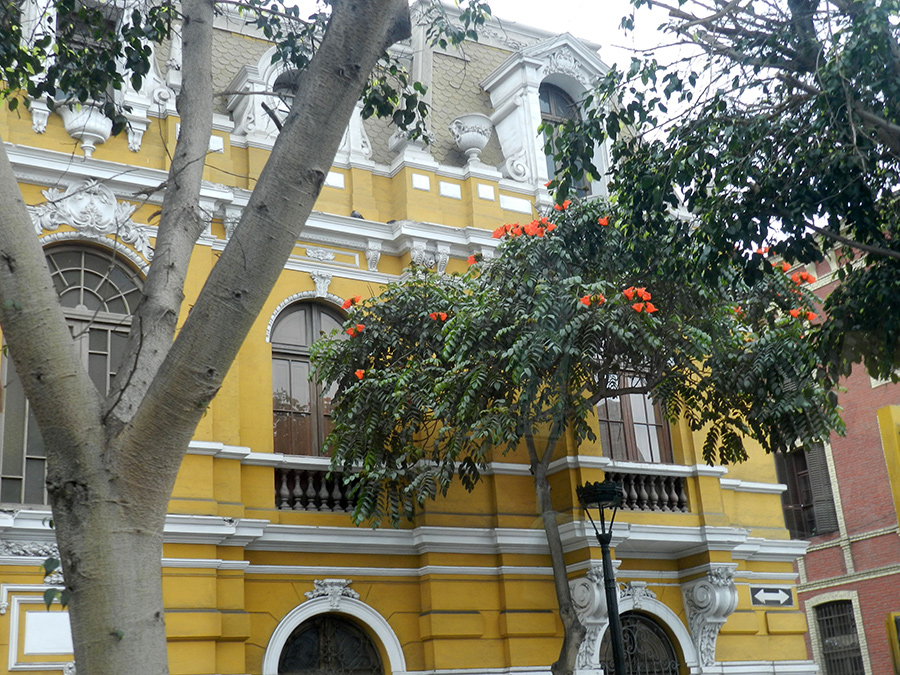
After the museum we headed into the city of Lima. The Spanish influence in the main area, it is intense.

2-lima1 2-lima2 2-lima4 2-lima6 2-lima11 2-lima19 2-lima18

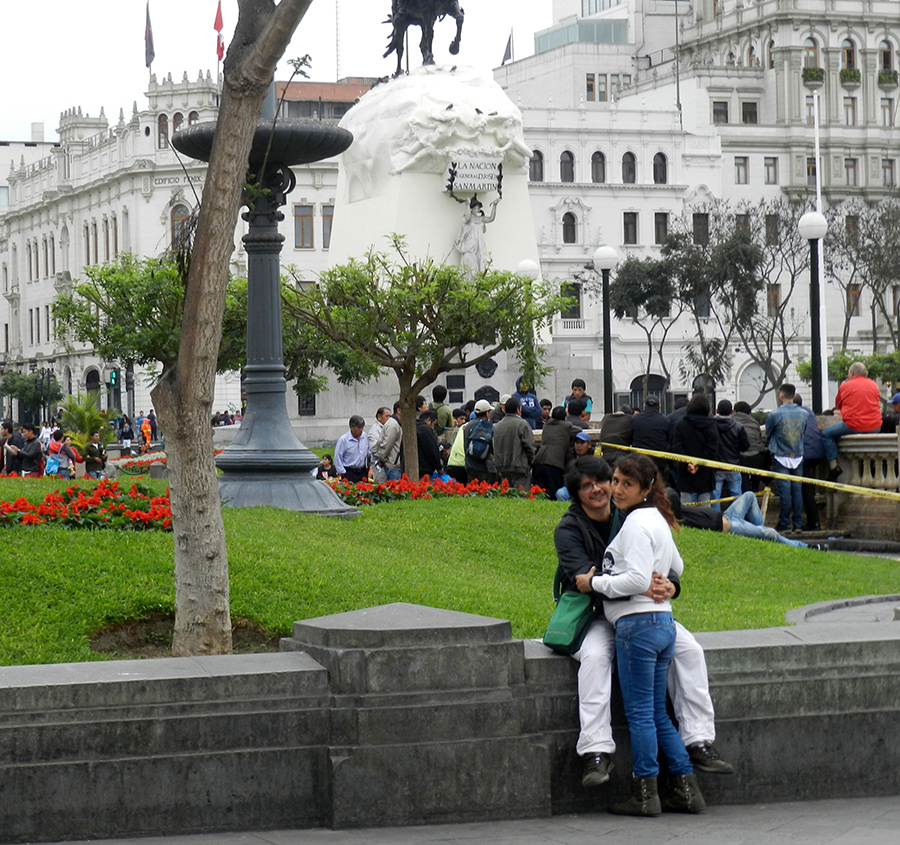
Yeah. If ever there should be a hashtag “EuropeanInfluence”, it would be here. I got a cute picture of two young people in love in front of one of the buildings. We waved at each other a bunch. They were nice.

2-lima5

A distinctly Spanish architectural detail is an ornate wooden balcony. Because it’s overcast so much but it never rains the original wooden balconies are well-preserved.

2-lima14 2-lima15

It really doesn’t rain there. I couldn’t believe it, but then our guide Sandra pointed out that there were no gutters or drains on the street and most of the roofs were flat. Then I looked it up online and sure enough they get about an inch a year maybe.

Some of the beautiful government buildings that are no longer suited for their original task have been re-purposed in wonderful ways. The library used to be a train station.

2-lima13

And the telegraph office is now a school of Peruvian Gastronomy. Peruvian cuisine has been voted one of the best in the world (They have the potatoes, people! All the potatoes!) and sometimes tourists come only to eat the food and learn how to prepare it.

2-lima20

My first meal there, oh my gosh. I had warm fried mashed potato balls topped with fresh avocado and shrimp in a sort of picante mayonnaise with fresh greens. Just about every meal was that good. I found myself getting really excited about quinoa soup. And corn. I got real excited about corn. My joy for potatoes has always been high, so that just maintained.

At my first meal I also sampled my very first cup of coca tea. Are you familiar with cocaine? This is the leaf that gives cocaine it’s “zip.” I’m not addicted to nose candy, don’t worry. Coca leaves contain 1.02% of the active ingredient. That means about 99% is just leaf. And then you dilute it in water which weakens the punch even more. No one is getting hooked on that. It tastes like a chamomile tea with a hint of spinach. Not unpleasant. Kind of plant-y. And you do feel slightly more awake after drinking it, so it’s not recommended at bedtime.

2-lima3

After lunch I got to see my first church in South America. If you know anything about me, you know I love me some CHARCH! So I was delighted. It was banana-colored and it had vultures nesting in it.

2-lima8 2-lima9

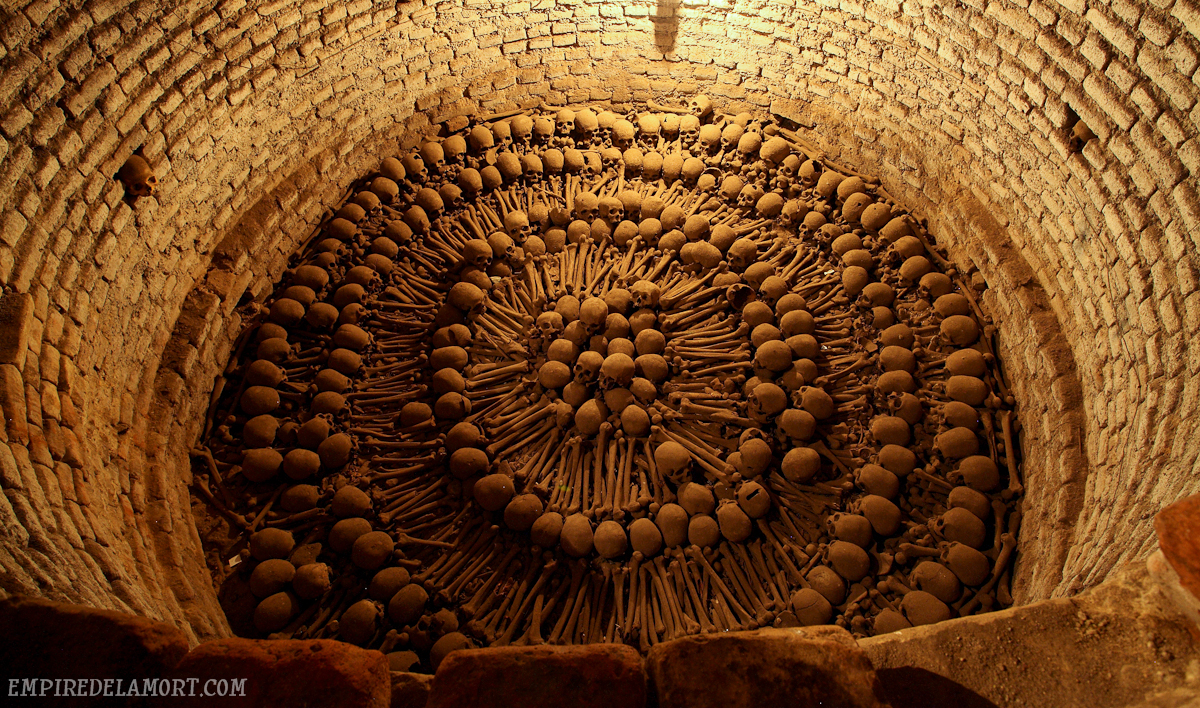
I was not allowed to take pictures inside the church because it is a functioning monastery but that didn’t stop other people so I will use their pictures. I found all of these on the internet, I did not take any of these. The interior is clearly Moorish style with geometric patterns throughout. Lovely but not mind-altering (like the church I visited in Quito, get ready for that craziness later). In the basement was crypts and I was delighted by them. There are about 25,000 people’s remains either in boxes or laid out in patterns in a well.

DK_photo_Bone_crypt_the_catacombs_Monasterio_de_San_Francisco_Lima_Peru_copy Church-of-San-Francisco-Lima-Peru-catacomb3 03_lima

Remember, this was all on Day One. No one knew me and the weirdness that I bring so they all saw me getting excited about piles of dead people and church vultures and potatoes. They were all very nice normal American folk. Several of them looked concerned, both for me and for themselves. We were all friends by the end though. It just took a little time for them to see the joy in dead people/vultures/potatoes.

Next blog entry: Cusco and the countryside.

I’m back from The America Below.

Tuesday, August 18th, 2015

I have returned from Peru and Ecuador! It was a fascinating trip. Aside from bringing home a case of the Travel Snots (common when you get into an enclosed metal tube with a lot of strangers for seven hours) I am unharmed. There were so many amazing experiences! I climbed Machu Picchu. I ate a guinea pig. I almost fell off a boat. I saw Blue-Footed Boobies mating. I watched the President of Ecuador speak from 100 feet away. I learned to make ceviche. I walked on lava. I rode in a three-wheeled motorcycle taxi. I swam with fur sea lions. And sharks. And sea turtles. I met some of the nicest people ever. I now have to sort through 4,000 photos (that is not an exaggeration – I took 1,900, my niece Drea took 2,200) but it will be worth it because, hey, Inca structures and utterly unique fauna. Get ready for awesomeness. In the meantime it is probably in your best interest to see Disney’s The Emperor’s New Groove and Pixar’s Finding Nemo. They will be referenced.

tumblr_lsiqydmLgP1r3eb9go1_500 tumblr_mai6viDwI71qajc4eo1_500